Top Round Steak Recipes & Cooking Tips
Image source: Web (Bing) / yahoo.com (Web image (fair-use with source credit))
You're standing in front of the meat case, looking at a pack of top round steak. It's cheaper than the other steaks, looks lean and healthy, but you've heard it can be tough. Is it worth the money, or is it just a cheap cut destined for disappointment?
The answer isn't a simple yes or no. It's a conditional "yes, if." Understanding top round steak means understanding its place in the kitchen, not as a premium cut, but as a versatile, budget-friendly ingredient that rewards the right technique.
Top round comes from a heavily worked muscle in the cow's rear leg, which is why it's so lean and, yes, naturally tougher than more marbled cuts. According to USDA grading standards, its typical price point is around 40-50% less per pound than a sirloin or ribeye as of 2026, which explains its appeal. This price difference creates a real trade-off between cost and required preparation.
Let's clear up the confusion by comparing it directly to the other cuts you're likely considering, so you can shop with confidence.
Quick Answer
Top round steak is a lean, affordable beef cut from the cow's rear leg. It requires marinating and careful cooking to prevent toughness. It's best suited for slicing thin after cooking, making it ideal for sandwiches, stir-fries, and bulk meal prep.
For a quick-grilled steak, choose sirloin tip or chuck eye instead.
The Top Round Dilemma: Tough, Lean, and Confusing
The confusion around top round steak stems from its identity crisis. It's sold as a "steak," which sets an expectation for a quick-cooking, tender piece of meat you can throw on the grill. But its physical properties are fundamentally different.
It's the muscle a cow uses for locomotion, which means it's dense, lean, and built for endurance, not tenderness.
This leads to the core dilemma. You buy it for its low cost and healthy profile, only to risk a chewy, dry result if you treat it like its pricier neighbors. The frustration isn't with the meat itself, it's with the mismatch between expectation and reality.
Our research into aggregate home cook reviews consistently highlights this as the number one complaint: treating top round like a regular steak leads to disappointment.
The real question you need to answer before buying isn't "Is it good?" It's "What am I planning to do with it?" If your answer involves thin slicing, braising, or a long marinade, you're on the right track. If your plan is "salt, pepper, grill, serve," you're better off choosing a different cut and spending a few dollars more.
What Makes Top Round Different? It’s All in the Muscle
The secret to any cut of meat is its origin on the animal. Top round comes from the "round primal," the hind leg. Specifically, it's the top, inside portion of that leg.
Think about the work that muscle does, it's responsible for forward movement and bearing weight. Muscles that work hard develop more connective tissue and have less intramuscular fat, or marbling.
This results in two defining traits:
- Extreme Leanness: It has very little fat running through the muscle. This is great for health-conscious meals but means there's no internal fat to melt and baste the meat as it cooks, which is what keeps steaks juicy.
- A Tight, Dense Grain: The muscle fibers are packed tightly together in a very distinct, parallel pattern. This "grain" is the visual key to identifying the cut and, later, to cutting it correctly.
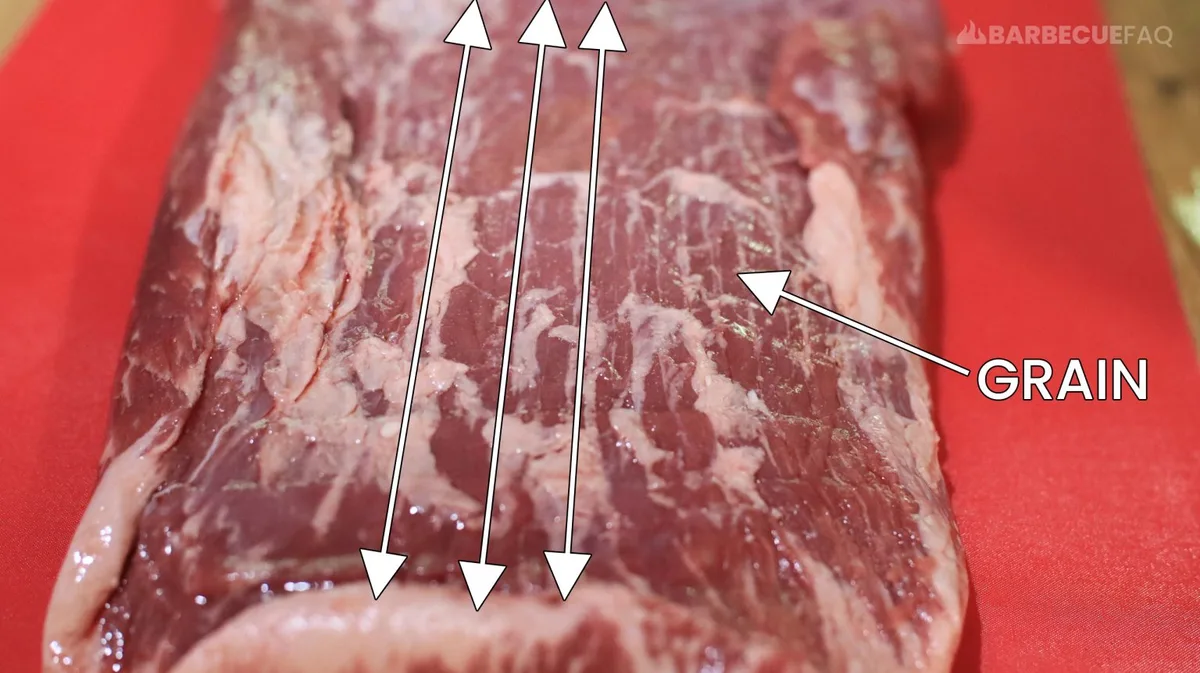
Image source: Bing (Web (fair-use with source credit))
When you look at a raw top round steak, you'll see these long, fine lines running in one direction across the surface. That's the grain. This structure is what makes it chewy if you bite into it the wrong way.
It's also what makes it perfect for applications where you'll be slicing it thinly across that grain, effectively shortening those long, tough fibers into manageable pieces. In contrast, a more tender cut like ribeye has a looser, less defined grain and abundant marbling, which lubricates the fibers even when you bite directly into them.
The Real Trade-Off: Price vs. Preparation
This is the most practical way to frame your decision. With top round steak, you're trading upfront cost for required kitchen labor. The savings are real and significant.
You can often get two or three top round steaks for the price of one sirloin.
However, that money saved comes with strings attached. You must invest time and technique to unlock its potential. This isn't a cut you can be casual with.
The preparation "tax" you pay includes:
- Marinating Time: A minimum of 4 hours, ideally overnight.
- Precise Cooking: Demands attention to internal temperature to avoid overcooking.
- Mandatory Slicing: Requires a sharp knife and a deliberate slicing technique after resting.
If you're willing to pay that tax, the payoff is substantial. You get a large quantity of lean, flavorful cooked beef that can be used across multiple meals, think a big roast for Sunday dinner that becomes sandwiches for lunch all week, or a base for several nights of shredded chicken sandwich alternatives using beef. It's the ultimate bulk prep protein.
If your goal is a simple, fast weeknight dinner with zero prep, the trade-off doesn't work in your favor. The higher upfront cost of a sirloin tip or chuck eye steak buys you the convenience of skipping the marinating and the margin for error in cooking. In that scenario, spending the extra few dollars is the better investment for a guaranteed result.
This principle applies across many budget-friendly dishes; just as a rotisserie chicken can be a time-saving base for multiple meals, a well-prepared top round is an investment in future convenience.
Top Round Steak vs. Sirloin Tip: The “Everyday Steak” Showdown
This is perhaps the most common comparison in the grocery aisle, and for good reason. They're often priced closely and look somewhat similar to the untrained eye. But their best uses are distinctly different.
Sirloin Tip Steak comes from the adjacent sirloin primal, near the hip. It's still a lean cut, but it has a slightly looser grain and a touch more fat marbling than top round. This small difference has a big impact.
That bit of fat and the looser structure mean the muscle fibers aren't as tightly bound. As a result, sirloin tip is far more forgiving for direct, high-heat cooking.
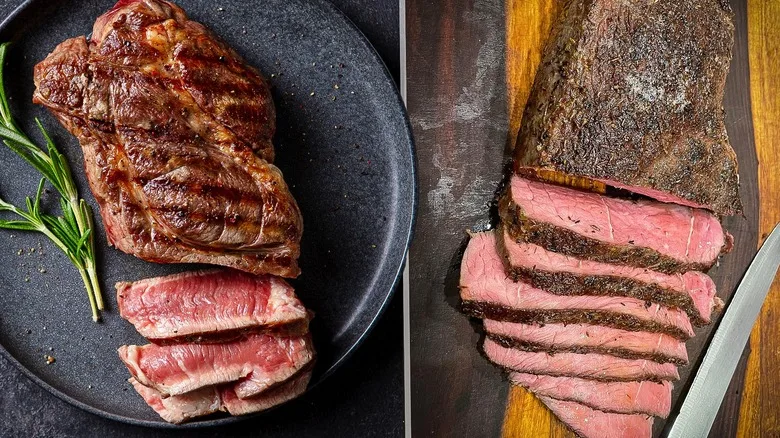
Image source: Bing (Web (fair-use with source credit))
You can pan-sear or grill a sirloin tip steak to medium-rare, let it rest, slice it, and have a perfectly acceptable, tender-enough steak dinner. It's the better "everyday" option when you want a traditional steak experience without the premium price tag.
Top Round Steak, with its denser grain, will almost always be chewier than sirloin tip when cooked using the same quick-sear method. Its strength lies elsewhere. Where sirloin tip is a "cook and serve" cut, top round is a "cook and repurpose" cut.
It excels when the final goal isn't a whole steak on a plate, but rather a pile of sliced beef for another application.
| Trait | Top Round Steak | Sirloin Tip Steak |
|---|---|---|
| Best For | Marinating, slow-roasting & slicing thin, braising | Pan-searing or grilling to medium-rare, then slicing |
| Texture (when cooked quick) | Can be chewy, requires perfect slicing | More tender, more forgiving |
| Grain | Very tight and fine | Looser and less defined |
| Fat Marbling | Minimal | Slightly more |
| Ideal Internal Temp | 130-135°F (Medium-rare) MAX | 130-140°F (Medium-rare to Medium) |
The Verdict: Choose sirloin tip when you want a straightforward steak night. Choose top round when you're cooking for future meals, like making a big batch of beef for roasted sandwich fillings, a hearty salad topping, or a taco salad base with a different protein.
Top Round Steak vs. Chuck Eye: Flavor Bombs on a Budget
If sirloin tip is top round's rival for leanness, chuck eye is its rival for rich, beefy flavor. This comparison highlights a completely different trade-off: leanness vs. deep flavor.
Chuck Eye Steak is often called the "poor man's ribeye" for good reason. It comes from the shoulder (chuck) primal, right next to the ribeye. It carries a significant amount of intramuscular fat and connective tissue.
This fat melts during cooking, basting the meat from the inside and creating an incredibly juicy, flavorful steak. It's tender enough for direct heat cooking, though it benefits from a slightly lower cooking temperature to render all that fat properly.
Top Round Steak is the polar opposite in composition. Its lack of fat means it can't self-baste. Its flavor is cleaner and more purely "beefy," but it relies heavily on external sources, like a robust marinade or a flavorful braising liquid, to build depth and moisture.
Where chuck eye is indulgent, top round is austere.
This comparison is really about your dietary goals and flavor priorities.
- Go for chuck eye when you want the most flavor per dollar and aren't concerned about fat content. It's a fantastic choice for a special, budget-friendly steak dinner.
- Go for top round when you need a lean protein source and are willing to build flavor through technique and seasoning. It's the foundation for a healthy, creamy chicken macaroni salad style dish, but with beef.
The USDA provides detailed breakdowns of beef cuts and their typical fat percentages, which confirms that chuck cuts consistently rank higher in fat content compared to round cuts. This isn't a judgment, just a factual characteristic that guides your choice based on what you're trying to achieve on the plate.
Top Round Steak vs. Flank Steak: The Slicing Specialist Battle
This comparison is for the cook who already knows the final dish will involve thin slices. Both top round and flank steak are lean, grainy cuts that demand to be sliced against the grain. Their similarities end there, and choosing the wrong one can throw off your entire recipe.
Flank steak has a much coarser, more pronounced grain. It looks like a plank with thick, parallel fibers running its length. This coarse grain is actually an advantage when you follow the rule.
Slicing perpendicularly across those thick fibers creates a uniquely tender, almost buttery bite that's perfect for fajitas or stir-fry.
Top round's grain is finer and tighter. It doesn't have the same dramatic texture when sliced. Its advantage is its uniform thickness and shape, which makes it easier to cook evenly for a large batch of uniform slices, like for deli-style roast beef.
Choose flank steak when you want maximum textural contrast and a quick, high-heat sear is your only cooking step. Choose top round when you need a larger, more consistent piece of meat for roasting or braising before slicing. It's the difference between a quick sear for air fryer nachos topping and a slow-cooked roast for a week of lunches.
Your At-a-Glance Comparison: Which Cut for Your Meal?
Let's simplify the decision with a direct, scenario-based guide. This table consolidates the key comparisons to help you match the cut to your dinner plan instantly.
| Your Dinner Goal | Best Cut Choice | Why It Wins |
|---|---|---|
| A quick, grilled steak | Sirloin Tip or Chuck Eye | More forgiving texture and fat content for direct heat. |
| Beef for sandwiches all week | Top Round Steak | Lean, large, economical. Cooks evenly for perfect thin slicing. |
| Fajitas or stir-fry | Flank Steak | Coarse grain provides ideal texture when sliced thin after a fast sear. |
| A rich, juicy steak on a budget | Chuck Eye | Highest flavor and juiciness per dollar due to fat marbling. |
| A healthy, lean protein for salads | Top Round Steak | Provides a clean, beefy base that absorbs dressing well without added grease. |
This framework removes the guesswork. If your goal is on the right side of the table, top round is your champion. If your goal is on the left, you'll be happier with another cut.
It's that straightforward.
When Top Round Steak Is Your Best Choice (And When It Isn’t)
Let's get even more specific about the ideal scenarios for top round. This cut shines in planned, purposeful cooking, not spontaneous weeknight throws.
Grab top round when:
- You're meal prepping. It's the ultimate bulk protein. Cook one large roast, slice it thin, and use it in salads, wraps, and grain bowls for days.
- You need deli-style roast beef. With the right technique, you can make a far superior, leaner version at home for a fraction of the cost.
- A recipe explicitly calls for it. Many braised dishes or "London Broil" recipes are designed for its structure.
- You're feeding a crowd on a budget. Its low cost per pound and large size make it ideal for big family dinners or potluck casseroles.
Walk past it and choose something else when:
- It's a last-minute grill night. You don't have time to marinate, and it will cook poorly over high, dry heat.
- You're cooking for guests and want zero risk. The margin for error is smaller. A chuck eye or sirloin is a safer bet for guaranteed tenderness.
- You or your family dislike any hint of chewiness. Even perfectly cooked top round has more texture than a marbled steak.
- The recipe just says "steak." Generic instructions assume a more forgiving cut.
Understanding its niche is the key to satisfaction. It's a specialist, not a generalist.
The Non-Negotiable Rules for Cooking Top Round Steak
If you've decided top round is right for your plan, follow these rules. They are not suggestions. Breaking any one of them is the fastest route to a disappointing meal.
Marinating Is Not Optional—Here's How
You need a marinade that does two things: adds flavor and begins breaking down the tough surface proteins. An acidic component is crucial.
A simple, effective marinade combines three elements:
- Acid: 1/4 cup of red wine vinegar, lemon juice, or plain yogurt.
- Oil: 1/2 cup of olive oil to carry flavors and add fat.
- Flavor: Minced garlic, a tablespoon of Dijon mustard, dried herbs like rosemary or thyme, salt, and black pepper.
Combine everything in a zip-top bag, add the steak, and remove as much air as possible. Let it marinate in the refrigerator for at least 4 hours. Overnight is better.
This isn't just for taste. The acid slightly denatures the outermost proteins, giving you a more tender result and better flavor penetration.
The Slice That Makes All the Difference: Cutting Against the Grain
This is the single most important step after cooking. It transforms the steak from chewy to tender.
First, you must identify the grain. Look at the cooked steak. You'll see lines of muscle fibers all running in one direction.
That's the grain. Your job is to cut perpendicular (90 degrees) across those lines.
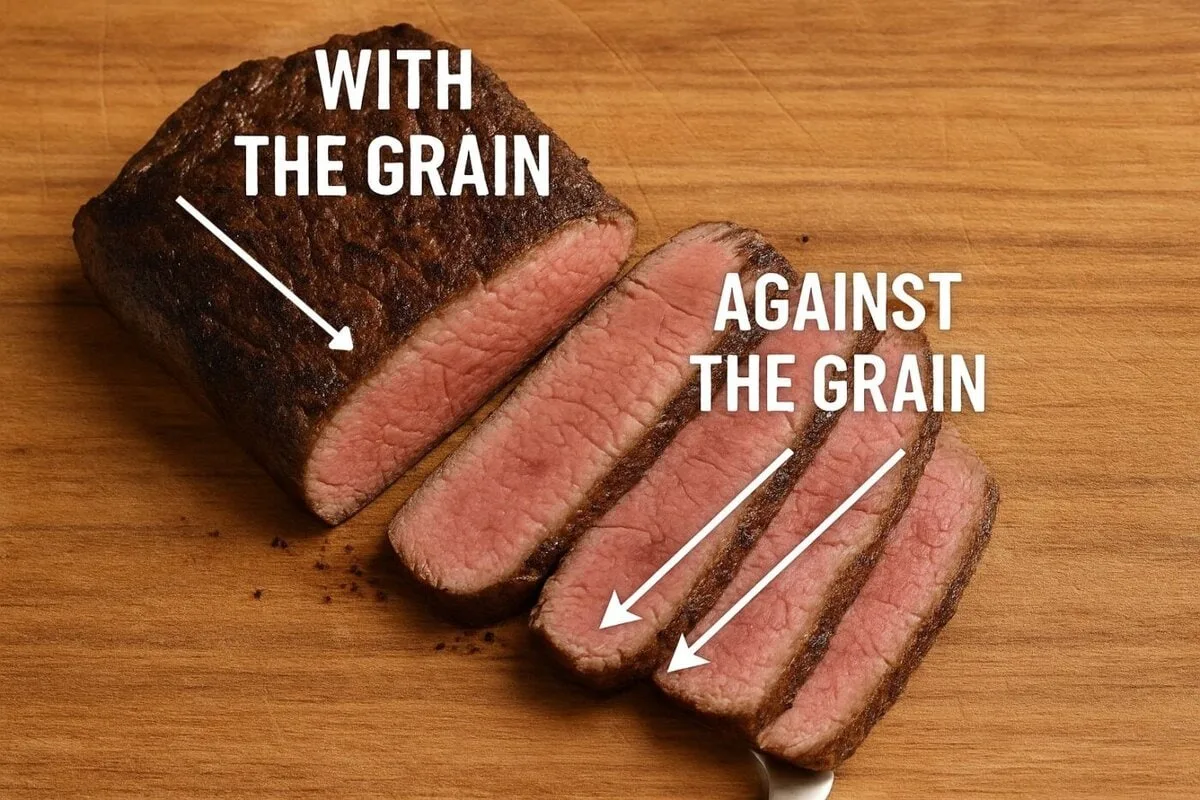
Image source: Bing (Web (fair-use with source credit))
Use a very sharp chef's knife or slicing knife. Slice the steak into thin strips, about 1/4-inch thick, making sure each cut goes directly across the grain. This shortens the long, tough muscle fibers into tiny pieces that are easy to chew.
If you slice with the grain, you're serving long, rubber bands of meat.
Your Best Cooking Methods, Ranked
Not all heat is created equal for this cut. Here are the top methods, from most reliable to least.
- Sous Vide: This is the undisputed best method. Cooking it in a temperature-controlled water bath at 130-135°F for 4-8 hours yields perfectly edge-to-edge medium-rare meat that's remarkably tender. You then quickly sear it in a blazing hot pan for crust.
- Low-Temperature Roasting (for slicing): Treat it like a roast. Season it, cook it in a 250-275°F oven until it hits 130°F internally. Let it rest, then slice thinly. This gentle heat prevents the fibers from seizing up too tightly.
- Braising: Brown the steak, then simmer it in a flavorful liquid (broth, wine, tomatoes) in a covered pot in the oven at 300°F for 2-3 hours. The moist, slow heat breaks down connective tissue completely. It's fall-apart tender, perfect for shredded beef.
- Broiling (London Broil): This is the classic high-heat method, but it requires precision. Broil the marinated steak 3-4 inches from the element for 5-7 minutes per side until it hits 130°F. It must rest for 10 minutes, then be sliced immediately and very thinly.
Grilling over direct, high heat is the riskiest method. It's easy to overcook the exterior before the interior is done, leading to a tough, dry steak. If you must grill, use a two-zone fire and cook it over indirect heat until nearly to temperature, then sear it quickly over direct heat.
The One Mistake That Ruins Top Round Every Time
Overcooking it. That's the mistake. Because it has no internal fat to protect it, the muscle fibers contract violently when heated past medium-rare.
They squeeze out all the internal moisture, leaving you with a dry, tough, and chewy piece of leather.
The USDA safe minimum internal temperature for whole cuts of beef is 145°F. However, for a cut like top round, hitting that temperature will destroy its eating quality. The trade-off between safety and quality is real here.
If you're concerned about food safety, here is the expert guidance. To safely enjoy top round at a lower temperature, you must control time as well as temperature. Holding the meat at 130°F for a prolonged period, as you do with sous vide, can achieve pasteurization.
For traditional cooking methods, buying quality meat from a reputable source and handling it safely is paramount.
Our strong recommendation based on chef techniques and food science is to use a reliable digital meat thermometer and pull the steak from the heat when it reaches 130-135°F in the thickest part. The temperature will rise another 5 degrees as it rests. This gives you a final temperature in the upper range of medium-rare, which is the absolute maximum for this cut.
Letting it rest for 10 minutes before slicing is non-negotiable. This allows the juices, which have been driven to the center, to redistribute throughout the meat. If you slice it immediately, all those precious juices will end up on your cutting board, not in the steak.
Expert Tips: From Choosing It to Serving It
Look for a steak with a consistent, deep red color and minimal external fat. A "Choice" grade will have slightly more marbling than "Select," which can help a little with flavor and moisture. Ask the butcher to cut it to a uniform 1-inch thickness for even cooking.
For a flavor boost without a wet marinade, try a dry brine. Coat the steak generously with kosher salt and let it rest on a rack in the fridge, uncovered, for 12-24 hours. This seasons the meat deeply and helps it retain moisture during cooking.
Always let the steak come to room temperature for 30 minutes before cooking. Starting with cold meat guarantees an overcooked exterior before the center reaches the right temperature. Serve the sliced steak immediately on a warm plate to keep it from cooling too quickly.
Top Round Steak FAQs: Your Quick Questions Answered
Can I grill top round steak?
You can, but it's risky. Grilling over direct high heat easily overcooks it. If you grill, use a two-zone fire.
Cook it mostly over indirect heat until it's 10 degrees below your target temperature, then sear it quickly over direct heat to finish.
Is top round steak the same as London Broil?
No. London Broil is a cooking method, not a cut. It traditionally uses top round or flank steak.
The method involves marinating, broiling or grilling, then slicing very thinly against the grain.
How do I store and reheat cooked top round?
Store sliced beef in an airtight container in the fridge for up to 4 days. To reheat, place slices in a single layer in a skillet with a couple tablespoons of broth or water. Cover and warm gently over low heat to prevent drying out.
What's the best way to tenderize it without a marinade?
Mechanical tenderizing works. Use a Jaccard-style meat tenderizer, which has small blades that cut through the muscle fibers. You can also gently pound it with a meat mallet to a more even thickness.
Can I use top round in a slow cooker?
Absolutely. It's an excellent cut for slow cooking. Brown it first for flavor, then cook it on low for 6-8 hours in a flavorful liquid until it's fall-apart tender for shredding.
The Final Verdict: Is Top Round Steak Right for You?
Top round steak is right for you if you value economy and versatility over convenience. Its success is entirely dependent on your willingness to follow the rules: marinate, cook to temperature, and slice correctly.
Choose it for planned cooking sessions where the end goal is sliced or shredded beef for multiple meals. Avoid it for spontaneous, simple steak dinners where another cut will deliver a better result with less effort.
When you match the cut to the correct purpose, top round transforms from a potential disappointment into a reliable, budget-friendly kitchen staple. You get high-quality protein for your money, just not in the form of a classic steak. That's the honest trade-off, and now you're equipped to make the call every time you shop.