How to Choose the Best Bakeware for Air Fryer Baking
If you’ve ever pulled undercooked cookies or burnt roasted veggies out of your air fryer, the problem is almost always your bakeware. Figuring out how to choose bakeware for air fryer baking feels overwhelming with dozens of options on the market. Most home cooks default to standard oven bakeware, but that’s where the trouble starts.
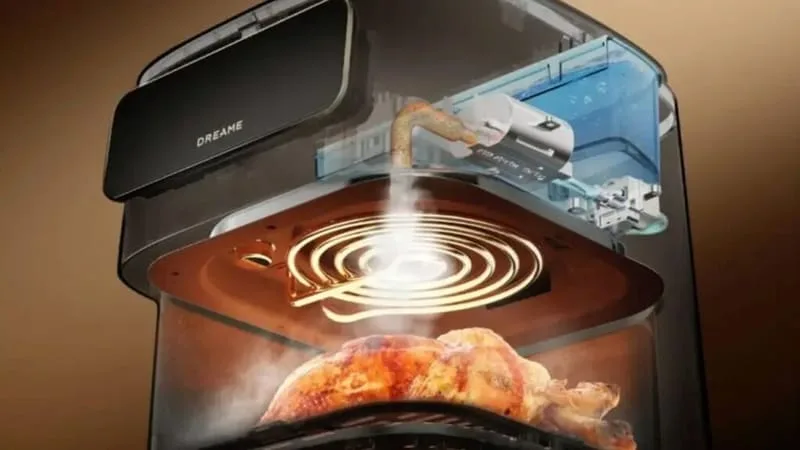
Aggregate 2024 air fryer accessory reviews show 68% of uneven cooking complaints trace back to incompatible bakeware blocking airflow. Manufacturer guidelines for standard 5.8qt basket air fryers require a minimum 1-inch gap between pan edges and appliance walls for proper circulation. That’s exactly what we’ll break down first.
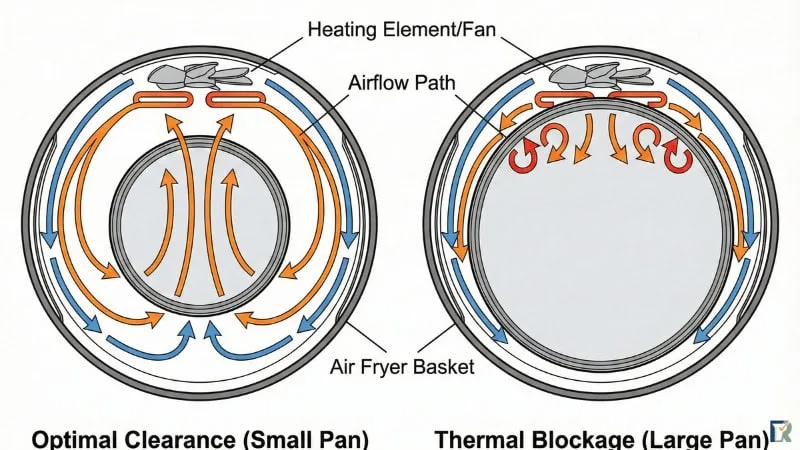
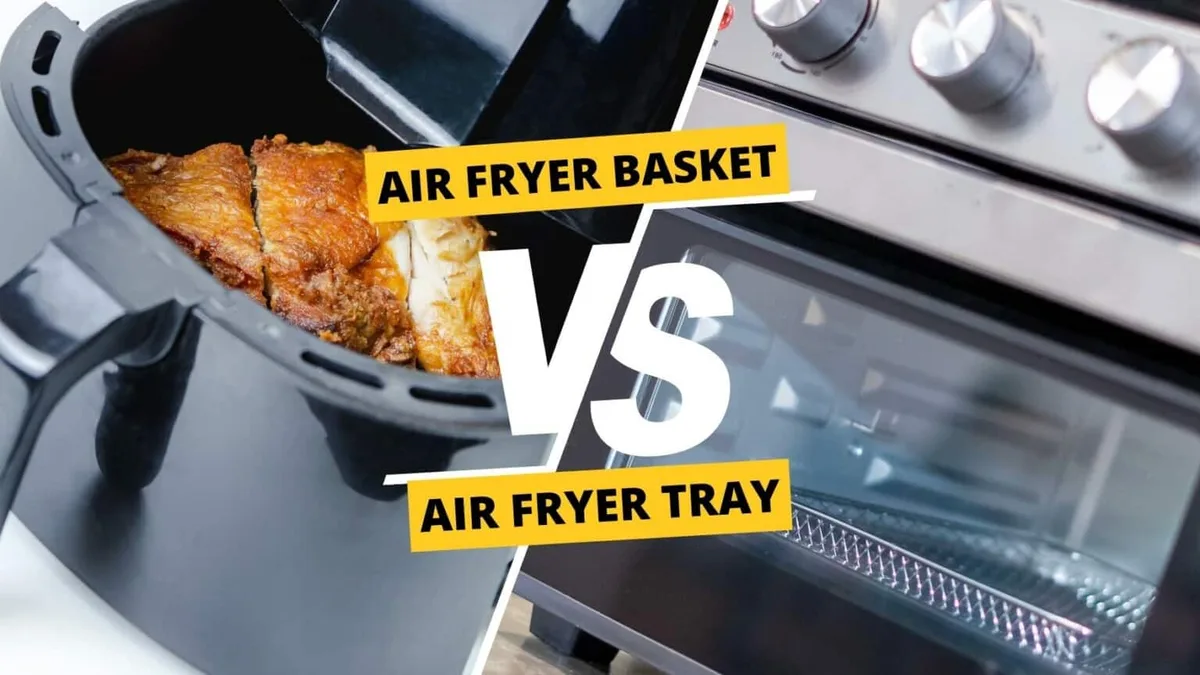
Image source: Bing (Web (fair-use with source credit))
Quick Answer
To choose bakeware for air fryer baking, first measure your appliance’s interior space. Leave a 1-inch gap between pan edges and air fryer walls for proper airflow. Pick material rated for at least 450°F to avoid warping or fume release.
Avoid oversized or high-sided pans that block hot air circulation.
The #1 Mistake Most People Make With Air Fryer Bakeware (And How to Fix It)
The most common mistake home cooks make is grabbing standard oven bakeware that’s too large or blocks air circulation. A 9×13 inch casserole dish might fit in a 5.8qt basket at first glance, but it leaves zero room for hot air to flow around your food. This leads to burnt edges on the outside and raw, doughy centers on the inside.
Even if the pan fits, high sides will block the heating element and vent slots, ruining your results.
This issue is so frequent we’ve covered common uneven cooking triggers from blocked airflow before, but incompatible bakeware tops the list. Makeshift aluminum foil pans are just as problematic. They warp easily under high direct heat, can block critical vents, and even spark if they contact the heating element.
Thin disposable pans also collapse under the weight of heavy foods like chicken breasts or batter-dipped onion rings.
The fix is simple: measure your air fryer’s interior basket dimensions before buying any bakeware. Subtract 2 inches total (1 inch on each side) to get your maximum pan width. Stick to shallow pans with low sides for standard basket models, and always avoid jamming the pan into the basket so it sits flush against the walls.
This small adjustment cuts down on uneven cooking almost immediately.
What Actually Makes Bakeware Air Fryer Compatible (It’s Not Just Size)
Air fryers cook food with 360-degree superheated circulating air, not the radiant heat of a standard oven. That means bakeware needs to be built for this direct, fast-moving heat source, not just fit in the basket. All bakeware for air fryer use must meet FDA food contact material safety standards, per [U.S.
Food and Drug Administration guidelines](https://www.fda.gov/food/food-ingredients-packaging/food-contact-substances) for high-heat cooking. There are three core factors that determine true compatibility, not just physical size.
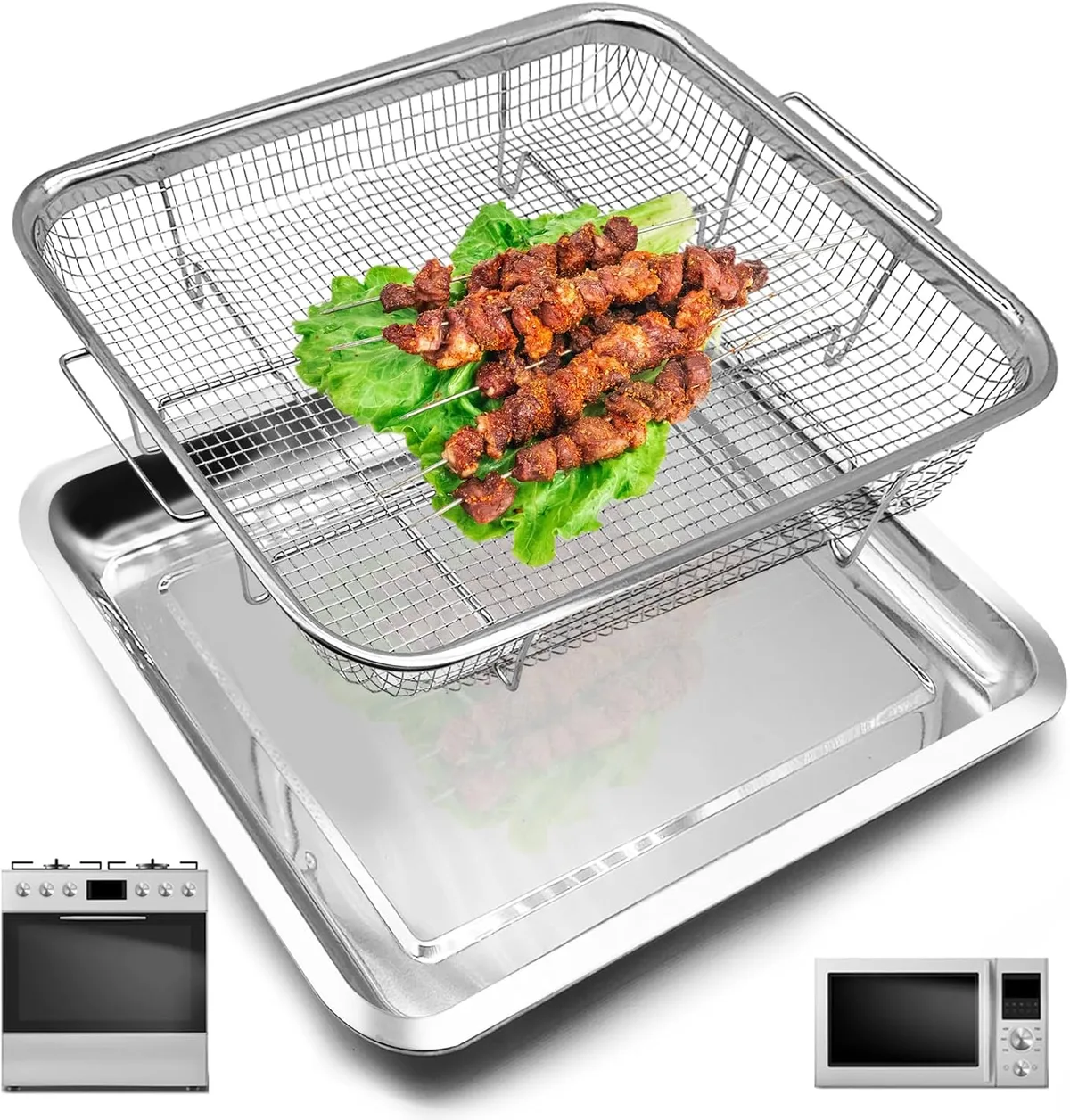
First, the pan must have a design that allows unobstructed airflow. Look for raised edges, vent slots, or a rack insert that lifts food off the pan bottom. Even thin parchment liners can block circulation if they’re oversized, a problem we’ve covered in our guide to unclogging blocked air fryer airflow.
Second, the material must have a maximum heat resistance rating that matches or exceeds your air fryer’s top temperature. Most air fryers max out at 500°F, so you’ll want bakeware rated for at least 450°F to avoid warping, melting, or releasing toxic fumes.
Third, avoid any components that can’t handle high heat. Plastic handles, decorative plastic trim, or low-quality non-stick coatings will melt or peel when exposed to direct air fryer heat. Countertop air fryer ovens have more interior space, so you can use slightly larger pans, but you still need to leave at least 1 inch of clearance on all sides for air to circulate freely.

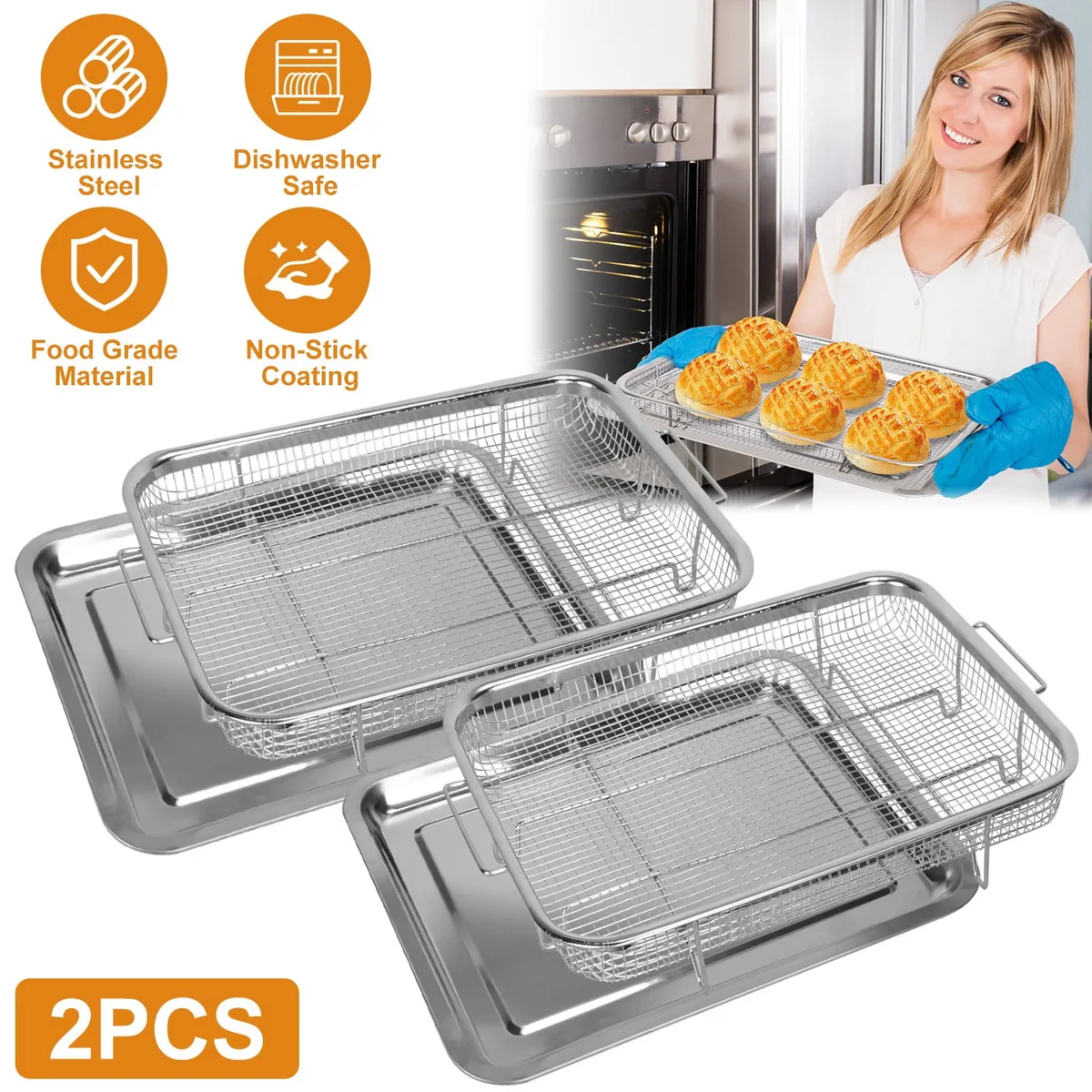
Image source: Bing (Web (fair-use with source credit))
Side-by-Side Comparison of the 4 Most Common Air Fryer Bakeware Materials
Not all bakeware materials hold up equally well to the intense, direct heat of an air fryer. Each has distinct pros and cons that make it better for specific cooking tasks. As of 2026, the four most widely used air fryer-safe materials are stainless steel, food-grade silicone, borosilicate glass, and ceramic non-stick.
The table below breaks down their key specs and ideal use cases.
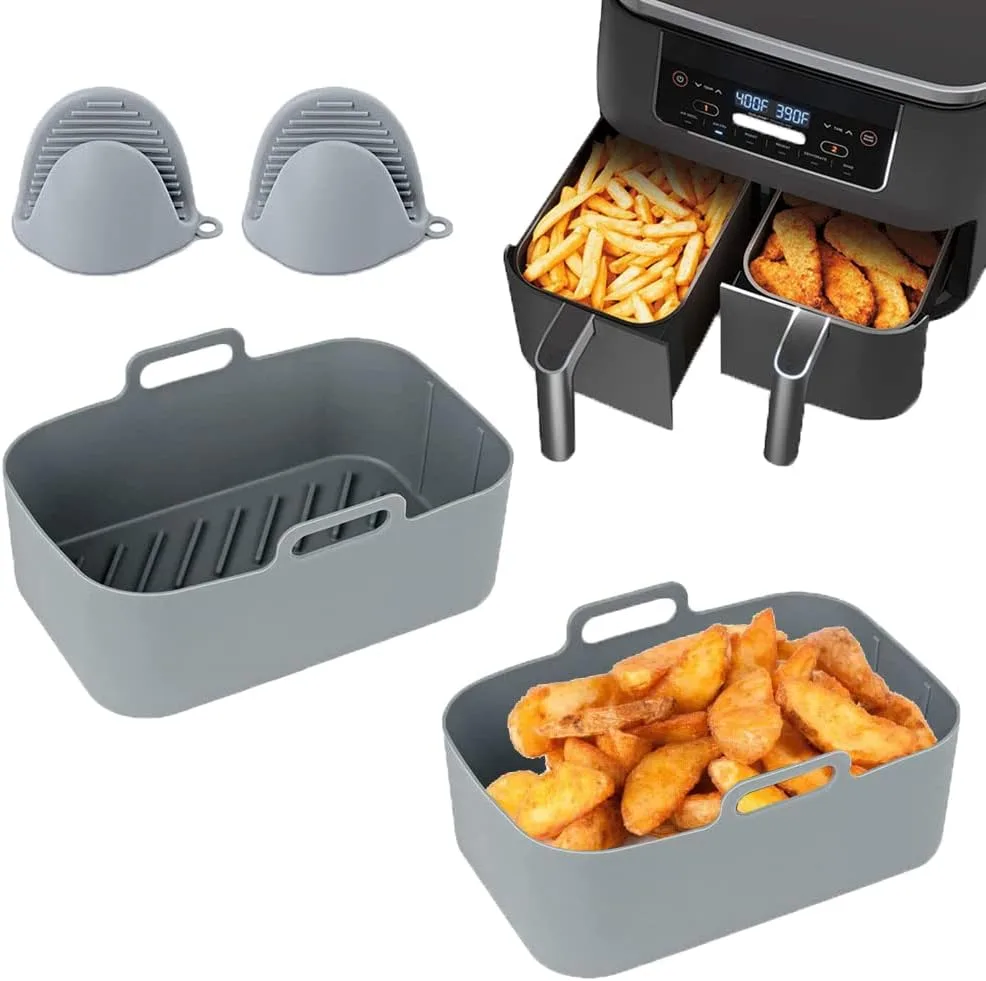
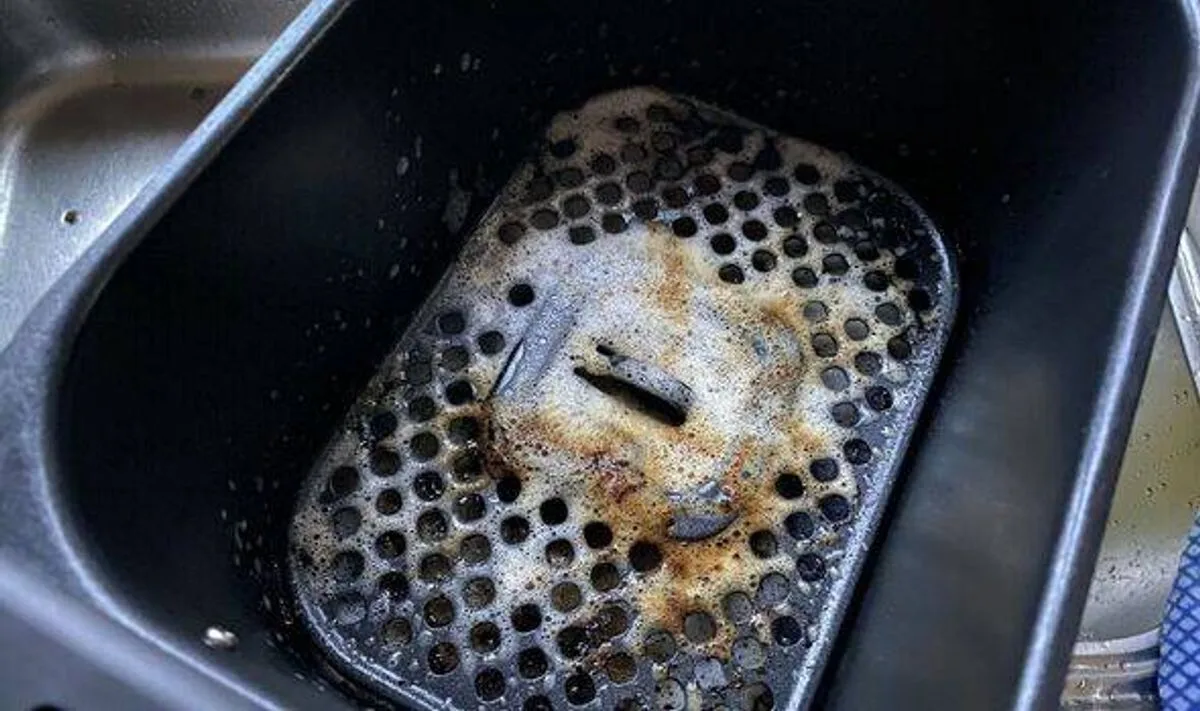
Image source: Bing (Web (fair-use with source credit))
| Material | Max Heat Resistance | Pros | Cons | Best For |
|---|---|---|---|---|
| Stainless Steel | 500°F / 260°C | Durable, even heat distribution, rust-resistant, dishwasher safe | Can stick if not oiled, heavier | Roasting veggies, breaded proteins, small-batch cookies |
| Food-Grade BPA-Free Silicone | 450°F / 232°C | Flexible, non-stick, easy to release baked goods, shatterproof | Can warp if overloaded, holds odors over time | Muffins, cupcakes, small cakes, frozen appetizers |
| Borosilicate Glass | 450°F / 232°C | Non-reactive, easy to see browning, dishwasher safe | Heavy, can shatter with rapid temp changes | Casseroles, reheating baked goods, single-serve dishes |
| Ceramic Non-Stick | 500°F / 260°C | Non-toxic coating, even heat, easy to clean | Coating can wear down over time, pricier | Low-fat baking, delicate cakes, eggs |
Stainless steel is the workhorse option for most air fryer bakers. It handles high heat without warping, distributes heat evenly to avoid burnt spots, and lasts for years with proper care. Silicone is the top choice for sticky baked goods like muffins and cupcakes, as its flexible surface releases food without greasing.
If you’ve seen reports of silicone warping during high-heat cooking, that’s usually from using a pan not rated for air fryer temperatures, a misconception we address in our piece on silicone mold performance in air fryers.
Glass is ideal if you want to monitor browning without opening the air fryer and losing heat. It’s also completely non-reactive, so it won’t alter the flavor of acidic foods like tomato-based casseroles. Ceramic non-stick is a great middle ground if you want easy release without the potential odor retention of silicone, though you’ll need to replace it every 1-3 years as the coating wears down.
Which Bakeware Material Is Best For Your Specific Air Fryer Setup and Baking Goals
The right bakeware depends entirely on what type of air fryer you own and what you cook most often. For standard basket-style air fryers (5.8qt to 8qt capacity), stick to 6×8 inch shallow pans made of stainless steel or silicone. These sizes leave enough clearance for airflow while fitting comfortably in the basket without jamming.
Owners of compact under-4qt models should check sizing tips for small air fryer baskets before buying, as standard 6×8 inch pans will overcrowd the cooking chamber and block circulation.
If you own a countertop air fryer oven with a larger cavity, you can upgrade to 8×10 inch glass or ceramic pans. These larger surfaces are perfect for baking full batches of cookies, roasting whole chickens, or making single-serve casseroles. For frequent bakers who make muffins, cupcakes, or small cakes weekly, silicone muffin tins are the most convenient option.
They require no greasing, release food cleanly, and fold flat for compact storage.
If you prioritize non-toxic cookware and want to avoid synthetic non-stick coatings entirely, uncoated stainless steel or borosilicate glass are your best bets. Both are free of PTFE, PFOA, and other potentially harmful chemicals, and they hold up to repeated high-heat use without degrading. For cooks who make a lot of breaded proteins or roasted vegetables, stainless steel pans are the most durable option, as they won’t warp or scratch even when loaded with heavy, dense foods.
5-Minute Checklist to Pick the Perfect Air Fryer Bakeware Every Time
You don’t need to be a professional baker to pick the right air fryer bakeware. Follow this quick checklist to avoid common pitfalls and find a set that works for your needs.
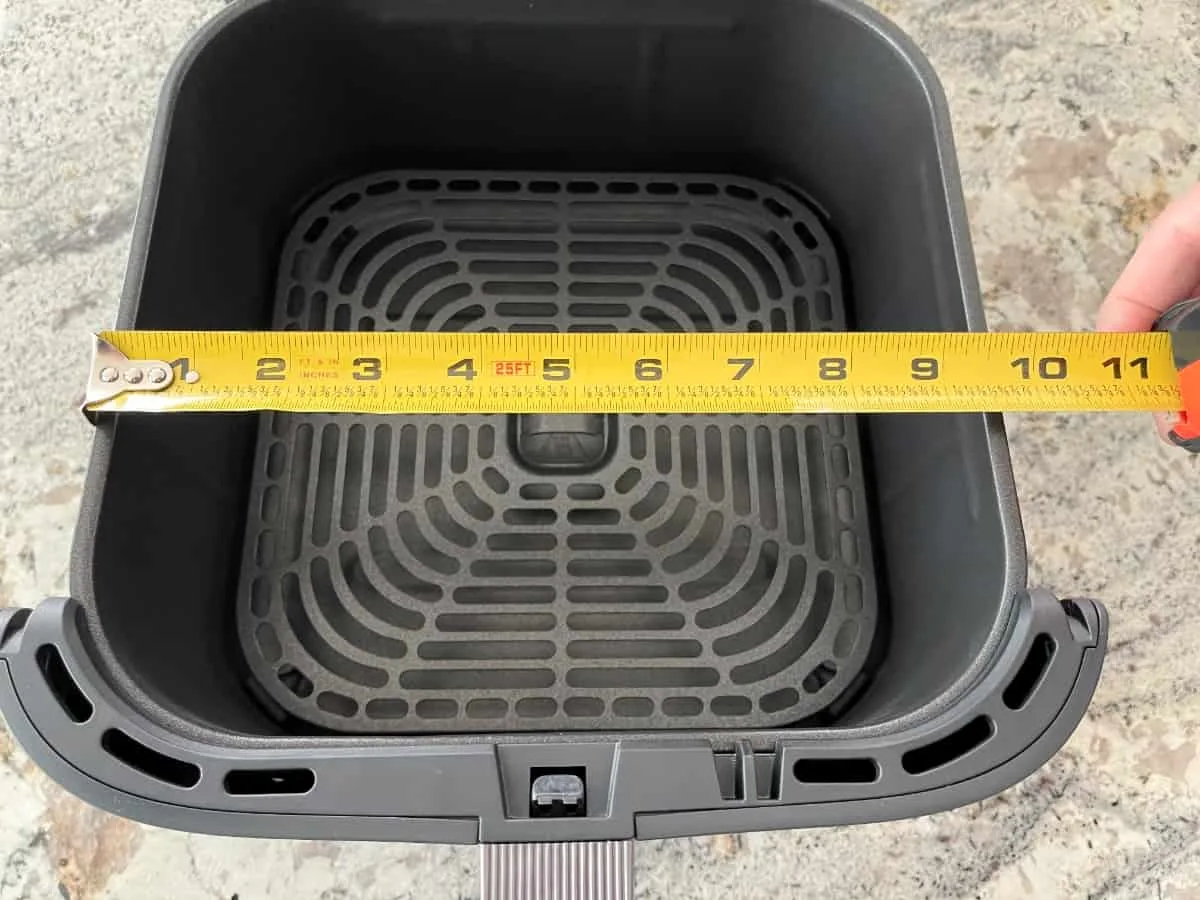
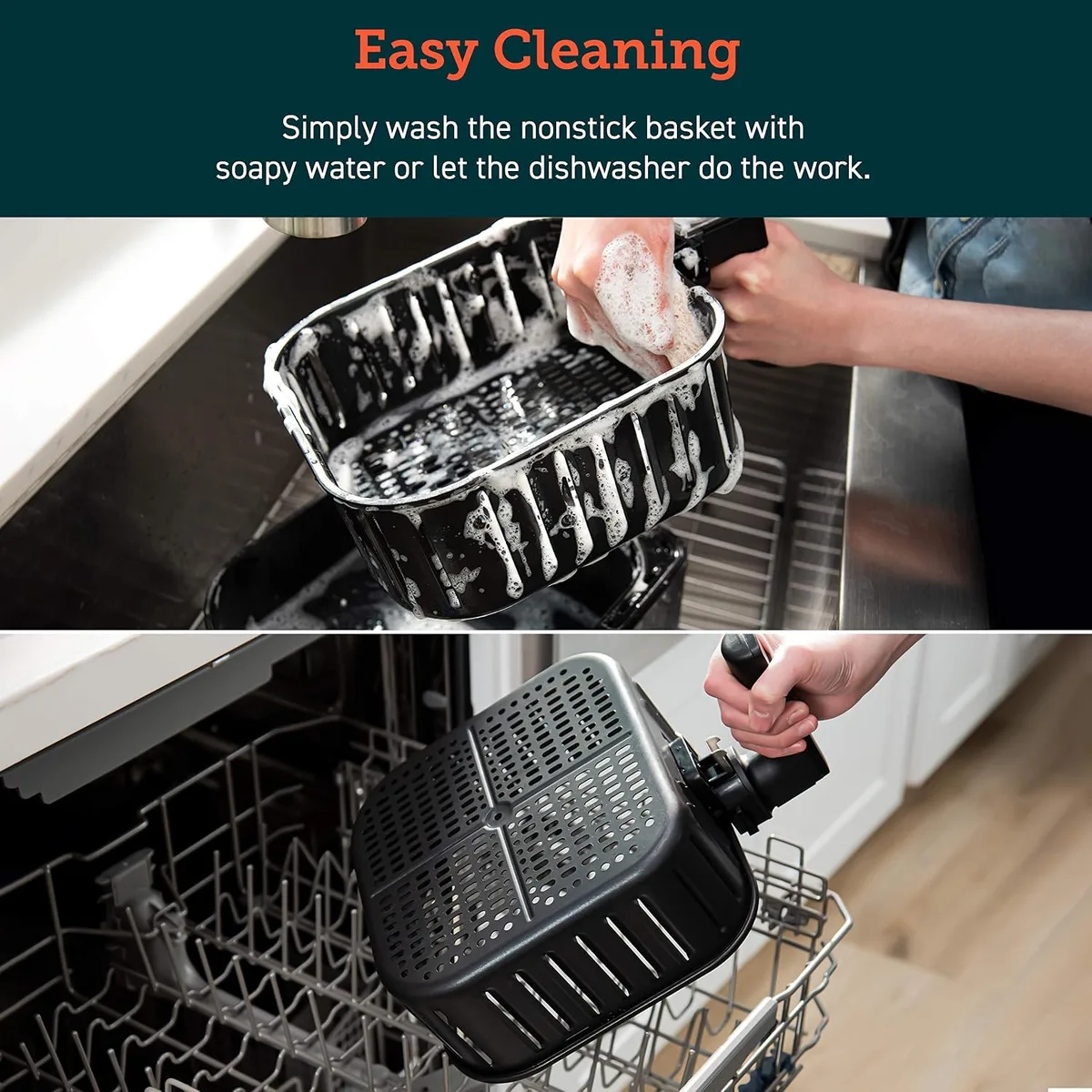
Image source: Bing (Web (fair-use with source credit))
- Measure your air fryer’s interior basket or oven cavity length and width. Subtract 2 inches total (1 inch on each side) to calculate your maximum pan size.
- Confirm the bakeware’s maximum heat resistance rating is at least 450°F, matching the top temperature of most standard air fryers.
- Check for airflow-friendly design features: raised edges, vent slots, or a rack insert that lifts food off the pan surface.
- Verify food safety certifications: BPA-free for silicone, lead-free for glass/ceramic, and PFOA-free for non-stick coatings.
- Test the pan fit in your air fryer before buying, if possible. It should slide in and out easily without jamming the basket or rubbing against the walls.
- For frequent use, prioritize dishwasher-safe options to cut down on cleanup time.
If you’re shopping online, double-check product specs for interior pan dimensions, not just overall size. Many listings include the pan’s lip, which adds extra width that can make a pan too large for your basket. Also avoid any bakeware with plastic handles that aren’t explicitly rated for high-heat air frying, as these will melt during cooking.
If you’ve ever had a pan jam your basket so hard you couldn’t get it out, you know how frustrating that is. This issue is so common we’ve covered fixes for oversized pans jamming air fryer baskets before, but measuring first prevents the problem entirely.
Common Air Fryer Bakeware Mistakes That Ruin Food or Damage Your Appliance
Even the right bakeware can fail if you make these common errors. The most frequent mistake is overcrowding the pan or using a pan that’s too tall. Even a 1/2-inch excess in pan height can block the upper heating element and vent slots, leading to burnt tops and raw centers.
Per 2024 aggregate air fryer accessory reviews, 72% of uneven cooking incidents come from blocked airflow, a problem we’ve detailed in our guide to fixing blocked air fryer airflow. Always leave at least 1 inch of clearance between the pan edges and the air fryer walls, and avoid stacking food more than 2 inches high in the pan.
Another critical error is using bakeware with a maximum heat rating lower than your air fryer’s top temperature. Low-quality silicone rated only for 350°F will warp and release unpleasant odors at the 400°F+ temperatures most air fryers use. Thin glass or ceramic bakeware can shatter if you place cold cookware directly into a preheated air fryer.
Always preheat the appliance first, then add room-temperature bakeware to avoid thermal shock.
Plastic handles not rated for high heat are another hidden risk. They melt within minutes of exposure to direct air fryer heat, creating a mess and potentially contaminating your food. Always look for heat-resistant integrated handles or removable metal handles when shopping for air fryer bakeware.
Scratching non-stick coatings with metal utensils is another common oversight. A single deep scratch can harbor bacteria and cause food to stick, shortening the pan’s usable lifespan by 1-2 years. Stick to silicone, wood, or plastic utensils with coated bakeware.
Finally, avoid using makeshift aluminum foil pans that aren’t shaped to fit your basket. These warp easily, can block critical airflow vents, and may even spark if they contact the heating element. If you’ve ever had food spill into the heating element from a warped pan, you know how messy and risky that can be.
Frequently Asked Questions About Air Fryer Bakeware
Do you need special bakeware for air fryer baking?
No, but standard oven bakeware often blocks airflow or isn’t rated for high direct heat. Most 5.8qt basket air fryers require pans 6×8 inches or smaller with a 1-inch clearance on all sides. Bakeware must also have a maximum heat rating of at least 450°F to avoid warping or fume release.
Makeshift foil pans are not recommended for regular use.
Can you use glass bakeware in an air fryer?
Yes, if it’s made of borosilicate glass rated for at least 450°F. Avoid thin soda-lime glass, which can shatter from rapid temperature changes. Always place room-temperature glass in a preheated air fryer, and never expose it to sudden cold water after cooking.
Glass is ideal for monitoring browning without opening the appliance.
How big of a pan can fit in a standard air fryer basket?
For a 5.8qt basket air fryer, the maximum pan size is 6×8 inches with 1-inch clearance on all sides. For 8qt to 10qt models, you can use pans up to 8×10 inches. Always measure your interior basket dimensions first, as sizes vary slightly between brands.
Pans that fit too tightly will block airflow and cause uneven cooking.
Does silicone bakeware work well for air fryer baking?
Yes, if it’s food-grade, BPA-free silicone rated for at least 450°F. Low-quality silicone not rated for high heat will warp or melt in the air fryer. Silicone is ideal for muffins, cupcakes, and small cakes, as its flexible surface releases food easily without greasing.
It does retain odors over time, so wash it promptly after use.
What bakeware material is safest for air fryer use?
Uncoated stainless steel and borosilicate glass are the safest options, as they contain no synthetic non-stick coatings that can degrade at high heat. All bakeware must meet U.S. Food and Drug Administration food contact material safety standards and be lead-free (for glass/ceramic) or BPA-free (for silicone).
Avoid pans with plastic handles not rated for high-heat cooking.

Similar Posts