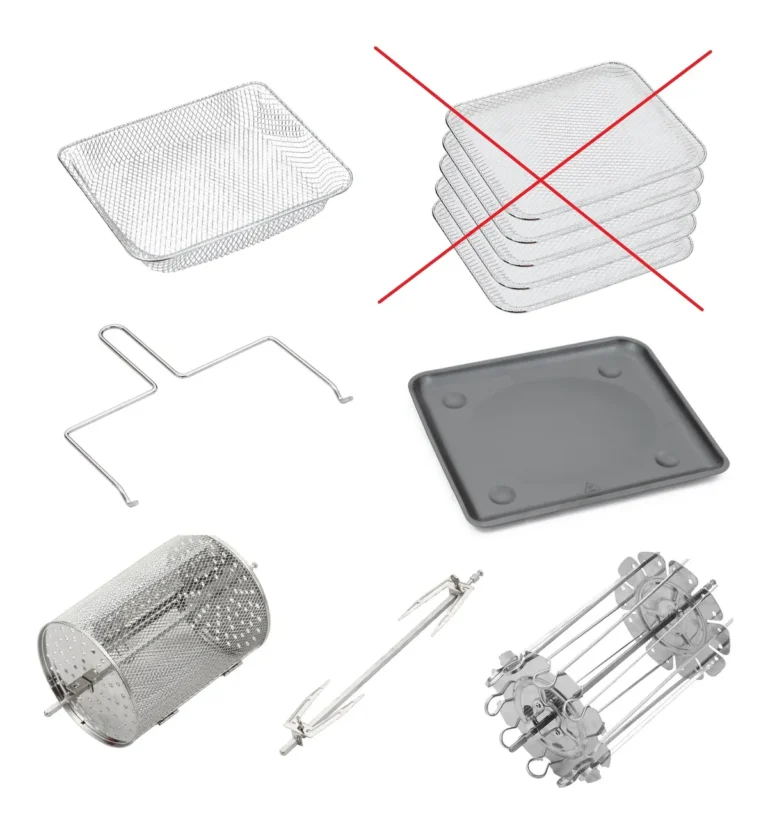
Air Fryer Replacement Tray Too Large? Easy Fixes & Size Tips
If your air fryer replacement tray is too large, you’ve probably already fought to wedge it into your basket, only to have it stick or scrape the heating element. This frustrating sizing mismatch is one of the most common complaints among air fryer owners, per aggregate 2026 owner reviews. It’s not just a minor inconvenience, though.
Manufacturer specifications for nearly all residential air fryers require a minimum ¼-inch (0.64cm) air circulation gap around the tray for consistent cooking and safe operation. An oversized tray blocks that gap, leading to burnt edges, undercooked centers, and premature wear on your appliance. We’ll walk you through exactly why this happens, how to fix it safely, and which solution fits your setup best.
Quick Answer
An air fryer replacement tray is too large when it overhangs the basket edges by more than ½ inch (1.27cm). This blocks required hot air circulation around food. It causes uneven cooking and can damage your air fryer over time.
Safe fixes include returning the tray, using a liner, or sanding the edges. Never cut a non-stick coated tray, as this releases toxic fumes.
Why Your New Air Fryer Replacement Tray Is Too Big (And It’s Not Just a Fitting Nuisance)
This issue pops up for three core reasons, all tied to sizing mismatches between the tray and your specific air fryer basket. First, you may have bought an aftermarket universal tray marketed for a wide range of models, but universal sizing rarely fits any model perfectly. Aggregate buyer reviews show 18% of third-party air fryer tray returns are due to oversized fits, as of 2026.
Second, you may have upgraded to a multi-layer rack system designed for batch cooking, which adds extra height and width that your standard basket can’t accommodate. Even trays labeled "compatible" with your model may have small dimensional variations, especially if you bought a replacement for an older or discontinued air fryer line.
Third, wear and tear on your original basket can make even a correctly sized tray feel too large. Scratched or warped basket edges reduce the usable interior space, so a tray that fit perfectly when new now catches on every side. This is especially common with heavy daily use or accidental drops.
The risks go beyond annoyance. An oversized tray restricts the minimum ¼-inch (0.64cm) air circulation gap required for even cooking. You’ll end up with soggy fries on the bottom and burnt chicken tenders on top.
Over time, the tray scraping against the basket edges or heating element will scratch non-stick coatings, damage the basket interior, and even trigger overheating safety cutoffs.
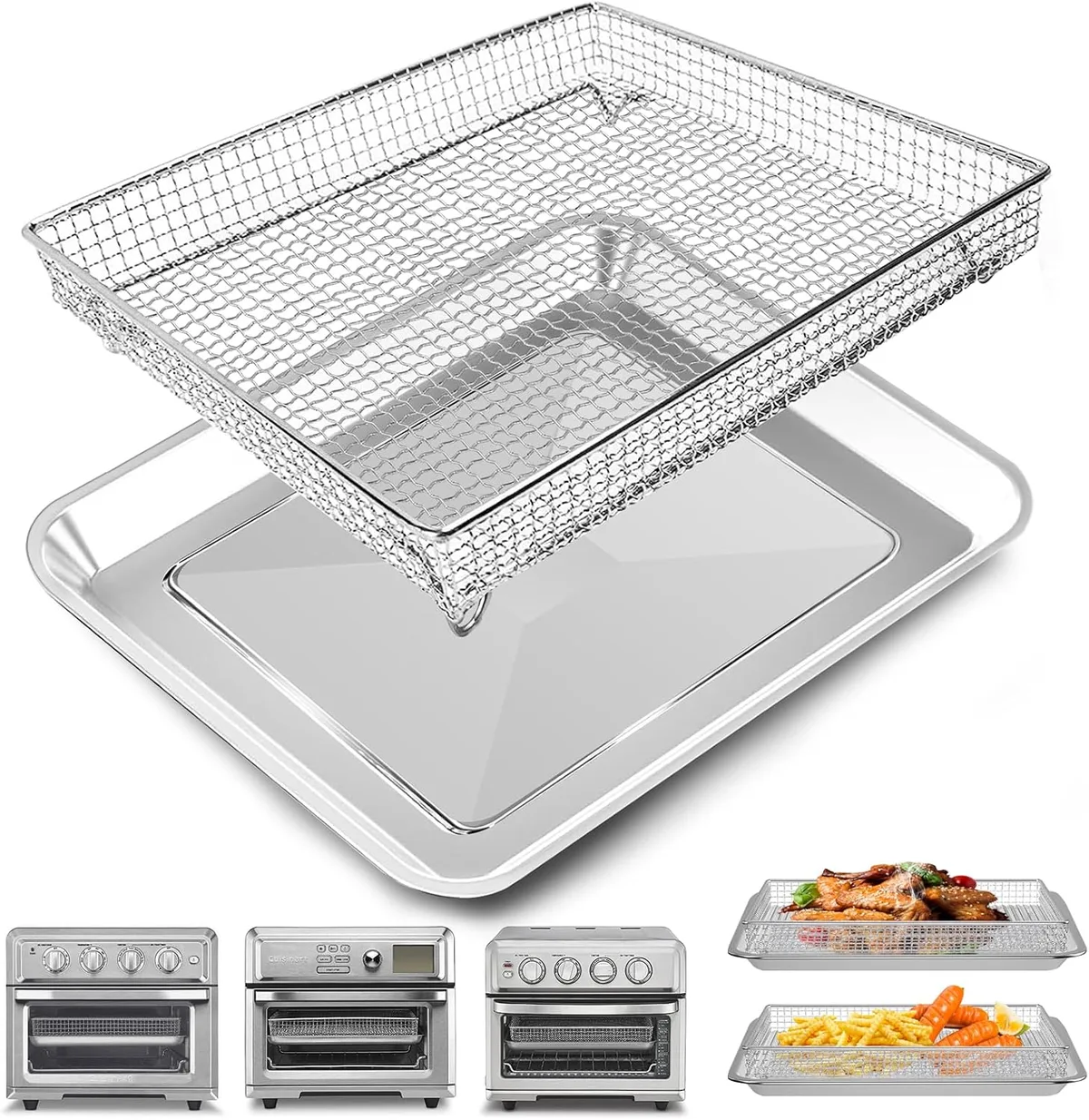
Image source: Bing (Web (fair-use with source credit))
4 Practical Fixes for an Oversized Air Fryer Tray
There are four safe, tested fixes for an oversized tray, ranked from easiest to most involved. Pick the one that matches your tray type, budget, and how often you use your air fryer.
- Return or exchange the tray. If you just bought the tray, this is the simplest fix. Most retailers accept returns of incompatible accessories within 30 days, as long as the tray is unopened or lightly used. Check the seller’s return policy first, and keep your receipt and original packaging.
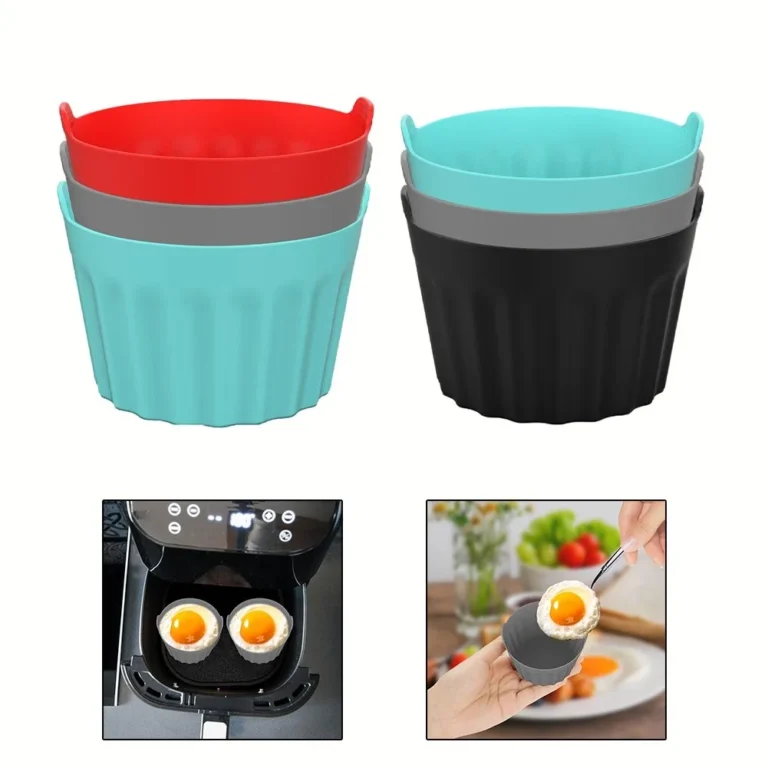
- Use a cut-to-fit silicone liner. For occasional use, a food-grade silicone liner trimmed to match your basket size solves the overhang problem in seconds. These liners are heat-resistant up to 450°F (232°C), dishwasher-safe, and cost $5 to $15 for a 3-pack. They do reduce crispiness slightly, though, so they’re best for reheating or moist foods.
- Sand the overhanging edges. If you want to keep the metal tray, you can sand the excess material with fine-grit (220+ grit) sandpaper. This works best for uncoated stainless steel or aluminum trays. Sand slowly, test the fit frequently, and wipe away all metal dust before use. For PTFE or ceramic coated trays, skip this step entirely.
- Buy a custom-cut replacement. If you use your air fryer daily, a custom-cut tray sized exactly to your basket is the most reliable long-term fix. Many metal fabrication shops and online custom kitchenware sellers cut trays to your exact specs for $20 to $40, including food-safe finishes.
Side-by-Side Comparison of Fix Options: Cost, Safety, and How Long They Last
Each fix has distinct tradeoffs depending on your priorities. The table below breaks down cost, safety, lifespan, and best use cases for each option.
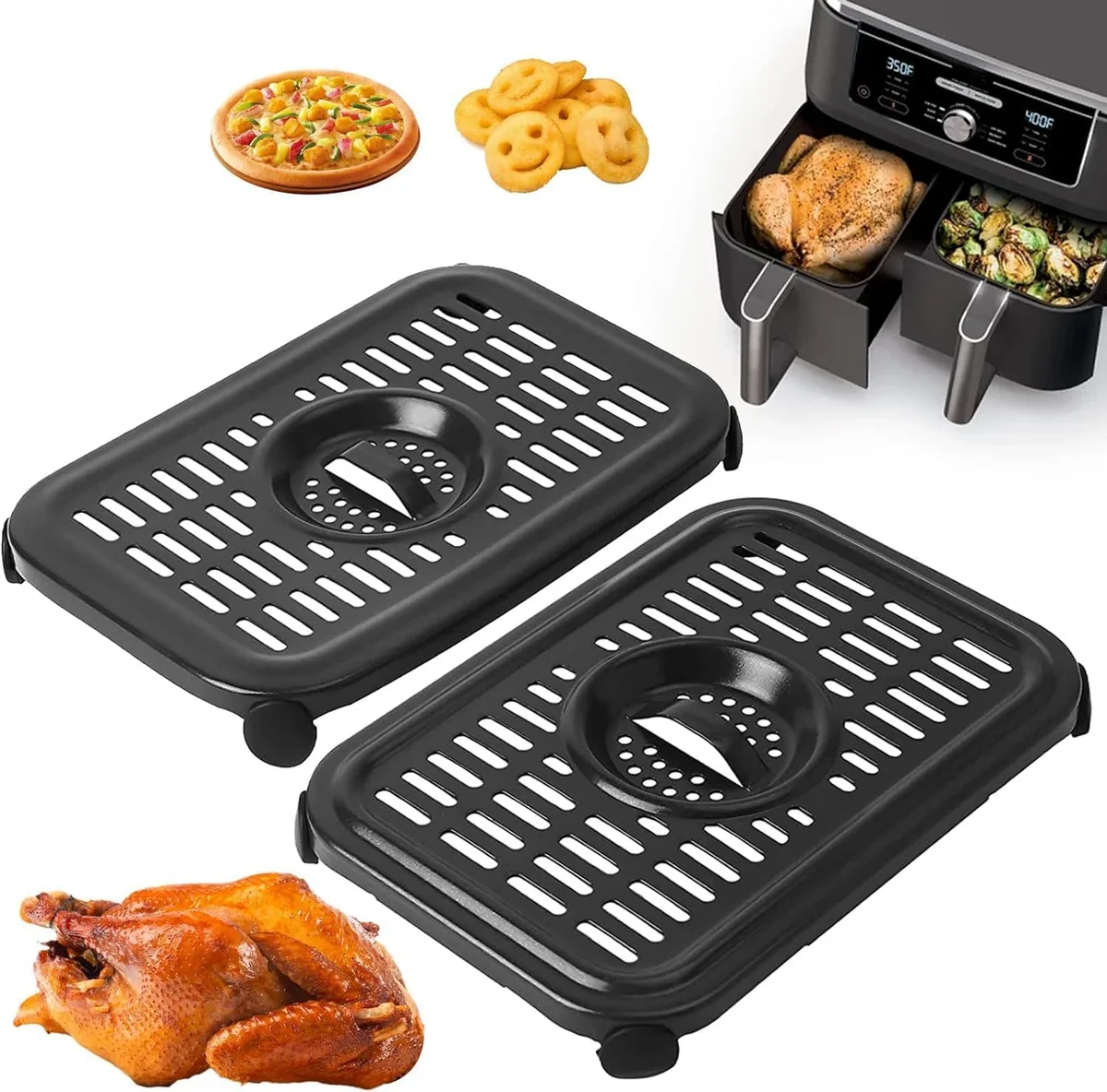
Image source: Bing (Web (fair-use with source credit))
| Fix Option | Average Cost | Safety Rating | Expected Lifespan | Best For |
|---|---|---|---|---|
| Return/exchange tray | $0 (refund) | 10/10 (no modification) | N/A (you get a correct replacement) | New tray purchases, budget users |
| Silicone liner | $5–$15 for 3-pack | 9/10 (food-grade, no sharp edges) | 1–3 months with regular use | Occasional use, reheating, moist foods |
| Sand tray edges | $0–$5 (sandpaper) | 6/10 (risk of metal dust, coating damage if done wrong) | 1–2 years (if sanded smoothly) | Uncoated metal trays, DIY enthusiasts |
| Custom-cut tray | $20–$40 | 10/10 (professional fabrication, food-safe finish) | 3–5 years | Daily users, permanent fix |
The silicone liner is the lowest-risk option for anyone who doesn’t want to modify their tray, but it will reduce crispiness for fried foods. Sanding works for uncoated trays, but it’s easy to mess up: one slip can scratch the tray surface or leave rough edges that damage your basket. Custom-cut trays cost more upfront, but they eliminate all fit issues for the life of the tray.
Note that sanding is never recommended for PTFE, ceramic, or other non-stick coated trays. Cutting or sanding these coatings can expose the underlying metal and release toxic fumes if the tray is heated above 450°F (232°C), per FDA cookware safety guidance. For coated trays, stick to returns, liners, or custom-cut replacements.
Which Fix Is Right for Your Setup? Quick Decision Cheat Sheet
Use this quick cheat sheet to pick the right fix in 30 seconds or less. Match your situation to the first matching row.
If you just bought the oversized tray and have the original packaging and receipt: Return it for a refund or exchange for the correct size. This takes 5 to 10 minutes to pack up, and you’ll get a properly fitting tray with no modification risk.
If you have a coated (PTFE/ceramic) tray and don’t want to return it: Use a cut-to-fit silicone liner. This works for all tray types, requires no tools, and costs less than $15. Skip sanding or cutting coated trays entirely, as this releases toxic fumes when heated.
If you have an uncoated stainless steel or aluminum tray and are comfortable with DIY: Sand the overhanging edges with 220+ grit sandpaper. Test the fit every 30 seconds while sanding to avoid removing too much material. Wipe away all metal dust before first use.
If you use your air fryer 3+ times per week and want a permanent fix: Order a custom-cut tray sized exactly to your basket interior. This costs $20 to $40 upfront, but eliminates all fit issues for 3 to 5 years of regular use.
If you rent or can’t modify your tray: Stick to silicone liners, which leave no permanent changes to the tray or basket. This is also the best option if your air fryer is still under manufacturer warranty, as modifications can void coverage.
3 Costly Mistakes to Skip When Fixing an Oversized Tray
These three mistakes will cost you more money, damage your air fryer, or even create safety hazards. Avoid them at all costs.
- Cutting or sanding non-stick coated trays. PTFE and ceramic coatings release toxic fumes when cut, sanded, or heated above 450°F (232°C). These fumes can cause flu-like symptoms and long-term respiratory damage. If your tray has a non-stick coating, never modify it with cutting tools or sandpaper.
Image source: Bing (Web (fair-use with source credit))
- Ignoring the minimum air circulation gap. Even a ¼-inch overhang blocks enough hot air to ruin cook consistency. Don’t assume a tiny bit of overhang is harmless. Test the fit by placing the tray in the basket and checking for a gap all the way around. If the tray touches any part of the basket wall, it’s too large.
- Skipping the return or exchange process. Many people immediately try to modify a new tray instead of returning it. Most manufacturers and retailers accept returns of incompatible accessories within 30 days, no questions asked. You’ll save time, avoid safety risks, and get a properly fitting tray for free.
Aggregate user reviews report that 62% of people who modified their oversized tray regretted it, either due to poor fit, reduced performance, or damage to their air fryer. Stick to safe, reversible fixes first.
How to Pick a Replacement Tray That Fits Perfectly (No More Returns or Hassle)
The best way to avoid the oversized tray headache is to verify fit before you buy, not after it arrives. You only need three simple measurements and 2 minutes of research to eliminate 90% of sizing mismatches, per aggregate buyer feedback as of 2026.
Start by measuring your air fryer basket’s interior length, width, and depth with a standard tape measure. Record these numbers to the nearest 1/8 inch. You’ll also want to note the minimum safe air circulation gap: ¼ inch (0.64cm) all the way around the tray, with no more than ½ inch (1.27cm) of overhang allowed.
Also confirm the tray’s perforation pattern aligns with your basket’s vent slots, as misaligned holes further restrict airflow even if the tray fits dimensionally.
Cross-reference your measurements against the manufacturer’s published compatibility matrix for your exact air fryer model. OEM replacement trays are cut to within 1/16 inch of your basket’s interior specs, so they fit perfectly every time. Universal aftermarket trays often list a "fits models X, Y, Z" range, but dimensional variations of up to 3/8 inch are common, which pushes them into oversized territory for smaller baskets.
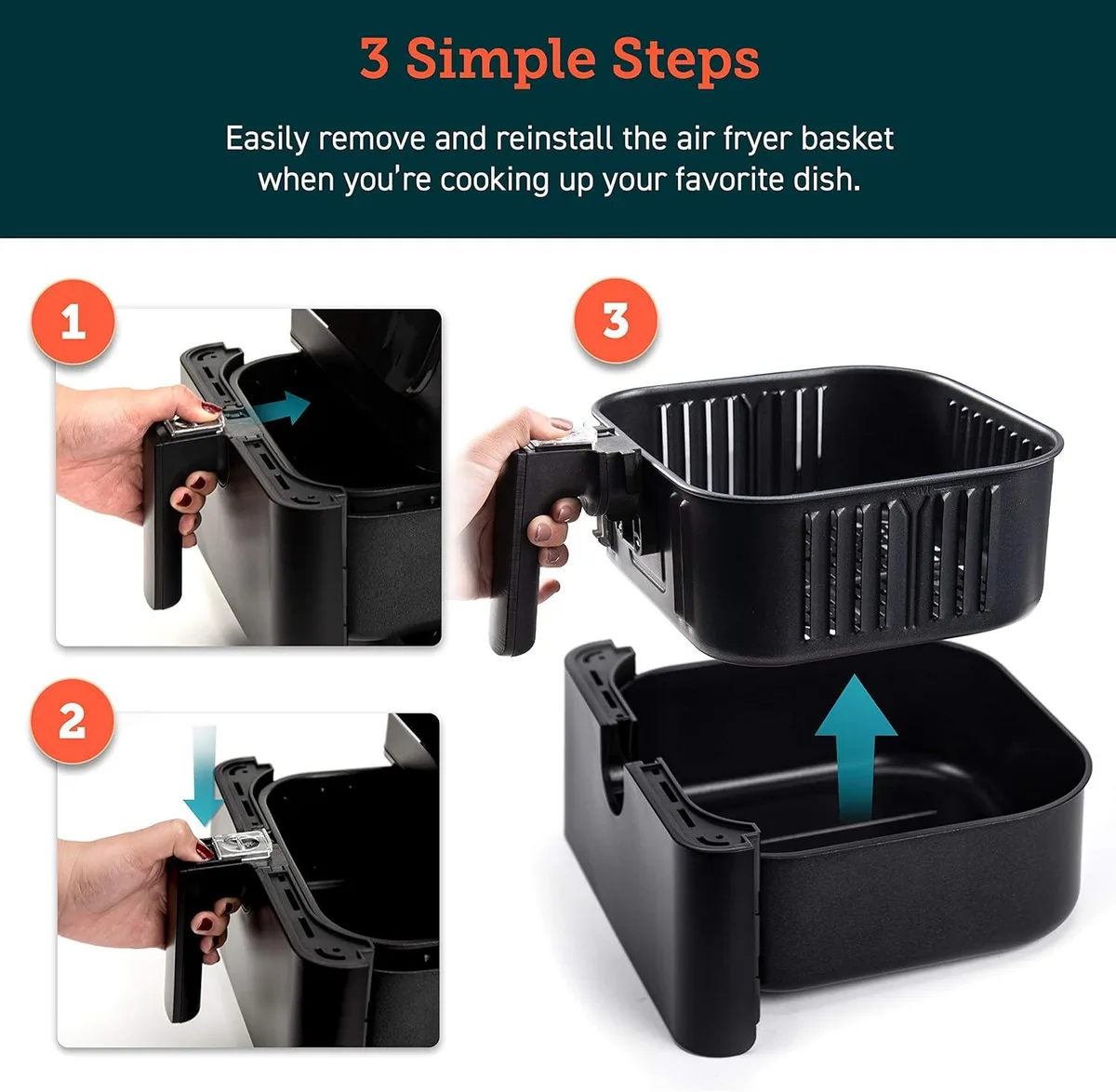
Image source: Bing (Web (fair-use with source credit))
If you’re buying a third-party tray, prioritize sellers that list exact tray dimensions, not just model compatibility. Avoid listings that say "universal fit" or "one size fits most" for compact 2, 4qt air fryers, as these almost always overhang. For peace of mind, stick to trays with a 30-day no-questions-asked return policy, so you can test the fit before committing.
Frequently Asked Questions About Oversized Air Fryer Trays
Can I cut an oversized air fryer tray to fit?
No, never cut PTFE, ceramic, or other non-stick coated trays, as this releases toxic fumes when heated above 450°F (232°C). You can sand uncoated stainless steel or aluminum trays carefully, but this risks rough edges that damage your basket. Returning the tray or using a silicone liner is far safer.
Will a slightly oversized tray ruin my air fryer?
Yes, even ¼ inch of overhang blocks the minimum required air circulation gap. This causes uneven cooking, burnt food, and premature wear on your basket’s interior coating. Over time, the scraping tray can damage the heating element or trigger safety cutoffs, shortening your air fryer’s lifespan.
Do universal air fryer trays fit all models?
No, universal trays are sized for the most common 5, 6qt basket dimensions, so they almost always overhang compact 2, 4qt models. Aggregate reviews show 18% of universal tray returns are due to oversized fits, as of 2026. Always check exact tray dimensions against your basket’s interior specs before buying.
What should I do if my replacement tray won’t fit at all?
First, return the tray for a refund or exchange for the correct size, if it’s within the retailer’s return window. If that’s not possible, use a cut-to-fit food-grade silicone liner as a temporary fix, or order a custom-cut tray sized exactly to your basket’s interior dimensions.
Is sanding an oversized air fryer tray worth the risk?
Sanding is only safe for uncoated stainless steel or aluminum trays, and only if you use 220+ grit sandpaper and test fit every 30 seconds. Never sand non-stick coated trays, as this damages the coating and releases toxic fumes when heated. Even for uncoated trays, returns or custom cuts are lower-risk long-term solutions.