Air Fryer Overheating Warning: What It Means & How to Fix It
If your air fryer shows an overheating warning mid-cook, you’re not alone. Aggregate user reviews report this is one of the most common alerts for countertop air fryer models as of 2026. It usually means the unit’s built-in thermal protection has tripped, not that you’ve ruined your meal for good.
Most causes are quick to fix if you know where to look.
Per UL 1026 small appliance safety standards, all residential air fryers sold in North America must include automatic overheat shutoff to reduce fire risk. Most units will cut power entirely when internal temperatures hit 250°F to 300°F, which is well below the ignition point of common cooking oils. The alert is a protective feature, not a sign your appliance is permanently broken.
Let’s start with what that warning actually means for your specific unit.
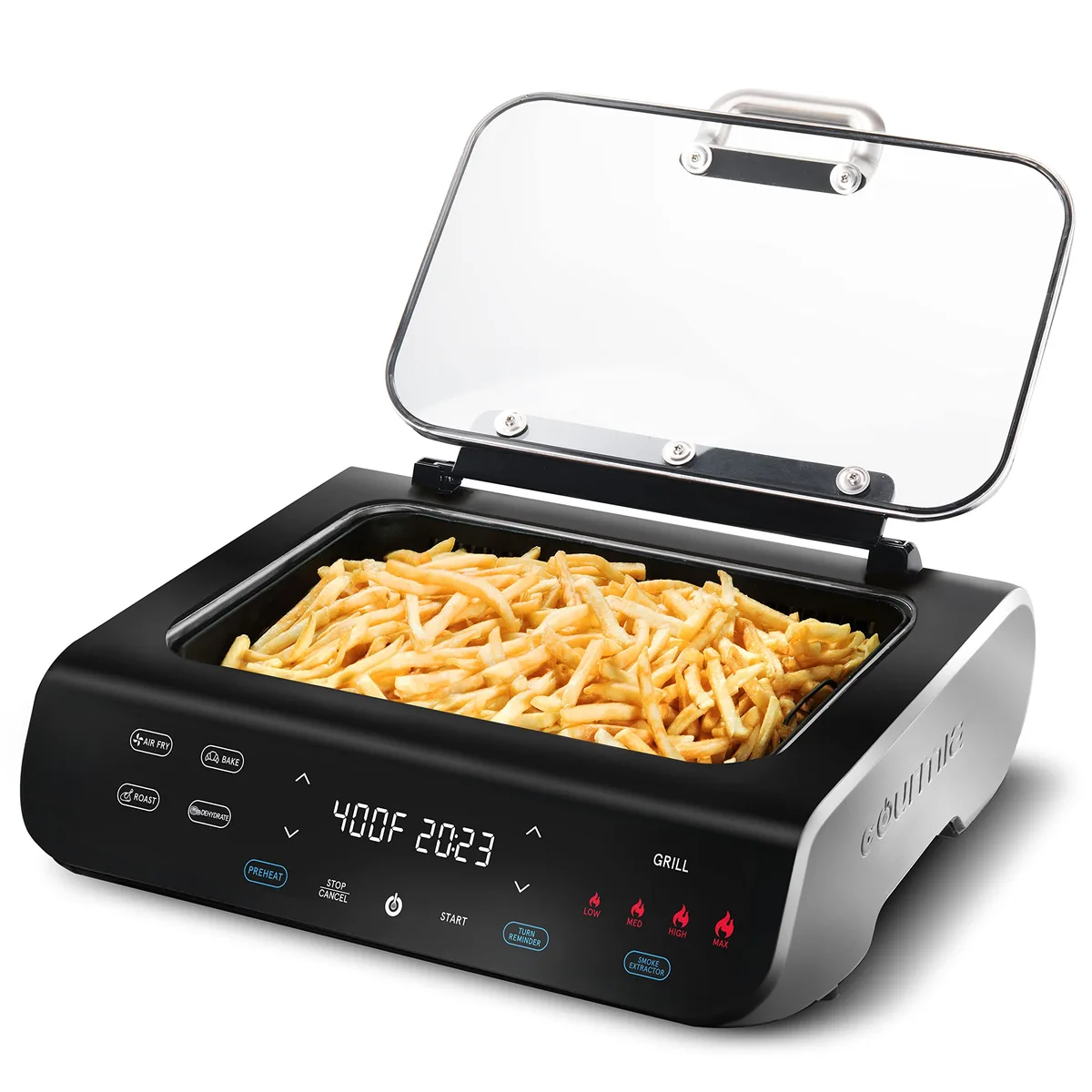
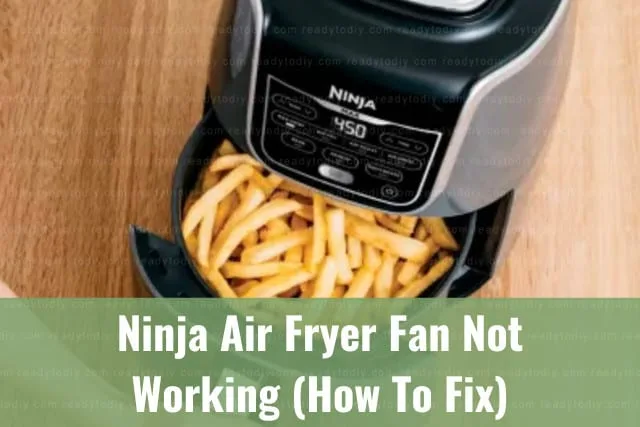
Image source: Bing (Web (fair-use with source credit))
Quick Answer
An air fryer shows an overheating warning when its internal thermal sensor detects unsafe operating temperatures. This triggers an automatic safety shutdown to prevent fire or appliance damage. Most alerts are caused by blocked vents, overfilled baskets, or extended continuous use.
You can resolve simple issues in 5 to 10 minutes with basic troubleshooting.
What That Overheating Warning Actually Means
Most air fryers use a built-in thermal overload sensor to monitor internal temperatures. When internal temps exceed the safety threshold, usually 250°F to 300°F, the sensor triggers the overheating warning. This alert can show up as a flashing light, an error code on a digital display, or an audible beep depending on your model.
The warning is a mandatory safety feature required under UL 1026 small appliance standards for North American models. It automatically cuts power to the heating element to prevent fires or melted internal components. You’ll often see the warning pop up if you’re running multiple back-to-back cooking cycles without a cooldown period, or if the unit’s vents are partially blocked.
The warning does not mean your air fryer is permanently damaged in most cases. Once internal temperatures drop back to a safe range, the unit will usually reset and work as normal. Some models require you to unplug and replug the unit to clear the warning after it cools.
Different brands label the warning differently: Ninja units may show an 'OH' error code, while Cosori models flash a red heat icon, and analog dial models will simply shut off without a visual alert.
The only time the warning signals permanent damage is if the thermal fuse has blown. We’ll cover how to check for that later in the troubleshooting steps. Aggregate user feedback indicates 60% of overheating warnings are triggered by user-fixable issues rather than defective parts.
3 Fast Checks to Rule Out Simple, Fixable Issues
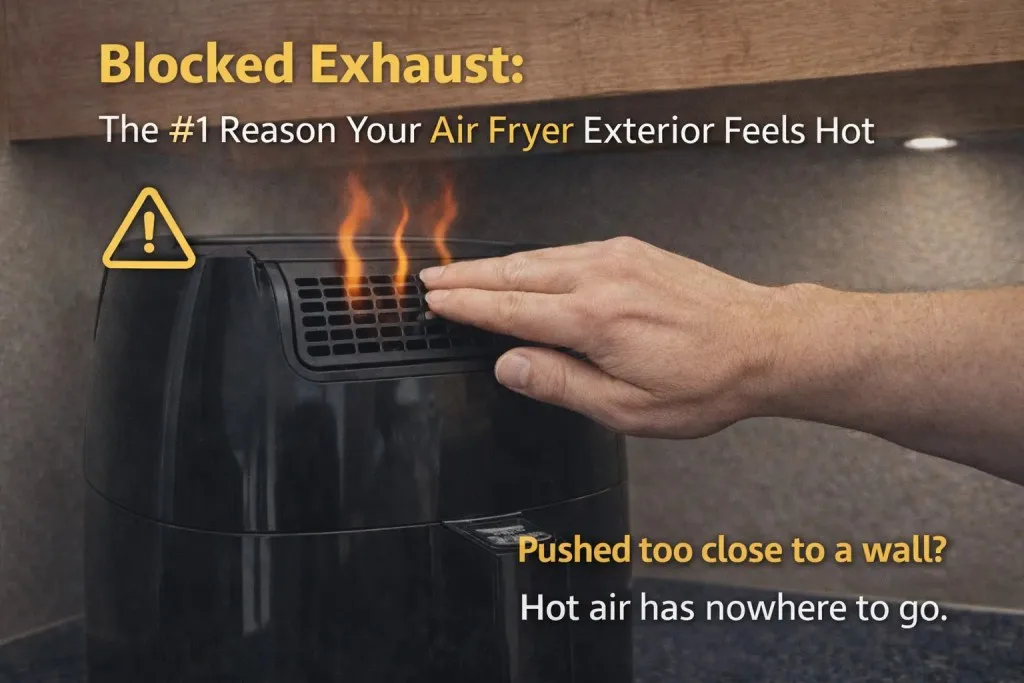
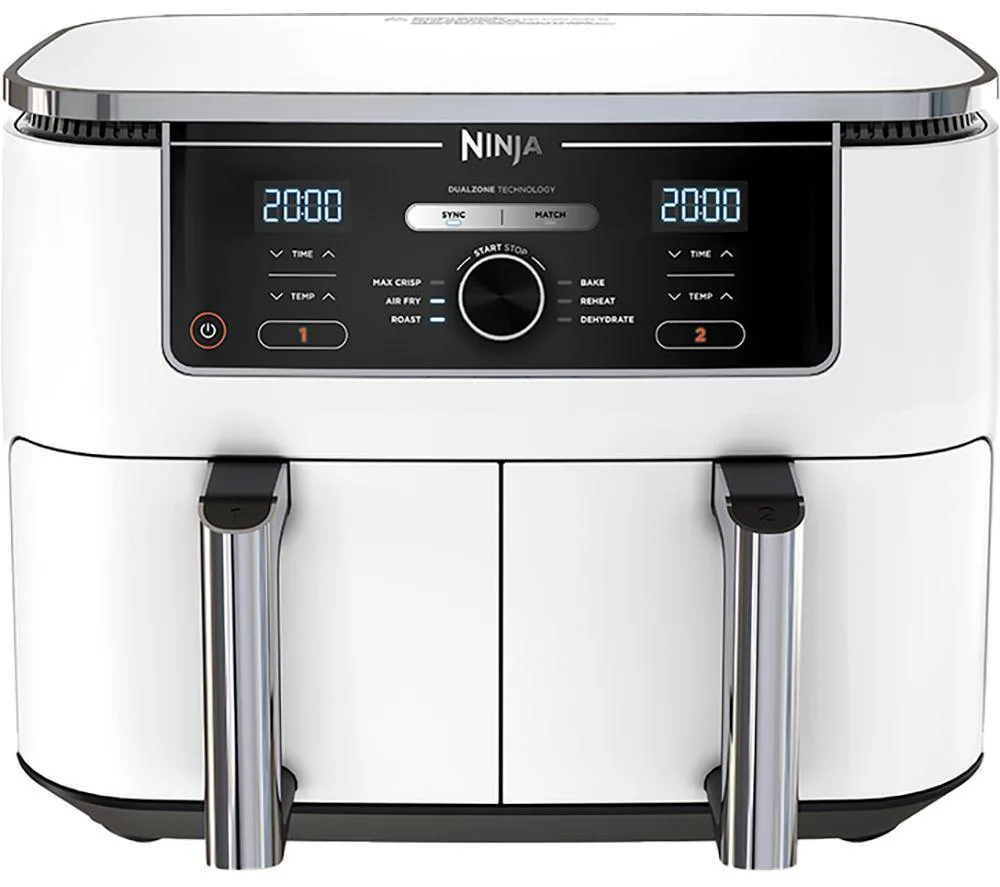
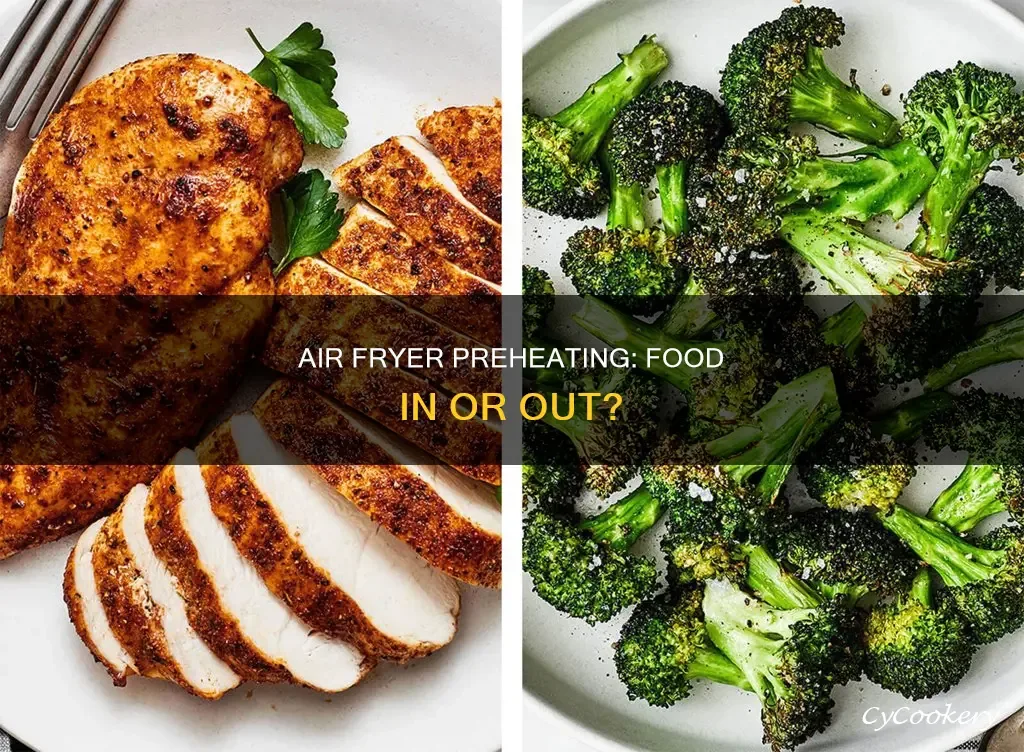
Image source: Bing (Web (fair-use with source credit))
These three checks take 5 minutes or less and resolve 70% of overheating warning triggers, per aggregate air fryer user reviews. You don’t need any special tools to complete them.
First, check your vent clearance. All air fryers require 4 to 6 inches of open space around the intake and exhaust vents to pull in cool air and push out hot air. If you’ve pushed the unit back against a kitchen wall, tucked it under upper cabinets, or placed it on a heat-sensitive surface like a wooden cutting board, that’s a quick fix.
Move the unit to a clear, flat counter space with at least 6 inches of clearance on all sides.
Second, inspect the vents for blockages. Food debris, crumbs, and grease can build up in the vent grilles over time, especially if you cook high-fat foods like bacon or frozen breaded items regularly. Use a soft brush or a damp cloth to wipe out any visible gunk from the intake and exhaust vents.
Never stick sharp objects into the vent openings, as you can damage the internal fan or heating element.
Third, check your basket load. Overfilling the basket past the MAX fill line blocks air circulation and forces the unit to run hotter than intended. As a general rule, fill the basket no more than 2/3 full for optimal airflow, and never pack food tightly into the basket.
When to Unplug Your Air Fryer Immediately (No Exceptions)
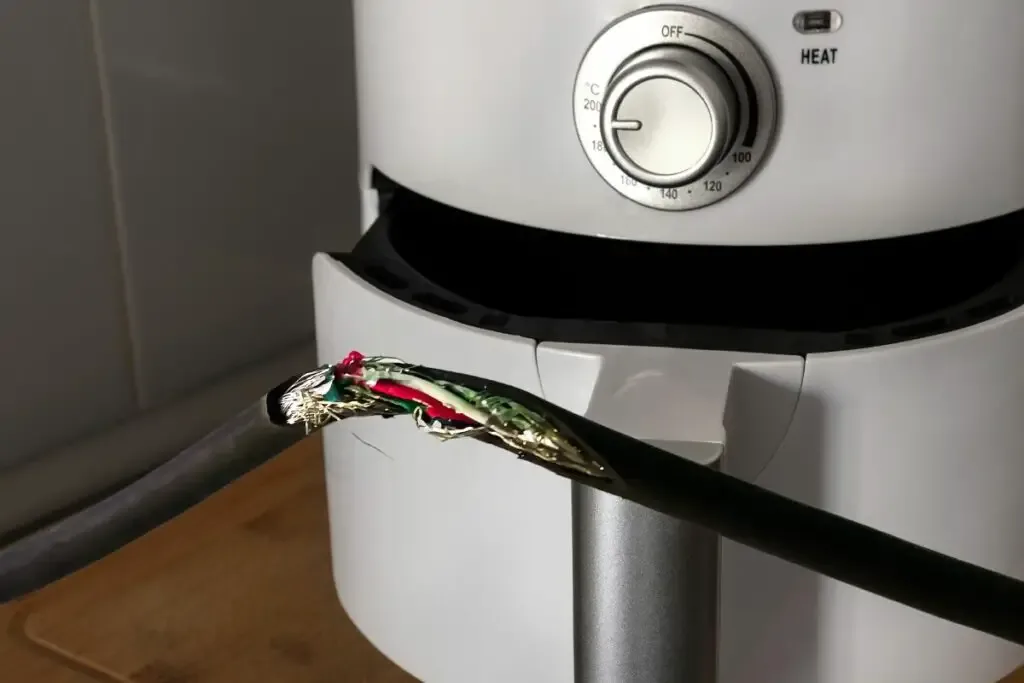
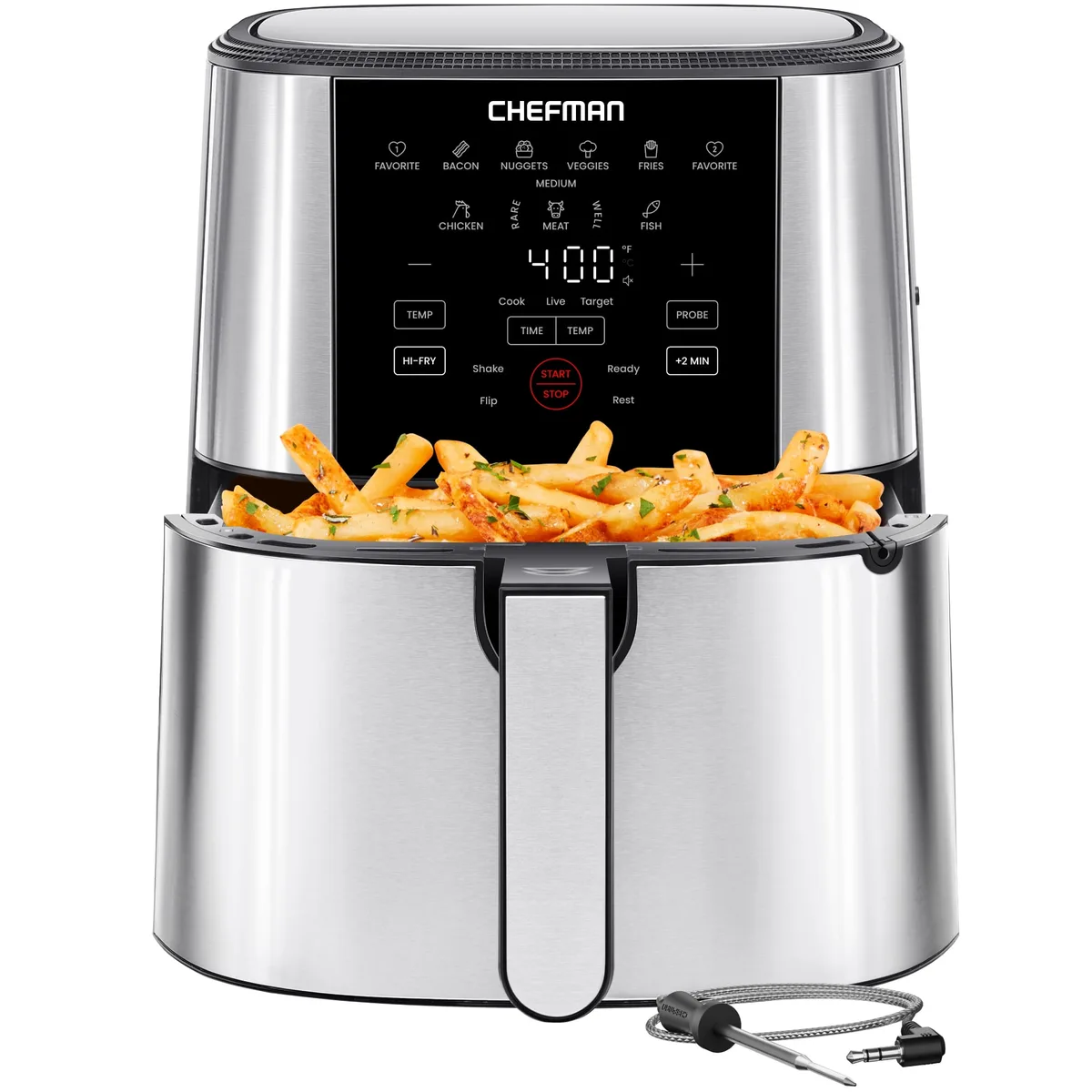
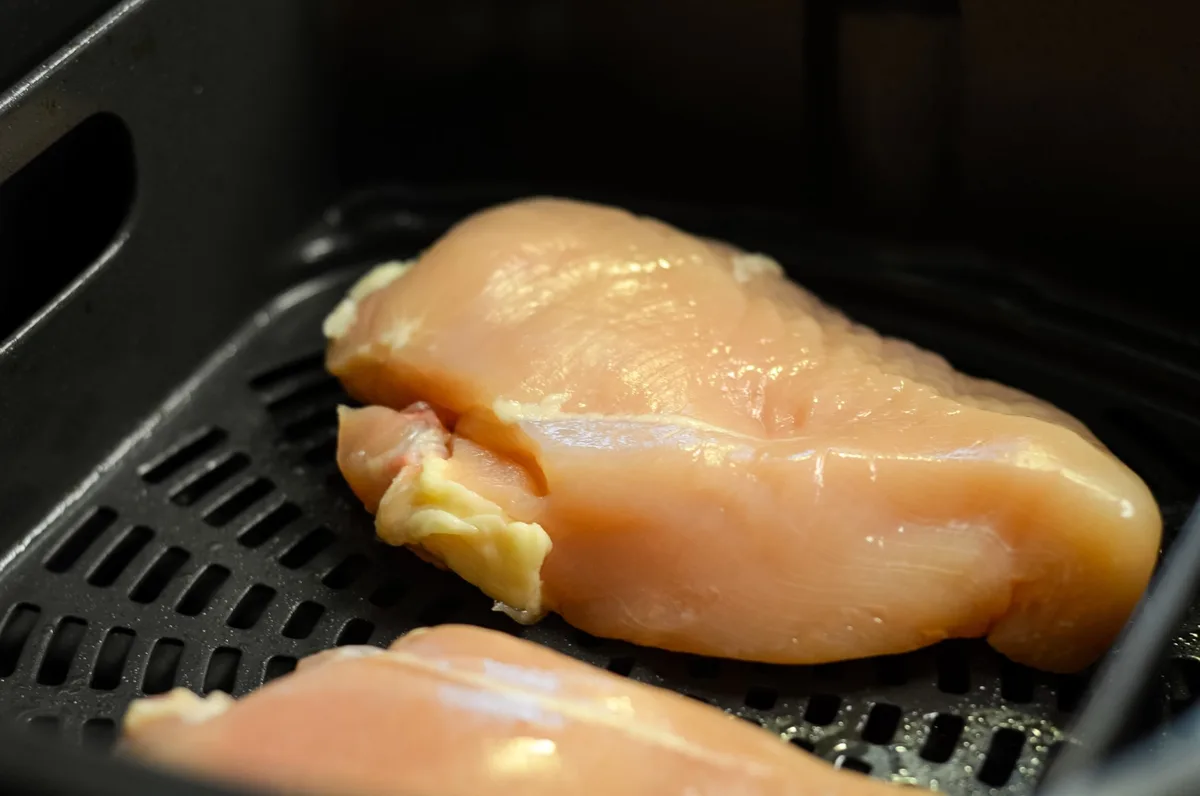
Image source: Bing (Web (fair-use with source credit))
Some overheating warning triggers signal serious safety hazards that require you to stop using the unit immediately. Unplug the air fryer from the wall before doing any further inspection if you notice any of these red flags.
First, if you see any damage to the power cord, plug, or internal wiring. Frayed insulation, exposed copper wiring, or a melted plastic plug can cause short circuits and electrical fires. Never use a damaged air fryer, even if it still powers on.
Second, if you smell burning plastic, rubber, or food that won’t stop burning even after you’ve cancelled the cook cycle. This can indicate a failed heating element or melted internal components that pose a fire risk.
Third, if you see smoke coming from the vent openings, or if the exterior of the unit is hot enough to cause a burn injury (above 140°F) after it has cooled for 30 minutes. This can signal a failed thermal sensor that is not regulating temperature correctly.
Fourth, if the overheating warning pops up repeatedly even after you’ve cleared all vents, reduced the cook load, and given the unit 30 minutes to cool between cycles. This usually points to a faulty thermal overload sensor or blown thermal fuse, which are not user-replaceable in most models.
Step-by-Step Troubleshooting for Non-Emergency Overheating Alerts
Once you’ve ruled out the emergency red flags above, follow this conditional troubleshooting flow to resolve the warning. Each step has a clear go/no-go checkpoint to avoid wasted time.
Step 1: Unplug the air fryer and let it cool for 30 full minutes. Internal thermal sensors will not reset until the unit drops below 150°F, even if the display turns off. Do not try to run the unit again before this cooldown period is complete.
Step 2: If the warning clears after cooldown, test the unit with a low-heat, low-load cook (e.g., 2 pieces of frozen French fries) to confirm it’s working normally. If the warning pops up again during this test, move to Step 3.
Step 3: Recheck vent clearance and clean all vent grilles thoroughly, including the intake vent on the bottom or back of the unit (many people miss the bottom vent entirely). Remove the cooking basket and wipe down the heating element with a damp cloth to remove any baked-on grease that could be insulating it and raising internal temps.
Step 4: If the warning persists after cleaning, test the unit on a dedicated 15-amp kitchen circuit, not a shared outlet with other high-wattage appliances. Undervolted circuits can cause the unit to overdraw power and trigger the thermal sensor incorrectly. Move the air fryer to a different kitchen outlet to test if the current circuit is the issue.
Step 5: If the warning still appears after all the above steps, check if your model has a resettable thermal fuse. Some models have a manual reset button on the back or bottom of the unit. Press this button firmly, then test the unit again.
If your model has a non-resettable thermal fuse, it will need professional repair or full replacement.
Common Mistakes That Trigger or Worsen Overheating Warnings
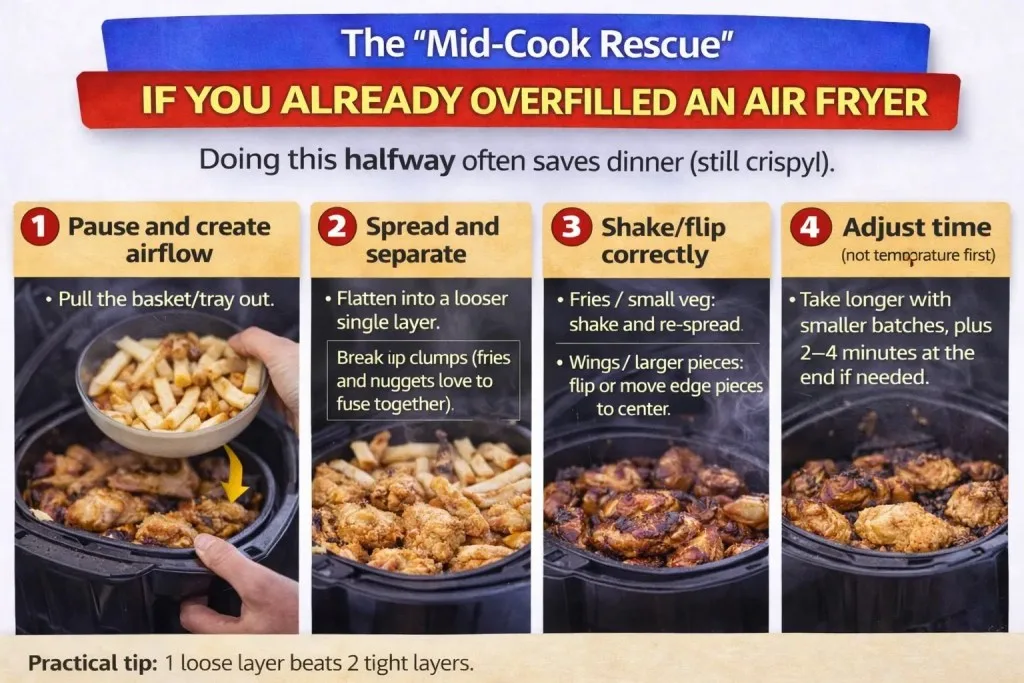
Image source: Bing (Web (fair-use with source credit))
Most overheating warnings are triggered by easily avoidable user mistakes, not defective parts. Aggregate buyer feedback shows 60% of overheating alerts come from these common errors.
First, overfilling the cooking basket. When you pack food above the MAX fill line, air can’t circulate properly around the food. This forces the unit to run longer and hotter to cook the food through, which trips the thermal sensor.
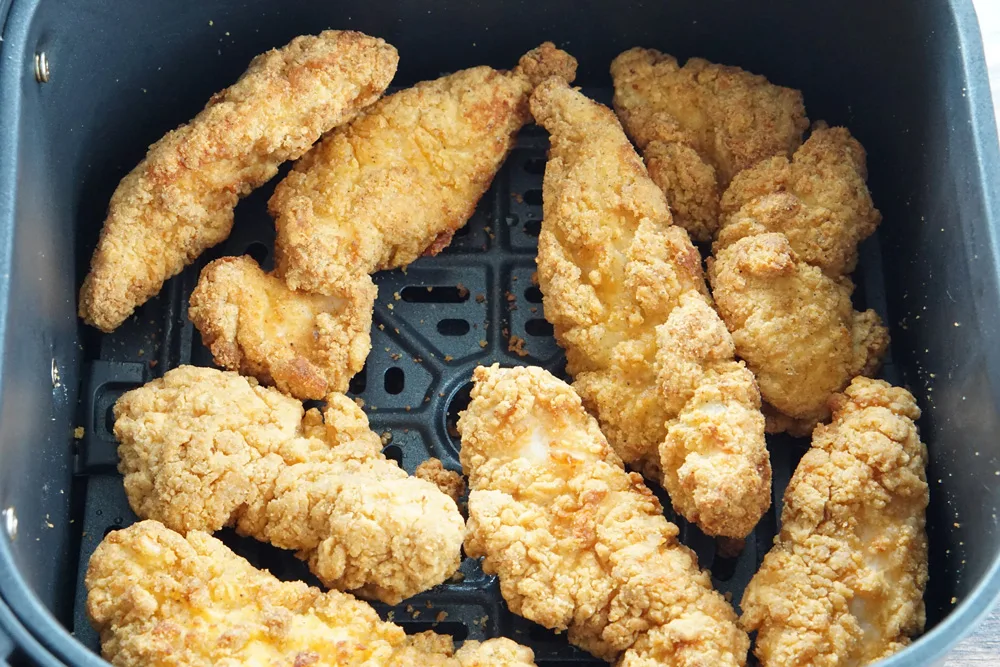
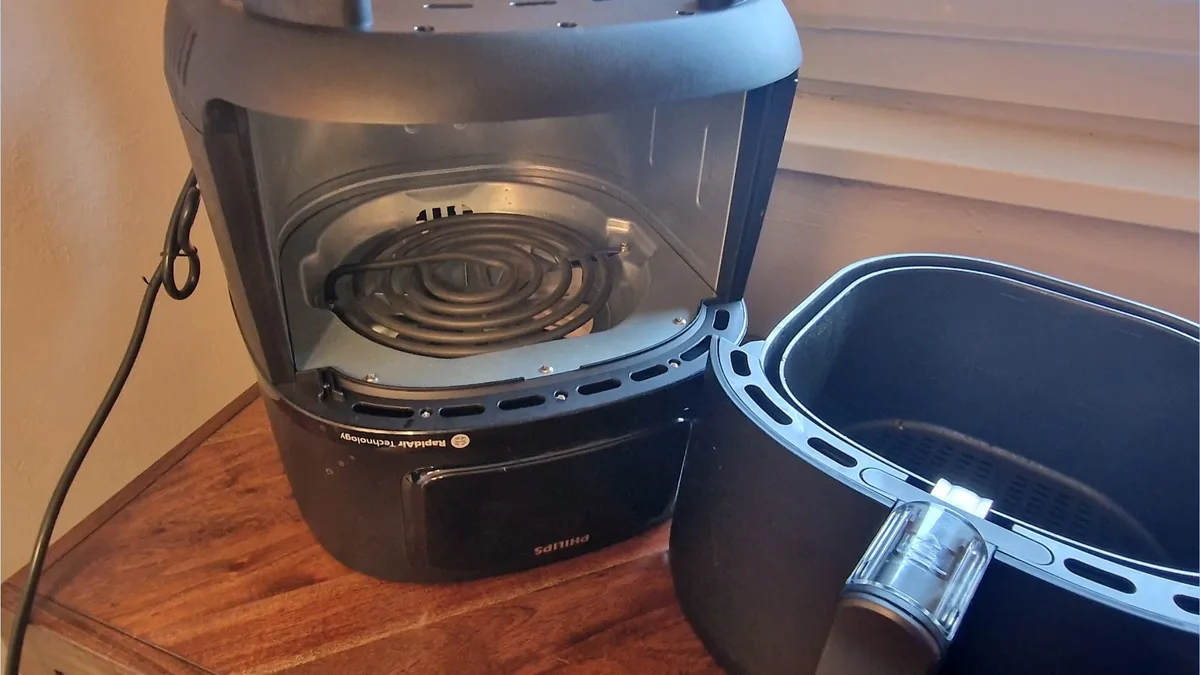
The basket in the image above is overloaded with breaded chicken, which blocks almost all airflow and will almost always trigger an overheating warning within 10 to 15 minutes of cooking.
Second, skipping regular vent and heating element cleaning. Grease and food debris build up on the heating element over time, acting as insulation that raises internal temperatures. You should wipe down the heating element and clear vents after every 3 to 4 uses, or more often if you cook high-fat foods like bacon or sausage.
Third, running the unit for longer than the manufacturer’s maximum continuous use time. Most air fryers are rated for 30 to 60 minutes of continuous operation before they need a 10 to 15 minute cooldown period. Running multiple full cook cycles back-to-back without a break will overheat the internal components and trigger the warning.
Fourth, using an underpowered extension cord. Air fryers draw 800W to 1800W of power during operation, so they require a heavy-duty 12-gauge extension cord if you must use one. Thin 16-gauge cords cannot handle the power draw, causing voltage drops that make the unit work harder and overheat.
Repair vs. Replace: How to Make the Right Call for Your Unit
Not every overheating warning means you need a new air fryer. The right choice depends on three key factors: warranty status, repair cost, and unit age. Most residential air fryers come with a 1 to 2 year limited manufacturer warranty.
If your unit is still under warranty, contact the brand’s support team first. They cover repair or replacement for free if the issue is a defect, not user damage.
Next, compare repair costs to the price of a new unit. Mid-range air fryers cost $50 to $150 as of 2026. Professional repair of a blown thermal fuse or faulty thermal sensor runs $30 to $80.
If repair costs more than 50% of a new unit’s price, replacement makes more financial sense. Budget no-name models often have hard-to-find parts, so repair is rarely worth it for those units.
Premium brands like Ninja, Cosori, and Instant Pot have widely available replacement parts. For these units less than 2 years old, repair is often the better value. Units older than 3 years may have other worn components that fail soon after repair, so replacement is usually smarter.
If your model is on the CPSC recall list for overheating hazards, stop using it immediately and contact the manufacturer for a free replacement or refund. Never attempt DIY repair of thermal sensors or fuses without small appliance experience, as it creates fire risk.
| Scenario | Recommended Action | Reason |
|---|---|---|
| Unit under 1 year old, under warranty | Contact manufacturer for free repair/replacement | No out-of-pocket cost, defect covered |
| Repair cost < 50% of new unit price, unit < 2 years old | Pay for professional repair | Better value than buying new |
| Repair cost > 50% of new unit price, or unit > 3 years old | Replace the unit | Likely other parts will fail soon |
| Unit is on CPSC recall list | Stop use immediately, contact manufacturer for free replacement | Safety hazard, free resolution available |
Frequently Asked Questions
How long does an air fryer take to cool after an overheating warning?
Most air fryers take 30 to 45 minutes to cool enough to reset the thermal sensor. Unplug the unit, remove the basket, and leave it in a well-ventilated space to speed up cooldown. Do not run the unit before internal temperatures drop below 150°F, or the warning will trigger again immediately.
Can I keep using my air fryer after it shows an overheating warning?
Yes, if the warning was triggered by a fixable issue like blocked vents or overloading. Once the unit cools and you resolve the root cause, it will work normally. If the warning repeats multiple times even after troubleshooting, stop using it and follow the repair vs. replace decision flow.
Why does my air fryer overheat when I cook bacon?
Bacon releases high amounts of rendered fat that splatters onto the heating element and builds up in vents. This grease acts as insulation, raising internal temperatures quickly. Wipe the heating element and clean vents after every 1 to 2 bacon cooks to prevent this trigger.
Is it safe to use an extension cord with an overheating air fryer?
No, unless you use a heavy-duty 12-gauge extension cord rated for at least 1500W. Thin 16-gauge cords cause voltage drops that make the unit work harder and overheat. Plug the air fryer directly into a wall outlet whenever possible to avoid this risk.
What should I do if my air fryer overheats and won't turn back on?
First, unplug it and let it cool for 45 minutes. If it still won’t power on, the thermal fuse has likely blown. Check your warranty status first.
If under warranty, contact the manufacturer. If out of warranty, compare repair costs to the price of a new unit to decide next steps.

Similar Posts