Perfect Crispy Curly Fries in an Air Fryer
If you’re staring at a bag of frozen curly fries and your air fryer, you're probably wondering if this is the magic combo or a one-way ticket to soggy potato disappointment. The answer isn't a simple yes or no. Getting that perfect curly fry texture, crispy outside, fluffy inside, depends almost entirely on the type of air fryer you own and how you use it.
Based on analysis of manufacturer specs and user reviews, a key factor is your appliance's wattage and its basket shape. Models around 1700 watts or higher, common as of 2026, provide the intense, immediate heat blast needed to crisp the complex shapes effectively. But using it wrong can lead to the very problem you're trying to avoid.
Let's break down why this specific matchup is so tricky and how to get it right.
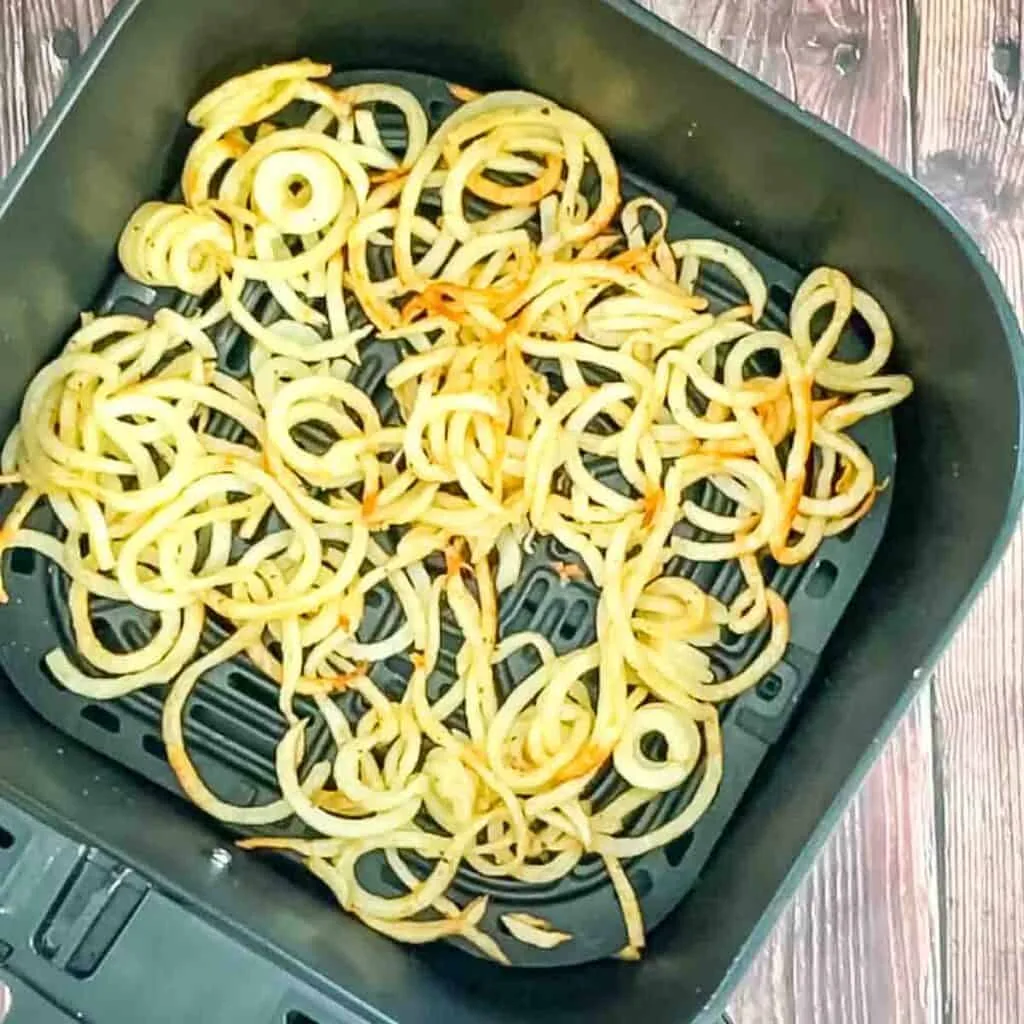
Image source: Bing (Web (fair-use with source credit))
Quick Answer
Yes, you can cook curly fries in an air fryer. Use a high-wattage model. Preheat to 400°F.
Toss fries lightly in oil. Arrange them in a strict single layer. Cook for 12 to 18 minutes.
Shake the basket halfway through. This method gives you crispy restaurant-style results.
The Curly Fry Conundrum: Why Your Air Fryer Isn’t Always the Answer
Your air fryer excels at flat, uniform foods. Think chicken wings or french fries. Curly fries are a different beast.
Their nooks and crannies are a blessing and a curse. They create more surface area for crisping, which is good. But they also create pockets where hot air can't circulate, which is very bad.
That's why the default "fries" button often fails here. It assumes a standard load and shape. Curly fries need a more aggressive, targeted approach to overcome their design.
If your air fryer can't generate and move enough heat quickly, the fries will steam in their own moisture. You'll end up with a chewy, soft mess.
The Short Answer: It's All About Space and Heat
Two non-negotiable principles govern success: space for air and speed of heat.
First, space. Every single curl needs exposure to the circulating hot air. If they're piled on top of each other, they will steam instead of crisp.
This is the single biggest mistake people make. We'll show you exactly what that looks like in a moment.
Second, heat. A high-wattage heating element (typically 1500W or more) can recover temperature quickly after you add cold food. A lower-wattage unit will struggle.
The air inside cools down, the fries start to steam, and by the time the heater catches up, the texture is ruined. It's why some air fryers nail curly fries and others consistently disappoint.
Anatomy of a Perfect Curly Fry: Two Key Components
To understand the process, you need to know what you're working with. The system has two parts: the machine and the food itself. Optimizing one without the other won't give you the best outcome.
Component 1: The Air Fryer Itself
Think of your air fryer not as a mini-oven, but as a powerful, focused convection system. The core mechanism is a high-speed fan that blows superheated air around a small, enclosed basket. This rapid circulation is what creates the "fry" effect with minimal oil.
The critical parts for curly fries are the heating element wattage and the basket geometry. Wattage determines how fast and hot the air gets. Basket geometry, whether it's round, square, or rectangular, dictates how evenly that air flows around irregular shapes.
A square or rectangular basket often gives you a better, flatter cooking surface for arranging curly fries than a deep, round bucket.
Component 2: The Curly Fry (Frozen vs. Homemade)
Your starting point drastically changes the game.
Frozen curly fries are par-cooked and coated. That coating is designed to crisp up. The challenge is that they're often stuck together in a frozen clump.
You must break them apart while still frozen. If you don't, you guarantee cold spots and steaming. They also contain ice crystals, which is why preheating is non-optional, you need to sear the surface fast.
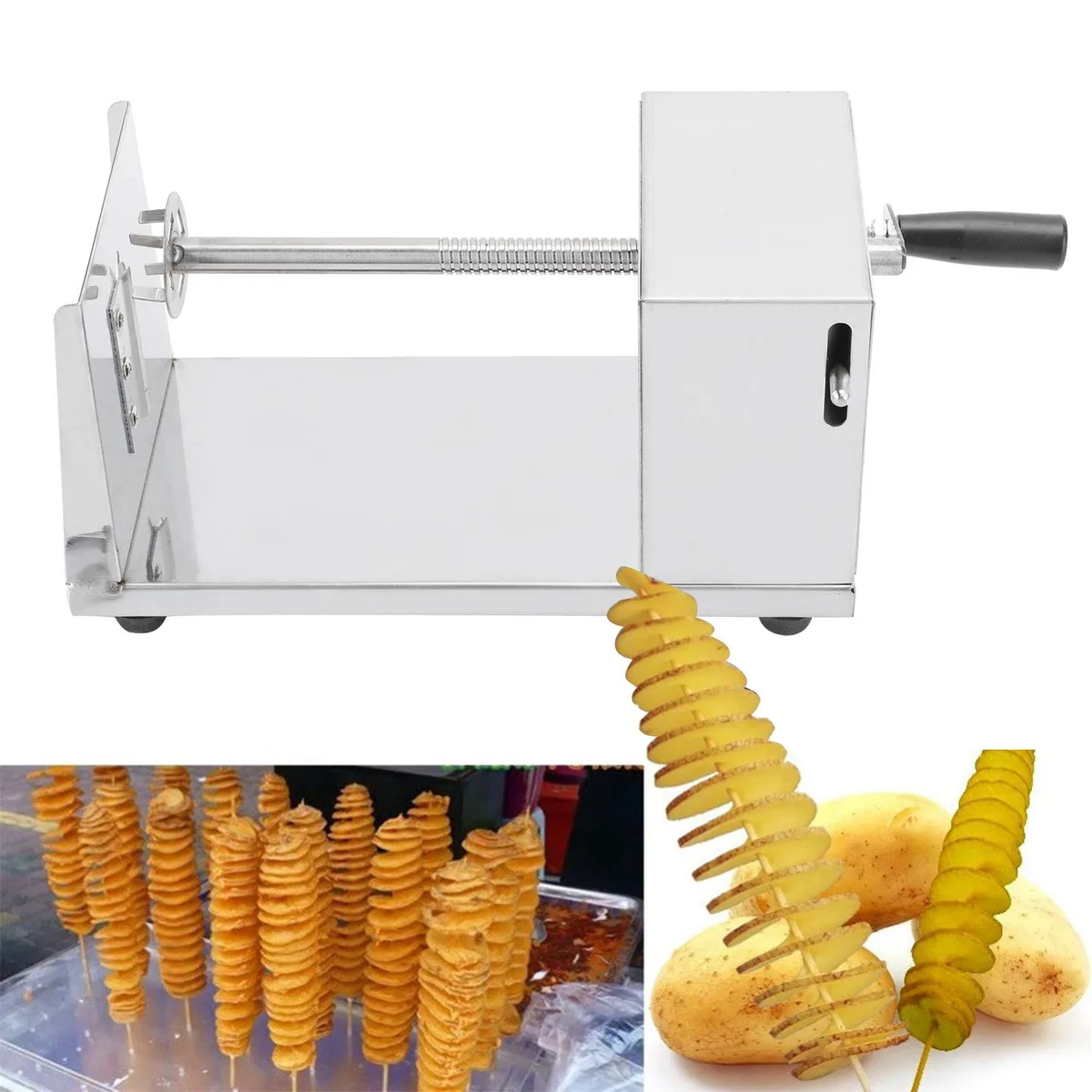
Homemade curly fries start with a raw potato. You'll need a spiralizer or a specific curly fry cutter. The advantage is total control.
You can pat them very dry and coat them evenly with a light starch (like cornstarch) and oil for maximum crispness. The disadvantage is time and added steps. They also lack the commercial coating, so they can dry out more easily if overcooked.
For a fantastic crispy side to pair with your fries, consider a classic creamy chicken macaroni salad.
Side-by-Side: How Different Air Fryer Types Handle Curly Fries
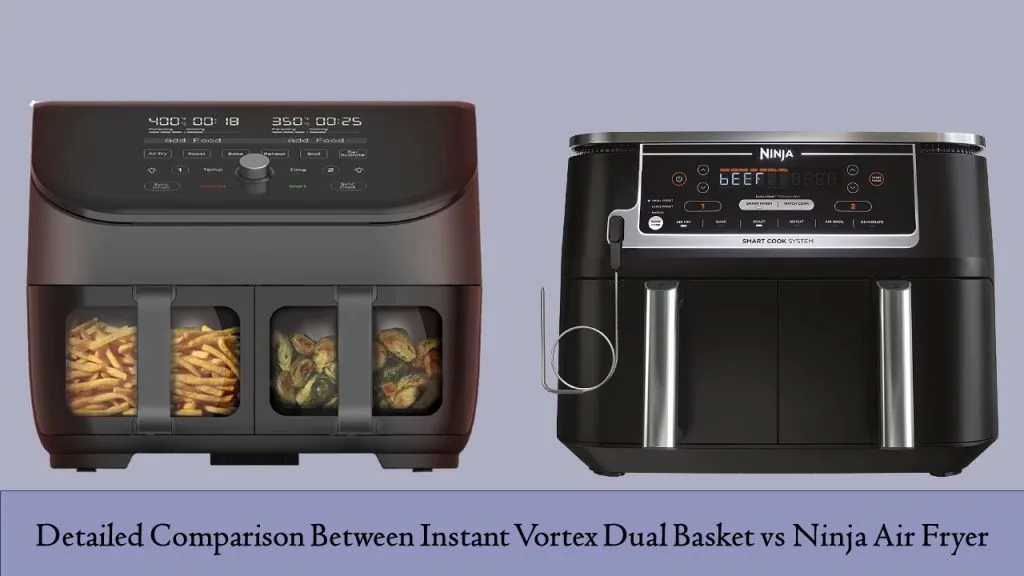
Not all air fryers are built the same. The market has largely settled into two dominant designs, and they perform very differently with tricky foods like curly fries.
The Basket-Style Air Fryer
This is the classic "pull-out basket" design. It's a square or round mesh basket that slides into a unit with the heating element and fan on top.
- Best for: Small to medium batches, superior crispiness.
- Why it works (or doesn't): The close proximity of the heating element (usually directly above the food) delivers intense top-down heat. This is great for browning. However, the deep basket can make arranging a single layer of curly fries challenging. If the basket is too full, the fries at the bottom get shielded from the primary heat source and steam.
The Oven-Style (Bucket) Air Fryer
This looks more like a small toaster oven with a front door and often multiple racks. The heating element and fan are usually in the back or top rear.
- Best for: Larger batches, more even cooking, versatility.
- Why it works (or doesn't): The wider, flatter cavity allows you to spread curly fries out on a rack, giving every piece full 360-degree exposure. This is ideal for air circulation. The potential downside is that the heat source is farther away, so it may not create quite the same intense, immediate sear as a basket-style, depending on the model's wattage.
Here’s a quick comparison to help you identify which type you have and what to expect:
| Feature | Basket-Style | Oven-Style (Bucket) |
|---|---|---|
| Typical Capacity | 2-6 quarts | 5-10+ quarts |
| Curly Fry Layout | Single layer in a deep basket. Can be tricky. | Single layer on a wide, flat rack. Often easier. |
| Heat Source | Directly above food. | Usually in rear/top. |
| Best Outcome | Potentially crispier tops. | Potentially more even cooking. |
| Biggest Risk | Steaming at the bottom of a crowded basket. | Drying out if overcooked or under-powered. |
For other great uses of your oven-style air fryer, try making a batch of perfectly melted air fryer nachos as an appetizer.
The Crucial Comparison: Air Fryer Specs for Curly Fries
Now that you know the two main air fryer types, let's look under the hood. The technical specs on the box directly determine your curly fry outcome. You can't change your machine's specs, but you can understand its limits and work with them.
Wattage Matters More Than You Think
Think of wattage as your air fryer's horsepower. It determines how quickly the heating element can generate and maintain high temperatures. For curly fries, this is critical.
A unit with 1700 watts or more (common in newer models) can blast the basket with heat the moment you add frozen fries. It recovers temperature fast after the cold load. A unit under 1400 watts will likely struggle.
The interior temperature drops, the fries start to steam, and you get a soggy result before the heat catches up. Check your appliance's label or manual for this number.
Capacity and Basket Shape Are Everything
Capacity is a double-edged sword. A large 6-quart basket seems great for a family. But if you only fill it a quarter of the way with curly fries, you're wasting energy and potentially creating uneven airflow.
More importantly, is the basket deep or wide?
A deep, narrow basket forces you to stack curly fries. A wider, shallower basket lets you spread them out. Our research shows that a rectangular or square basket, even in a smaller 3-quart size, often yields better results for curly fries than a deep 5-quart round one because of that single-layer rule.
Helpful Features vs. Gimmicks
Look for a few key features that genuinely help.
A "Frozen" or "Reheat" preset is useful. These programs often start with a higher initial temperature to quickly sear the surface of frozen food. A simple timer and temperature dial are actually preferable for fine-tuning.
A shaking reminder alert is a nice bonus, but don't rely on it. You need to visually check for doneness anyway. Non-stick, dishwasher-safe baskets are a practical must for cleanup, given the starchy potato coating.
Avoid getting distracted by dozens of presets for foods you'll never cook. Focus on the core performance: high max temperature, responsive controls, and a basket you can arrange food in easily.
The Pro's Method: Your Step-by-Step Guide to Crispy Curly Fries
Let's translate all that theory into action. This method works for both frozen and homemade curly fries, with a few noted adjustments. It prioritizes technique over guesswork.
Step 1: Preheat and Prep
Always preheat your air fryer. Set it to 400°F (205°C) and let it run for 3 to 5 minutes. This ensures the cooking environment is aggressively hot from the second the food goes in.
While it preheats, prep your fries. For frozen, break apart any clumps in the bag. For homemade, ensure they are patted completely dry with a paper towel.
Place them in a large bowl.
Step 2: The Oil Toss (Less is More)
Add one to two tablespoons of a high-smoke-point oil to the bowl. Avocado, canola, or refined peanut oil are great choices. Do not use aerosol cooking spray directly on a non-stick basket, as it can damage the coating over time.
Toss the fries thoroughly until every piece has a faint, shiny gloss. For extra-crispy homemade fries, add a teaspoon of cornstarch to the bowl before tossing. This creates a craggier, crispier surface.
Step 3: The Single-Layer Rule
This is the most important step. Carefully place the fries into the preheated basket or on the rack. They must not touch or overlap.
If you have too many fries for one layer, cook in batches. Yes, it takes longer. No, there is no workaround.
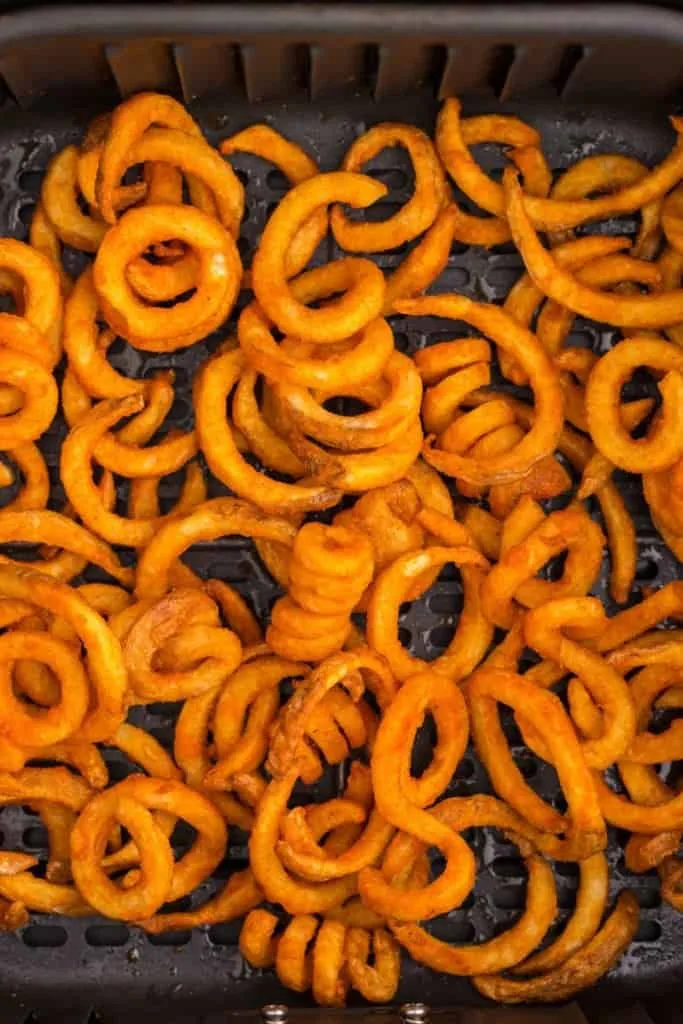
Crowding is the guaranteed path to failure. The photo below shows exactly what you're trying to avoid.
Step 4: The Mid-Cook Shake
Set the timer for 8 minutes. When it goes off, pull the basket (use oven mitts) and shake it vigorously. For oven-style models, carefully flip the fries with tongs.
This reorients the curls so hidden surfaces get exposed to the hot air.
This shake is non-negotiable for even cooking. It prevents the fries on the bottom from steaming and the ones on top from burning.
Step 5: The Final Check
After shaking, cook for another 4 to 10 minutes. The total time will be 12 to 18 minutes. Start checking at the 12-minute mark.
Look for deep golden-brown color and listen for a light, crispy sound when you move them.
Cook times vary wildly by model wattage and fry thickness. Trust visual cues over the clock. When they look perfect, transfer them immediately to a plate.
Fries left in the hot basket will continue to cook and can become overdone.
3 Common Mistakes That Lead to Soggy or Burnt Fries
Understanding what goes wrong is half the battle. These three errors account for nearly all disappointing air fryer curly fry results.
Mistake #1: Overcrowding the Basket
We've said it repeatedly because it's that critical. Overcrowding blocks airflow. The fries at the bottom steam in the moisture released from the fries above.
You get a pile of pale, limp potatoes.
The fix is simple. Cook in batches. It feels tedious, but it's the only way to achieve the texture you want.
Your second batch will cook even faster since the unit is already at peak temperature.
Mistake #2: Skipping the Preheat
Adding frozen food to a cold air fryer is a disaster. The appliance spends the first several minutes just trying to get back to temperature. During that time, your fries are thawing and steaming in a lukewarm, humid environment.
Always take the extra three minutes to preheat. It ensures a strong sear from the start, which locks in texture.
Mistake #3: Using the Wrong Oil (or Too Much)
Extra virgin olive oil has a low smoke point. At 400°F, it can burn and create bitter, smoky flavors. Avoid it for this high-heat application.
Using too much oil is just as bad. The excess will drip to the bottom of the basket and smoke, or it will make the fries greasy instead of crispy. One to two tablespoons for a standard batch is plenty.
The goal is a light coating, not a deep fry.
For a perfectly cooked protein to go with your fries, try these easy air fryer chicken tacos.
So, Should You Use an Air Fryer for Curly Fries? A Final Verdict
It depends on your goals, your machine, and your patience. Let's break down the final decision points.
Best For: The Quick, Crispy Snack
Your air fryer is the best tool for making one or two servings of frozen curly fries quickly. If you have a high-wattage model and follow the single-layer rule, you can get drive-through quality crispiness in under 15 minutes with far less oil and mess than deep frying.
It's also excellent for reheating leftover curly fries, reviving them to near-original crispness in just a few minutes. This makes it a fantastic appliance for fast snacks and sides.
Consider an Alternative: The Big-Batch Oven Method
If you're feeding a crowd, your conventional oven might be better. You can fit multiple baking sheets in at once, cooking a large volume in roughly the same time. The trade-off is that oven-cooked curly fries often aren't quite as uniformly crispy as the best air fryer results.
The convection bake setting on your oven is a good middle ground. It mimics the air fryer's method on a larger scale. Just be sure to flip the fries halfway through for even browning.
The Bottom-Line Recommendation
For most home cooks, the air fryer is a winning choice for curly fries. The key is managing expectations and technique. Don't expect to dump a full bag into a small basket and get perfect results.
If you own a basket-style air fryer, be militant about the single layer. If you own an oven-style model, make full use of its wide rack. Preheat every time.
Use the right oil. Cook in batches if needed.
When done right, it delivers a fantastic, convenient result. When done wrong, it's a lesson in food science. Start with a small batch, follow the steps closely, and you'll nail it.
Pair your successful fries with a fresh Thai chicken salad for a satisfying meal with contrasting textures.
Frequently Asked Questions
Why are my air fryer curly fries not crispy?
They are likely overcrowded or under-preheated. Curly fries need maximum hot air circulation on all sides. If they are piled up, they steam.
If the air fryer isn't hot when they go in, they start to steam before crisping. Cook in a single layer and always preheat.
Can I cook homemade curly fries from scratch in the air fryer?
Absolutely. Spiralize a russet potato. Pat the curls extremely dry.
Toss with a little cornstarch and oil. Cook at 380°F for 12-16 minutes, shaking halfway. They'll be lighter and less coated than frozen fries, but deliciously crispy.
Do I need to flip curly fries in the air fryer?
You need to agitate them, but a full flip isn't always possible. For basket-style models, a vigorous shake works. For oven-style models with a flat rack, using tongs to turn them over is best.
The goal is to expose all surfaces to the heat.
How do I prevent curly fries from sticking to the basket?
A light coating of oil on the fries themselves is the best prevention. Avoid aerosol sprays directly on a non-stick basket. If sticking is an issue, a quick spritz of oil on the basket before preheating can help, but it's often not needed with enough oil on the food.
What's the best temperature for frozen curly fries?
400°F (205°C) is the ideal starting point. This high temperature quickly sears the exterior coating, locking in crispness. If you find the outside is browning too fast before the inside is hot, you can reduce to 380°F for the remainder of the cook time.
Can I cook other frozen snacks this way?
The same principles apply. Most frozen snacks, like potato nuggets or breaded veggies, need a single layer and a preheated air fryer for the crispiest outcome. Always check package instructions for recommended air fryer times and temperatures, as they can vary.
For another great frozen-to-fabulous idea, look up how to make a Chick-fil-A chicken sandwich at home.