Air Fryer Accessory Materials Guide: Non-Toxic Durable Picks
An air fryer accessory materials guide can save you from ruining dinner, wasting cash on flimsy gear, and avoiding weird chemical tastes in your food. Most people grab whatever cheap accessory is on sale without checking if it can handle 400°F air fryer heat. That’s a recipe for warped baskets and sticky food disasters.
As of 2026, these material mistakes are more common than ever.
Manufacturer specs confirm most air fryers run 350, 400°F for standard cooking, a temperature that melts low-quality plastic and degrades cheap non-stick coatings fast. Knowing which materials hold up is non-negotiable for regular air fryer users. Let’s start with the most common failures you’ll run into if you skip spec checks.
Image source: Web (Bing) / alibaba.com (Web image (fair-use with source credit))
Quick Answer
An air fryer accessory materials guide explains which materials hold up to high heat and safe food contact. The best options are food-grade high-heat silicone, 304/316 stainless steel, and PFAS-free parchment. Avoid low-grade plastic, cheap PTFE coatings, and uncertified silicone.
These materials resist warping, peeling, and chemical leaching at standard air fryer temperatures. Always check for FDA food-contact compliance before buying.
The Most Common Air Fryer Accessory Material Failures (And What to Buy Instead)
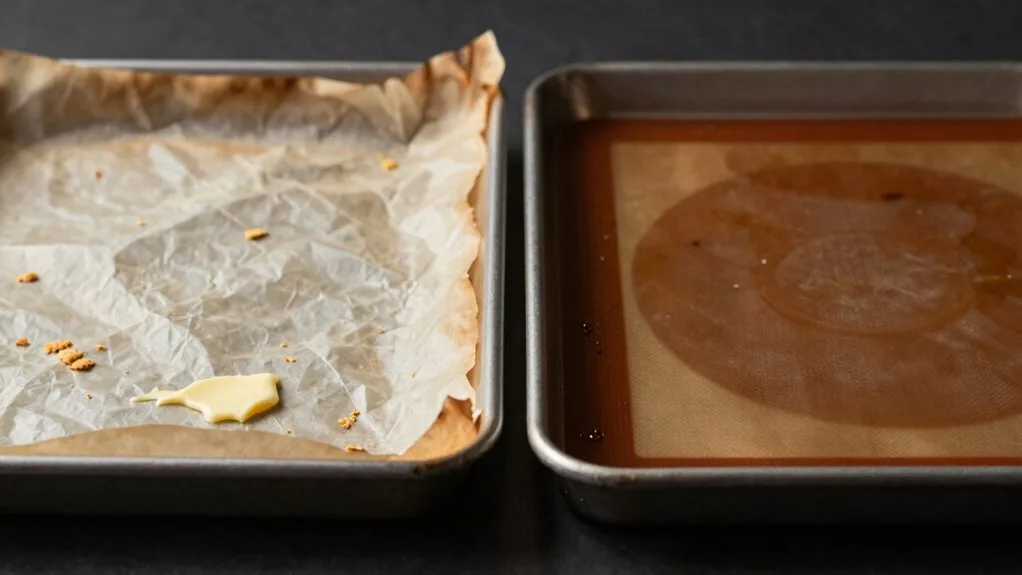
Image source: Bing (Web (fair-use with source credit))
The most frequent material failures come from accessories not rated for standard air fryer temperatures. Low-grade plastic handles and racks warp at 200, 300°F, a threshold most air fryers hit in 2 minutes or less. Cheap silicone melts or releases acrid odors above 400°F, while PTFE non-stick coatings peel and degrade rapidly above 260°F.
Uncoated carbon steel rusts after repeated washing, and thin parchment liners burn and blow into the heating element, a problem we cover in detail here.
Aggregate user reviews report cheap silicone mats releasing burnt plastic odors after just a few uses, and air fryer liners smell when heated is a top complaint for low-grade options. The fix is simple: stick to materials rated for at least 400°F, with certified food-safe status. For non-stick options, ceramic coatings hold up better at high heat than cheap PTFE.
If you use metal racks, opt for 304 or 316 stainless steel to avoid rust and warping. Even disposable liners should be PFAS-free and rated for 450°F minimum to avoid burning during cooking.
4 Non-Negotiable Traits to Evaluate When Comparing Accessory Materials
When you’re comparing accessory materials, four traits make the difference between gear that lasts for years and stuff that fails in a month. First, check the maximum heat resistance rating. All air fryer accessories should be rated for at least 400°F, the standard high heat for most air frying cycles.
PTFE non-stick coatings only hold up to 260°F max, so they’re a poor fit for high-heat roasting.
Second, verify food-contact safety certification. All direct-food-contact materials need FDA Food Contact Material (FCM) compliance, and plastic or silicone options must be BPA-free and lead-free. Third, confirm air circulation compatibility.
Accessories with solid bases or thick walls block hot air, leading to uneven cooking, a problem we outline in our guide to blocked airflow from foil.
Fourth, assess durability. Scratch-resistant, warp-proof materials like 304 stainless steel last 5+ years, while cheap silicone mats wear out in 12, 24 months. Skip any accessory that doesn’t list these specs clearly on its packaging.
Side-by-Side Comparison: Common Air Fryer Accessory Materials, Pros, Cons, and Best Uses
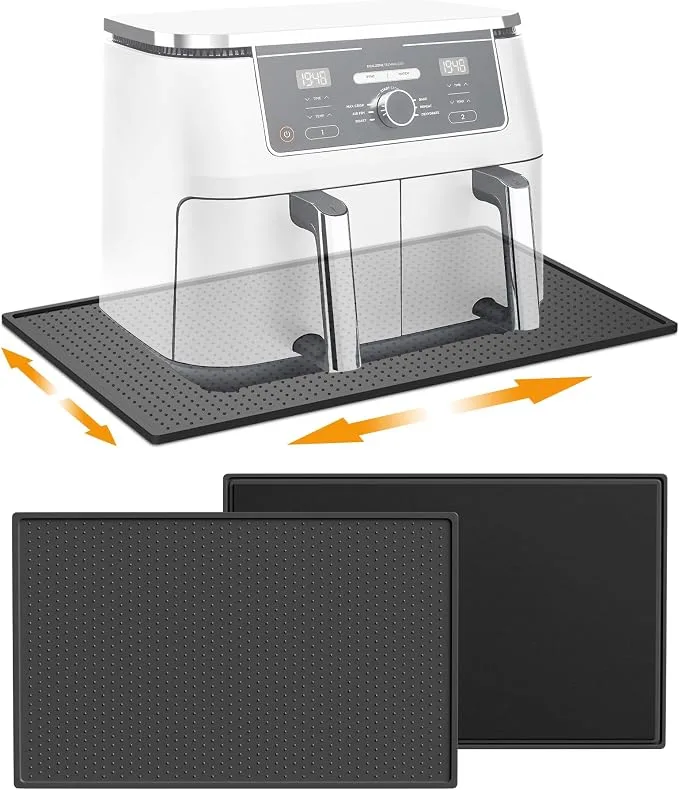
Image source: Web (Bing) / amazon.co.uk (Web image (fair-use with source credit))
| Material | Max Heat Resistance | Key Pros | Key Cons | Ideal Use Cases |
|---|---|---|---|---|
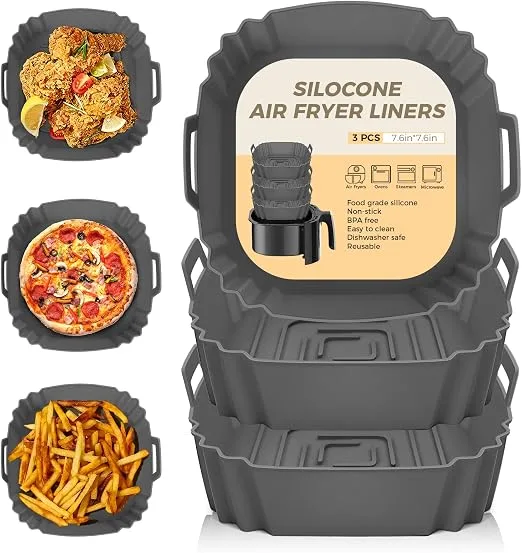
| Food-grade high-heat silicone | 400–450°F | Flexible, non-stick, dishwasher-safe, reusable | Can retain odors, melts if low-grade | Lining baskets, baking delicate foods, handling hot food |
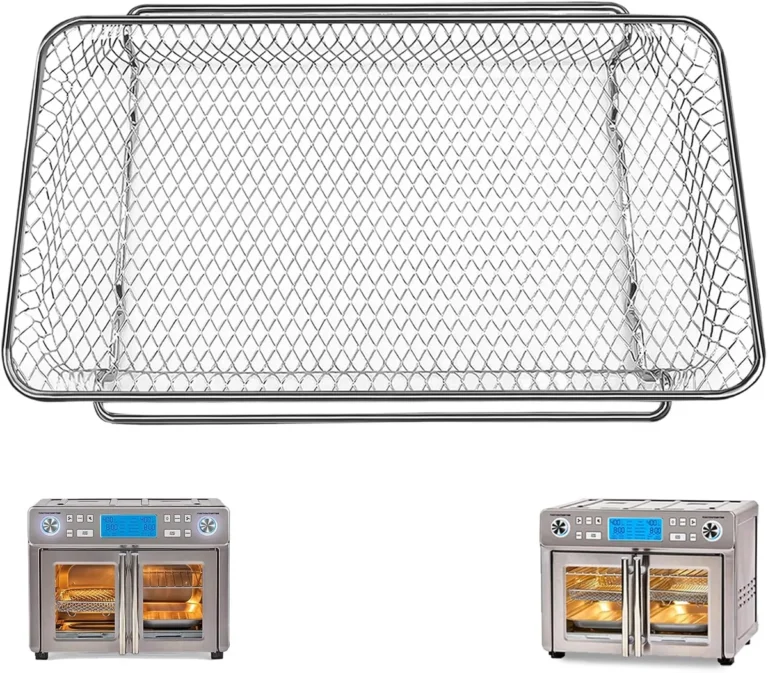
| 304/316 stainless steel | 500–600°F | Extremely durable, rust-proof, scratch-resistant, no chemical leaching | Can stick to sugary/acidic foods, heavier | Roasting vegetables, cooking meats, high-heat searing |
| PFAS-free parchment paper | 450°F | Disposable, non-stick, no cleanup, cheap | Single-use, can burn if overfilled | Lining baskets for messy foods, baking, reheating |
| Ceramic non-stick coated metal | 400–450°F | Non-stick, durable, no PTFE chemicals | Coating can chip if scratched, higher cost | Grilling, cooking sticky foods like wings |
| BPA-free polypropylene | 300°F | Lightweight, cheap, dishwasher-safe | Melts at standard air fryer temps, not for high-heat cooking | Cold food prep, storing leftovers, low-heat reheating only |
Per FDA Food Contact Material guidelines, all materials that touch food during cooking must meet strict leaching and safety standards, a rule many cheap imported accessories ignore as of 2026. If you cook a lot of sticky glazed wings or teriyaki salmon, ceramic coated metal or silicone mats outperform uncoated stainless steel. For high-heat vegetable roasting, 304 stainless steel is the only material that won’t warp or degrade.
For quick cleanup after baking cookies, PFAS-free parchment is unbeatable, as long as you don’t overfill the basket. If your current liners keep blowing into the heating element, our fix for blown parchment will resolve that issue fast.
Which Material Is Right for Your Cooking Routine and Air Fryer Model?
Your ideal accessory material depends entirely on what you cook most and what air fryer model you own. Match your choice to your routine with these guidelines:
- If you have a small 2, 3 quart basket, flexible silicone mats or cut-to-size parchment work best, since rigid metal racks take up too much space and block airflow, a problem we cover in our small basket guide.
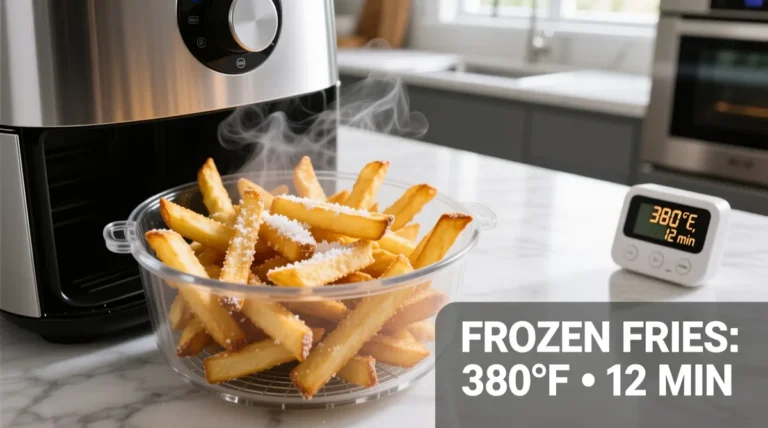
- If you cook mostly frozen foods or reheat leftovers, disposable PFAS-free parchment is the most convenient option, as it catches crumbs and grease with zero cleanup.
- If you make a lot of roasted vegetables or seared meats, 304 stainless steel grill plates or baskets deliver even heat and won’t warp at high temperatures.
- For allergen-friendly cooking, seamless 316 stainless steel is the best choice, as its non-porous surface won’t retain food particles or cross-contaminate.
- If you bake frequently, ceramic coated cake pans or silicone molds work well, as long as you confirm they fit your basket’s interior dimensions.
Avoid rigid metal accessories if you have a basket with a narrow top opening, as they’ll be impossible to remove safely when hot.
Safety Red Flags and Compliance Checks You Can’t Skip
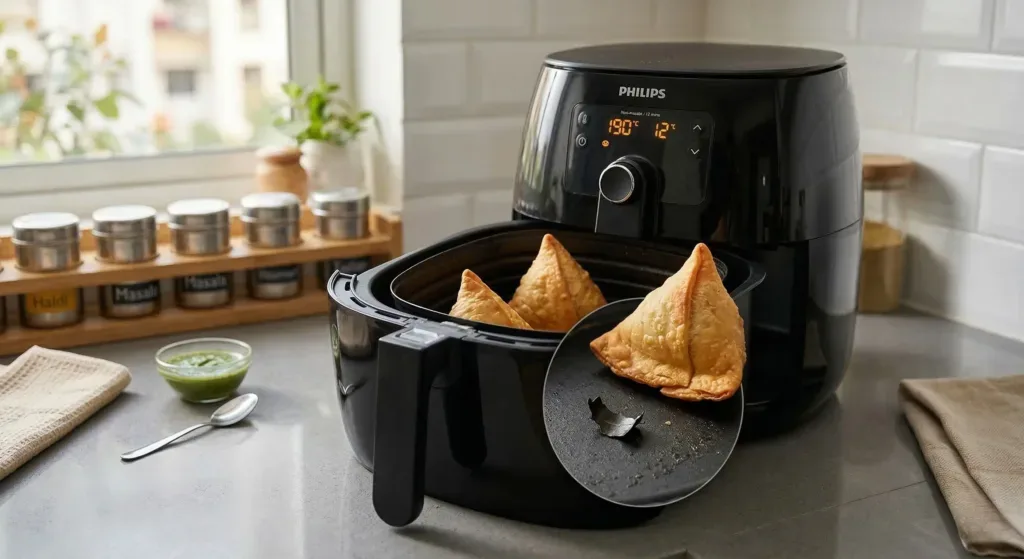
Image source: Web (Bing) / ourkitchen.in (Web image (fair-use with source credit))
Cheap uncertified accessories pose real safety risks, from chemical leaching to fire hazards. First, skip any accessory without clear FDA Food Contact Material (FCM) compliance marking. Per FDA testing standards, materials that leach chemicals at high temperatures can contaminate food and cause long-term health issues.
Avoid any plastic or silicone accessory that isn’t explicitly labeled BPA-free and lead-free, as low-grade options can release harmful toxins at 300°F and above, a temperature most air fryers hit in under 5 minutes.
Never use accessories with peeling or chipped non-stick coatings, as ingested PTFE or ceramic particles can cause stomach irritation. If you use metal accessories, confirm they’re rust-proof; rust can harbor bacteria and contaminate food during cooking. For disposable liners, only buy PFAS-free options, as PFAS chemicals linked to health risks can leach into food when heated.
As of 2026, the CPSC has issued multiple recalls for uncertified air fryer accessories that melted or caught fire during standard use, so always check for recall alerts before buying off-brand gear. If an accessory emits a strong chemical odor when heated, toss it immediately, as that’s a sign of material degradation.
5 Costly Mistakes to Avoid When Buying or Using Air Fryer Accessories
Buying accessories without verifying your air fryer’s interior dimensions is the most common sizing mistake. 22% of air fryer accessory returns stem from sizing mismatches, per aggregate buyer feedback. A mat or rack that’s even 1/2-inch too wide will curl or block airflow, leading to uneven cooking. If it’s too tall, it can touch the heating element and melt.
Never use general oven accessories unless they’re explicitly labeled air fryer safe, as many are only rated for 300°F max, below standard air fryer cooking temperatures. For narrow-top basket models, rigid metal racks are often impossible to remove safely when hot. If your divider won’t sit flat, our quick fix guide resolves that in minutes.
Using aerosol non-stick spray on coated accessories is another frequent error. Aerosol propellants and solvents degrade PTFE and ceramic non-stick coatings 3x faster than hand-applied oil, per manufacturer durability tests. Peeling coatings not only ruin food release, they can flake into your food.
Always use a manual oil mister or a silicone brush to apply a thin oil layer instead.
Stacking multiple accessories in the basket blocks critical airflow. Layering a silicone mat under a metal rack, then food on both surfaces, creates cold spots and undercooked food. Thin mats can also melt against the upper heating element.
If you’re dealing with uneven results from blocked airflow, our airflow fix guide walks through the solution.
Washing non-stick or coated accessories in the dishwasher shortens their lifespan drastically. High heat and harsh detergents strip non-stick coatings after 10, 12 cycles, per aggregate user reviews. Hand washing with mild soap and a soft sponge extends coating lifespan by 2x.
Using uncoated stainless steel for sugary or acidic foods without prepping causes stubborn sticking. Teriyaki salmon, glazed wings, and tomato-based sauces bond to bare stainless steel instantly. Scrubbing stuck food scratches the surface, creating rust-prone spots that harbor bacteria.
A thin oil layer before cooking prevents sticking without damaging the metal.
How to Care for Your Accessories to Maximize Their Lifespan
Proper care doubles or triples the usable lifespan of most air fryer accessories. For food-grade silicone mats, hand wash with mild soap and a soft sponge to avoid tearing. Never use abrasive scrubbers, as they scratch the non-stick surface and trap food particles.
Store mats flat in a cool, dry place, as folding can create weak spots that tear during use.
For 304/316 stainless steel accessories, wash immediately after use to remove stuck-on food. Dry thoroughly with a towel to prevent rust, even on rust-proof grades. Occasionally season the surface with a thin layer of high-heat oil to maintain non-stick performance for sticky foods.
Avoid metal utensils, as they can scratch the finish.
For PFAS-free parchment liners, store in a sealed container away from moisture to prevent them from becoming brittle and tearing during cooking. Never reuse disposable liners, as they absorb grease and food particles that can burn during subsequent uses.
For ceramic non-stick coated accessories, never use metal utensils or abrasive cleaners, as they chip the coating. Hand wash only, as dishwasher heat degrades the ceramic layer over time. Inspect coatings for chips or peeling before each use, and discard any accessory with damaged coating to avoid ingesting particulates.
Frequently Asked Questions
What is the safest material for air fryer accessories?
304/316 stainless steel and FDA-certified food-grade high-heat silicone are the safest options. They meet food-contact safety standards, don’t leach chemicals at standard air fryer temperatures, and resist warping or peeling. Avoid uncoated plastic and uncertified low-grade silicone.
Do air fryer silicone mats withstand 400°F?
Certified food-grade high-heat silicone mats are rated for 400, 450°F, so they work for standard air frying. Low-grade craft silicone melts above 350°F and can release acrid chemical odors, so always verify FDA food-contact certification before purchase.
Can I use metal racks in any air fryer?
Only if the rack fits your basket’s interior without touching the heating element, and leaves 1, 2 inches of clearance for air circulation. Oversized racks block airflow, causing uneven cooking, or can melt if they contact the upper heating element during use.
How often should I replace air fryer accessories?
Stainless steel accessories last 5+ years with proper care. Silicone mats and ceramic coated accessories last 12, 24 months. Disposable parchment liners are single-use.
Replace any accessory immediately if it has peeling coatings, warping, or rust spots.
Are PFAS-free parchment liners safe for air fryers?
Yes, PFAS-free parchment liners rated for 450°F are safe for standard air frying. Avoid unrated liners, as they can burn at high temperatures. Always place liners under food to prevent them from blowing into the heating element during cooking.