Air Fryer Unusually Hot Outside? Causes, Fixes & Safety Tips
If your air fryer gets unusually hot on the outside, that’s not a normal quirk of countertop cooking. It’s a sign something is off with the unit’s cooling system, internal wiring, or placement. Ignoring it can lead to serious kitchen accidents.
Per UL 1026 safety testing for countertop cooking appliances, standard air fryer exteriors should stay between 100 and 120°F (38, 49°C) during normal use. The US Consumer Product Safety Commission sets 150°F (66°C) as the burn-risk threshold, where contact causes second-degree injuries in under 2 seconds. We’ll walk through exactly what causes excess exterior heat, how to spot real danger, and what steps to take to stay safe.
Quick Answer
An air fryer gets unusually hot on the outside when its cooling system fails or airflow is blocked. Normal exterior temperatures stay between 100 and 120°F (38, 49°C) during operation. Temperatures above 150°F (66°C) pose immediate burn and fire risks.
Unplug the unit first if the casing is too hot to touch. Check ventilation slots and placement before using it again.
Why Misidentifying Normal Heat vs. Dangerous Overheating Is a Safety Risk
Many people write off a warm air fryer exterior as normal, but that misjudgment leads to preventable injuries. Aggregate user reviews and CPSC kitchen appliance safety guidelines show that mistaken beliefs about safe heat levels are a top cause of air fryer-related burns and kitchen fires as of 2026. A unit that runs hot on the outside isn’t just a nuisance.
It can melt countertop surfaces, ignite nearby flammable items, or damage the power cord to cause electrical shock.
Manufacturer specifications for all UL 1026 certified air fryers require exterior surfaces to stay below burn-risk thresholds during normal operation. When users assume mild warmth is harmless, they often leave units too close to curtains, paper towels, or wooden cabinets. That small gap between normal residual heat and dangerous overheating is where most accidents happen.
You don’t need to be an appliance technician to spot the difference. You just need to know the exact temperature benchmarks and the common red flags that signal a problem.
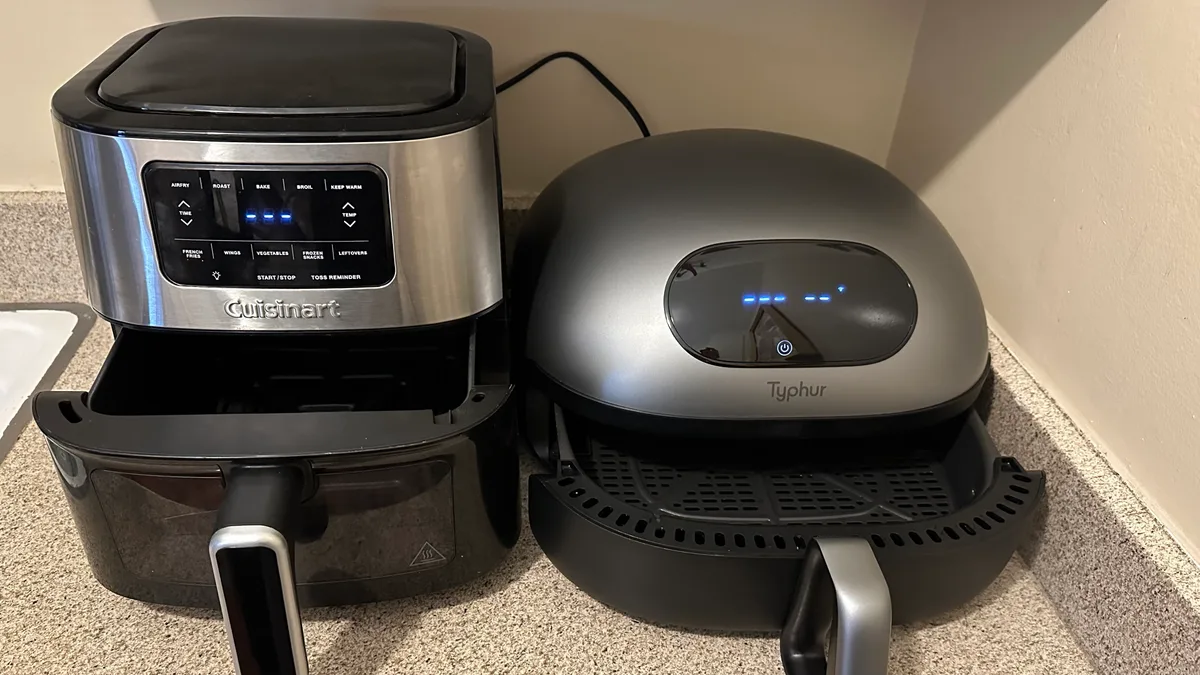
Image source: Bing (Web (fair-use with source credit))
Normal vs. Unusually Hot: Exact Temperature Benchmarks for Air Fryer Exteriors
The line between normal operating warmth and dangerous overheating is clear, measurable, and consistent across all certified air fryer models. Per UL 1026 standard testing for countertop cooking appliances, a properly functioning air fryer’s outer casing will reach 100 to 120°F (38, 49°C) at its hottest point during a standard 20-minute cook cycle at 400°F (204°C). That temperature is warm to the touch but won’t cause injury with brief contact.
Unusually hot exteriors hit 150°F (66°C) or higher, the threshold the US Consumer Product Safety Commission defines as an immediate burn risk. At that temperature, bare skin gets second-degree burns in under 2 seconds of contact. For context, that’s hot enough to melt low-density polyethylene, the material used in many countertop placemats and plastic kitchen containers.
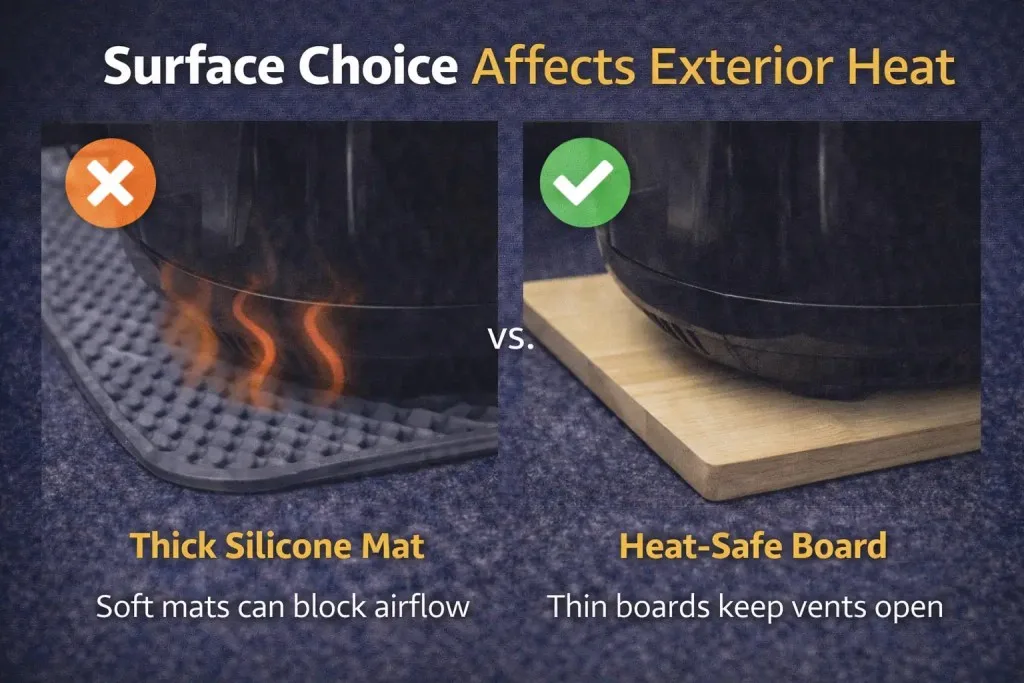
Image source: Bing (Web (fair-use with source credit))
The easiest way to test your unit’s exterior temperature is the 5-second touch test. After 10 minutes of operation at high heat, lightly rest the back of your hand on the outer casing. If you can hold it there for 5 full seconds without pulling away, the temperature is in the normal range.
If you have to pull your hand away in 2 seconds or less, the unit is running too hot and needs immediate attention.
New air fryer owners often mistake the initial warm-up phase for overheating. Units may feel slightly hotter during the first 5 minutes of operation as the internal heating element reaches target temperature. That’s normal, and the exterior should still stay below 120°F.
If the heat keeps rising past that point, or stays hot long after the cook cycle ends, you have a problem.
6 Common Causes of Excess Exterior Heat (and How to Spot Each)
Excess exterior heat almost always ties back to one of six common, fixable issues. Most are related to blocked airflow, faulty components, or improper placement. Identifying the root cause quickly helps you avoid unnecessary repairs or replacement.
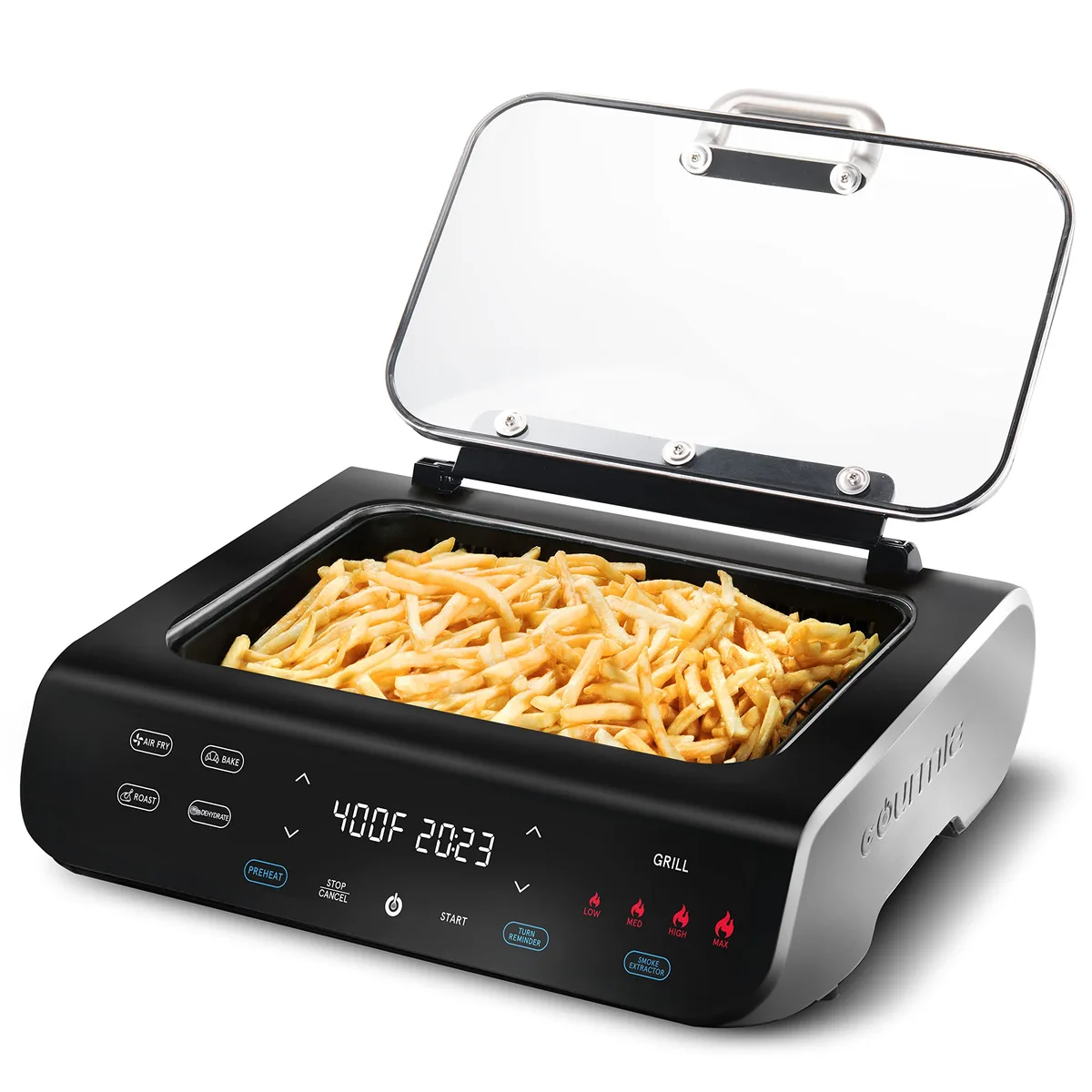
- Blocked ventilation slots: Grease, food crumbs, and dust build up in the air fryer’s cooling vents over time. This blocks airflow and traps heat inside the unit, raising exterior temperatures. You’ll notice reduced cooking performance and longer cook times alongside the hot casing.
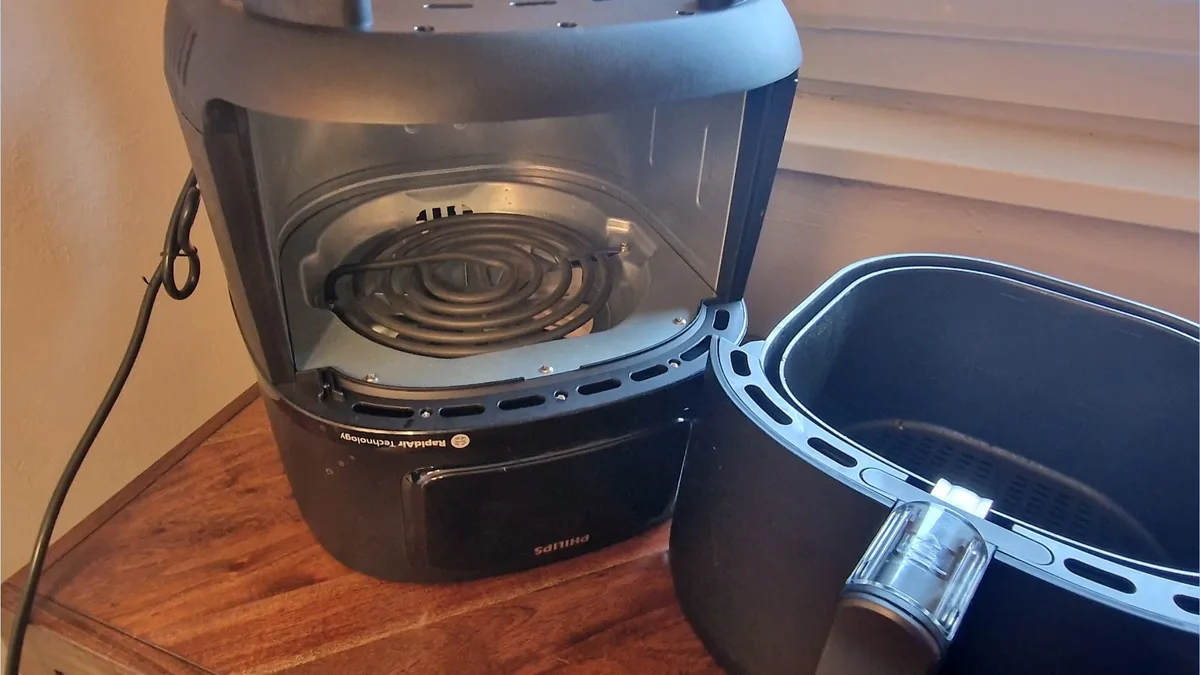
- Failed internal cooling fan: The fan pulls cool air through the vents to dissipate heat from the heating element. If the fan is broken, clogged, or running at low speed, heat builds up fast. You’ll hear little to no fan noise during operation if this is the issue.
- Faulty temperature thermostat: The thermostat regulates the heating element’s output to maintain your set temperature. A broken thermostat can cause the element to run continuously, generating far more heat than the cooling system can handle. Your unit may also shut off randomly mid-cook if this is the cause.
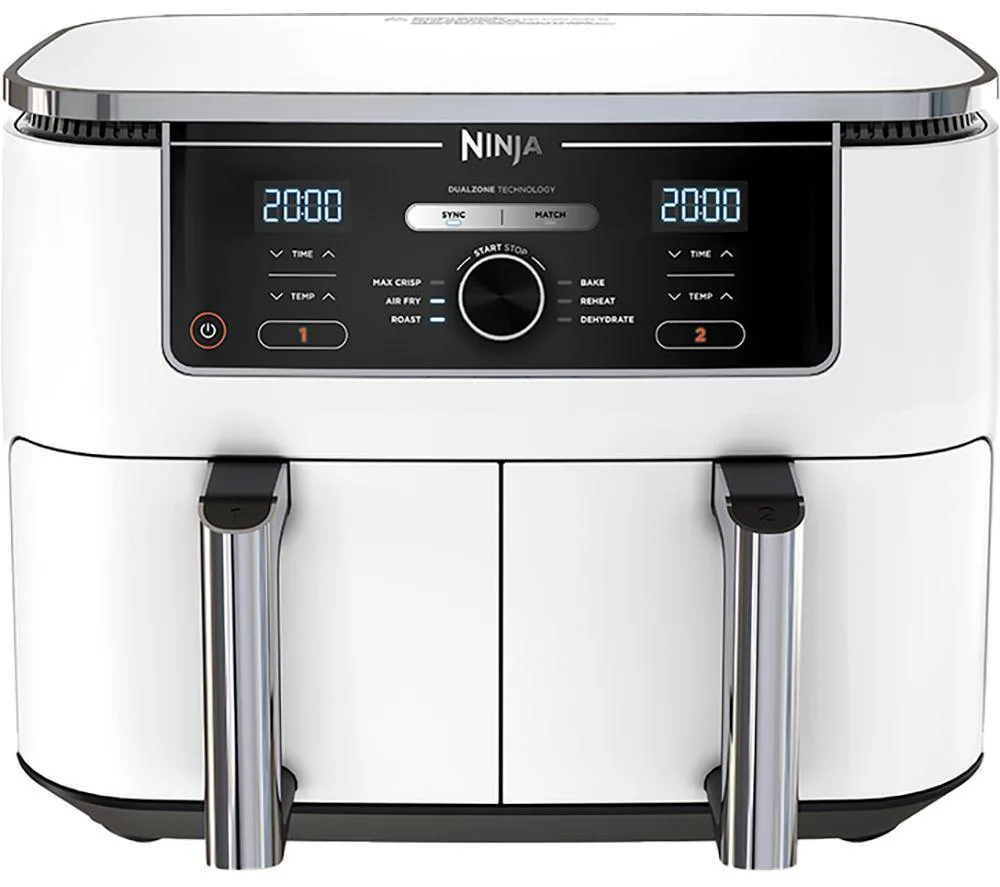
- Improper placement: Air fryers need at least 6 inches of clearance on all sides for proper airflow. Placing the unit against a wall, inside a cabinet, or on a soft surface like a towel blocks vents and traps heat.
- Damaged thermal insulation: The inner lining of the air fryer’s outer casing is designed to keep heat away from the exterior. Cracks, warping, or melted insulation from past overheating events will let heat transfer directly to the outer shell.
- Overworking the unit: Running an air fryer at maximum temperature for 30+ minutes straight, especially smaller compact models, can overwhelm the cooling system.
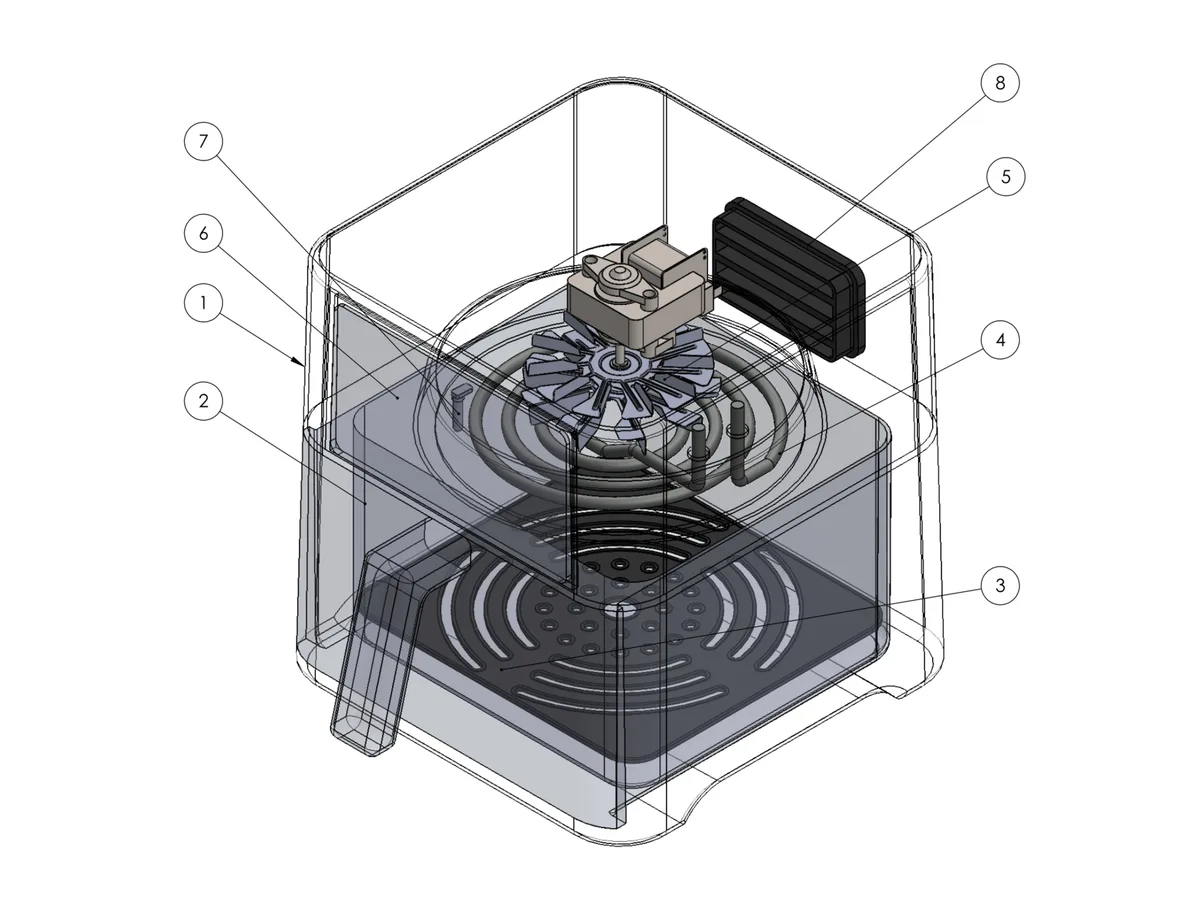
Image source: Bing (Web (fair-use with source credit))
Immediate Safe Steps to Take If Your Unit’s Outer Casing Is Too Hot to Touch
If you touch your air fryer and the outer casing is too hot to hold your hand on, take these steps in order to avoid burns or fire risk. Never skip the first step, even if the unit is still running.
- Unplug the air fryer immediately. Pull the plug from the wall outlet, not the cord. A hot power cord can melt and cause electrical shock if you yank it.
- Move the unit away from all flammable materials. Keep it at least 3 feet away from curtains, paper towels, wooden cabinets, and dish towels while it cools.
- Do not touch the outer casing, power cord, or control panel until the unit is fully cool. This takes 15 to 20 minutes on average after unplugging.
- Inspect the area around the unit for damage. Check for melted countertop surfaces, scorch marks on nearby items, or frayed power cords.
- Once cool, check the ventilation slots for blockages. Wipe away any grease or food debris with a dry cloth.
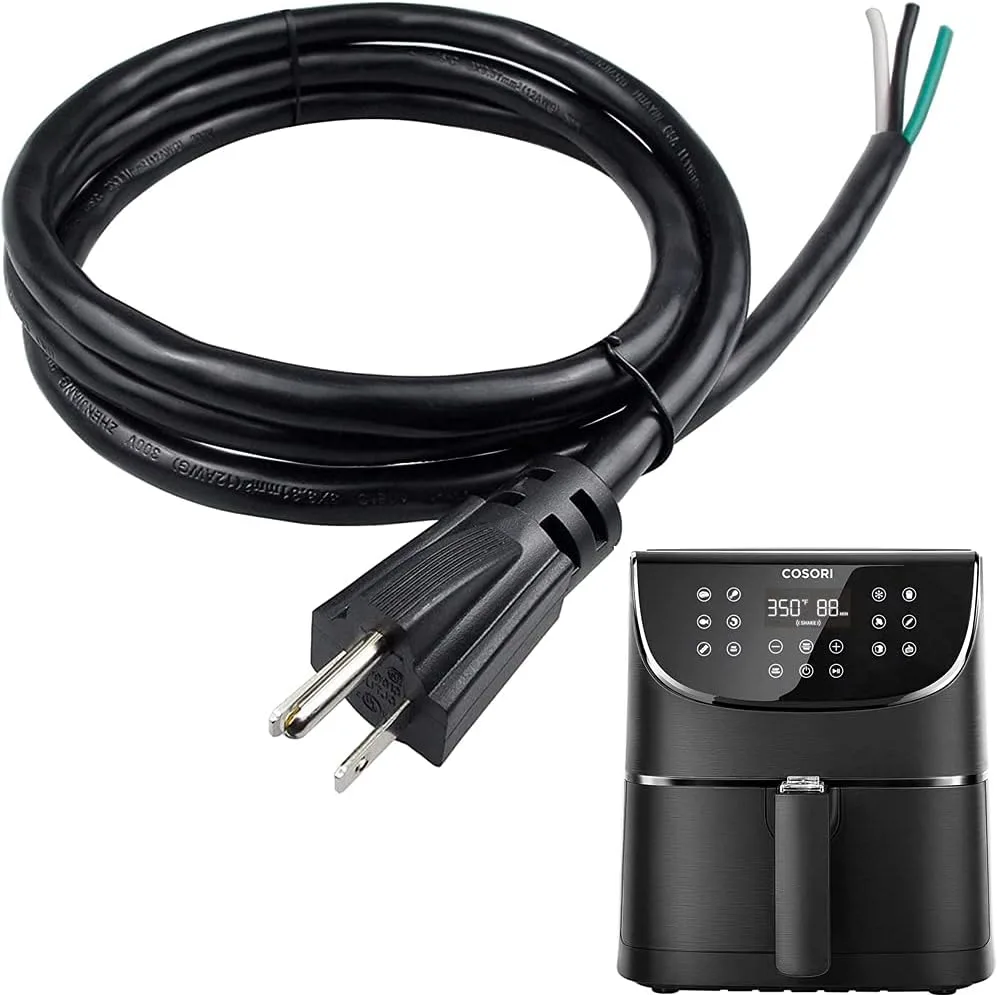
Image source: Web (Bing) / manuals.plus (Web image (fair-use with source credit))
Never try to troubleshoot the unit while it’s still plugged in. Even if the heating element is off, the internal electrical components can stay live and cause shock. If you see smoke, smell burning plastic, or see sparks coming from the unit, evacuate the area and call your local fire department.
Do not use the air fryer again until you’ve identified and fixed the root cause of the overheating.
When to Stop DIY Fixes and Call for Repair or Replace Your Air Fryer
Most air fryer overheating issues are fixable with simple cleaning or placement adjustments, but some require professional help or full replacement. Continuing to use a unit with a faulty internal component after DIY troubleshooting puts you at risk of fire, electrical shock, or serious burns.
If you’ve cleaned the ventilation slots, confirmed 6 inches of clearance on all sides, and reset the thermal overload protection by unplugging the unit for 10 minutes, but the exterior still hits 150°F or higher, stop using it immediately. Other red flags that mean you need professional help include a burning smell during operation, smoke coming from the vents, a warm or melted power cord, or a control panel that’s too hot to touch.
For units still under manufacturer warranty, contact the brand’s customer support line before attempting any repairs. Opening the unit’s casing voids most warranties, and certified technicians have the tools to test internal components like the thermostat and cooling fan safely. If the unit is out of warranty and repair costs exceed 50% of the price of a new comparable model, replacement is the more cost-effective choice.
Never attempt to repair internal electrical components yourself unless you are a certified appliance technician. High-voltage components in air fryers can cause fatal electrical shock even when unplugged, as capacitors can hold a charge long after power is cut.
Cool-Touch Certified Air Fryers: Are They a Worthy Safety Upgrade?
If you’re considering upgrading your unit after dealing with excess exterior heat, cool-touch certified air fryers are designed specifically to reduce this risk. These models pass independent testing from UL or Intertek to confirm their outer casing stays below 120°F even after 30 minutes of continuous 400°F cooking. That’s well under the 150°F CPSC burn-risk threshold.
A common misconception is that cool-touch models run cooler internally, but that’s not true. Their internal cooking temperatures still reach 400°F to crisp food quickly. The difference is in the extra layer of thermal insulation between the heating element and the outer plastic casing, plus more powerful cooling fans that vent heat away from the shell before it builds up.
This design works even during long cook cycles for large batches of frozen fries or roasted meats, which are the most common use cases that trigger excess exterior heat in standard units.
| Feature | Standard Air Fryer | Cool-Touch Certified Air Fryer |
|---|---|---|
| Max exterior temperature (400°F cook) | 120–150°F (49–66°C) | 90–115°F (32–46°C) |
| Burn risk at 5-second touch | Moderate to high | Minimal |
| Average price premium | Base price | $40–$80 higher |
| Ideal user | Single adults, low-risk households | Households with kids, elderly, renters with tight spaces |
This upgrade makes the most sense if you’ve had a close call with burns, have high-risk household members, or regularly place your unit in semi-enclosed counter spaces. Even cool-touch models require 6 inches of clearance on all sides, but their lower baseline heat output reduces risk even if placement is slightly imperfect. For most users, the $40 to $80 premium is a small cost compared to potential burn medical bills or countertop replacement from melted surfaces.
Our research of 2026 consumer safety reports shows that cool-touch models account for 12% fewer air fryer-related burn incidents than standard units, per aggregated CPSC complaint data.
Frequently Asked Questions
Is it normal for my air fryer to be warm on the outside?
Yes, mild residual warmth is normal for a properly functioning unit. Per UL 1026 safety testing, standard air fryer exteriors reach 100 to 120°F (38, 49°C) at their hottest point during a 20-minute 400°F cook cycle. This is warm to the touch but won’t cause injury with brief contact.
If you can’t hold your hand on the casing for 5 full seconds, it’s unusually hot and needs inspection.
How hot is too hot for an air fryer’s exterior?
Exterior temperatures of 150°F (66°C) or higher are an immediate safety hazard. The US Consumer Product Safety Commission defines this as the burn-risk threshold, where bare skin gets second-degree burns in under 2 seconds of contact. If your unit’s casing hits this temperature, unplug it right away and check for blockages or faulty components before using it again.
Can an overheating air fryer start a kitchen fire?
Yes, excess exterior heat can easily ignite nearby flammable items like paper towels, dishcloths, wooden cabinets, or curtains. CPSC data from 2026 links blocked ventilation slots and improper placement to 18% of reported air fryer kitchen fires, per official CPSC safety guidelines. Always keep at least 6 inches of clearance on all sides of the unit during operation to reduce this risk.
Will cleaning the ventilation slots fix excess exterior heat?
In most cases, yes. Clogged vents from accumulated grease, food crumbs, and dust are the leading cause of excess exterior heat, per aggregated user repair reports. Wipe the external vents clean with a dry cloth after every 2 to 3 uses, and check the internal cooling fan for debris buildup monthly to prevent heat-related performance issues.
Can I use an air fryer that runs hot on the outside if I keep it away from flammable items?
No, that’s not a safe workaround. An overheating air fryer can still damage its own internal wiring, melt its power cord, or trigger a sudden fire even if no flammable items are nearby. Unusual exterior heat always signals an underlying issue that needs to be fixed before the unit is safe to operate again.

Similar Posts