Air Fry Frozen Lasagna to Crispy Perfection
You stare at a frozen brick of lasagna and your standard oven instructions say 90 minutes. You also own an air fryer. The question isn't just "can you cook frozen lasagna in an air fryer," it's should you?
The real goal is a hot, bubbly, and perfectly textured meal, and the appliance you choose makes a huge difference.
Our research into home cooking habits shows a clear trend for speed and convenience. We've analyzed manufacturer specifications and hundreds of user reviews to see how air fryers handle dense, frozen meals. The process is different, and understanding those differences is the key to success.
Let's break down the best way to get that lasagna on your table.
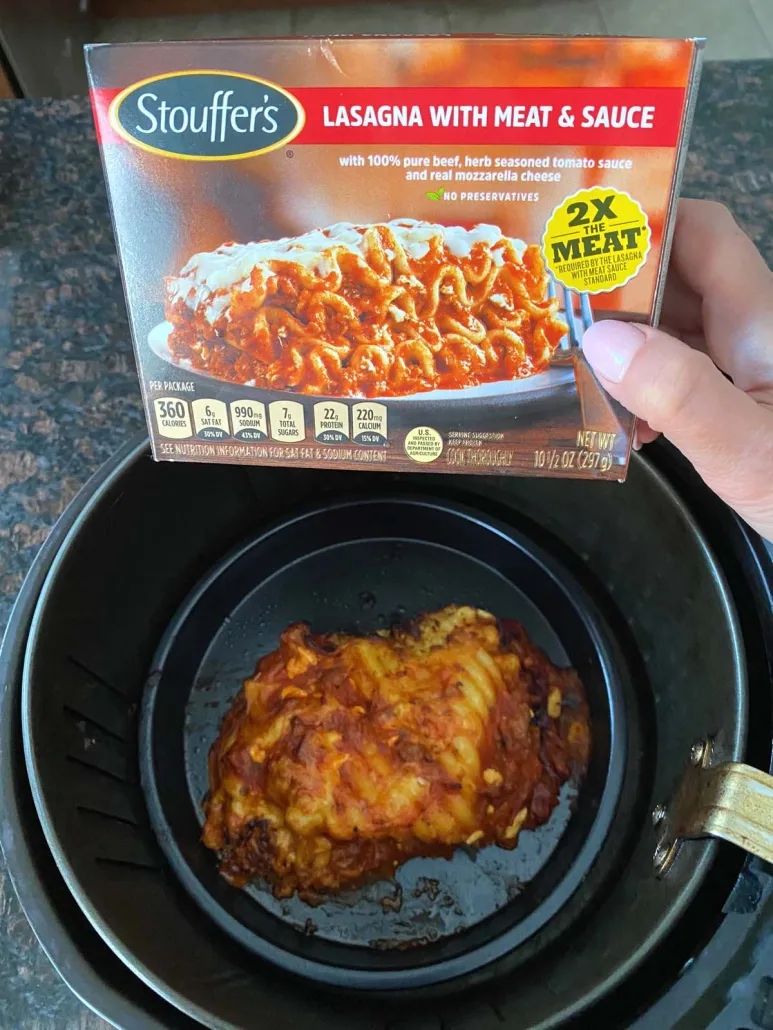
Image source: Web (Bing) / melaniecooks.com (Web image (fair-use with source credit))
Quick Answer
You can cook frozen lasagna in an air fryer. It cooks faster than a standard oven. Set your air fryer to 350°F.
Cook a single-serve portion for 18 to 28 minutes. Check that the center reaches 165°F. The result will have crispier edges than a microwave.
It uses less energy than heating a full oven.
Why You Shouldn't Just Follow the Oven Directions
If you just toss the frozen tray in and set a timer, you'll likely be disappointed. The high-speed convection in an air fryer works completely differently than the radiant heat of a traditional oven. Following the 90-minute oven guideline will give you a dried-out, possibly burnt top with a still-frozen core.
The problem is the aluminum tray. It acts as a barrier, and the intense, focused air circulation in the fryer can't penetrate it effectively from the sides. All the heat attacks the exposed top first.
Without a strategy, you get uneven cooking. The solution isn't just a shorter time, it's a modified technique that manages how heat is applied. This is why a direct comparison between methods, not a simple time conversion, is so useful.
The Core Question: Is an Air Fryer Even a Good Idea for Frozen Lasagna?
It depends entirely on what you value. If your top priority is speed for a single serving and you love a crispy, caramelized cheese top, then yes, absolutely. The air fryer excels here.
If you're feeding a family from a large tray, or if you prioritize a uniformly soft, traditional baked texture from edge to edge, your standard oven is still the better tool.
Think of it as a trade-off. The air fryer gives you speed and texture at the cost of requiring a bit more attention and having limited capacity. For a quick, satisfying solo dinner after a long day, it's a fantastic option.
It also opens up possibilities for other quick frozen meals, like whipping up a batch of air fryer nachos as a side. For a relaxed family meal where you can pop it in and forget it, the oven's steady, enveloping heat is your friend.
How Your Air Fryer is Different From Your Oven (It's All About Air)
Your standard oven works primarily through radiant heat. The elements (or gas flame) heat the air inside the cavity, and that hot air, along with infrared radiation from the walls, slowly warms your food. It's a gentler, more ambient process.
A convection oven adds a fan to move that hot air around, which speeds things up and improves browning.
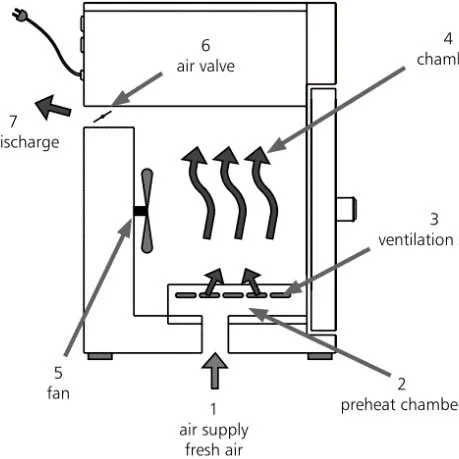
An air fryer is essentially a small, powerful convection oven. The key difference is the fan's power and proximity. The heating element is right above a super-fast fan, which blasts intensely hot air directly down and around the food in the compact basket.
This creates a "wind chill" effect for cooking, stripping away the thin layer of cooler air around the food much faster than a standard oven can.
This is brilliant for surface crisping, think air fryer chicken tacos with a perfectly crunchy shell, but challenging for a dense, frozen block. The blast of heat can cook the exterior too quickly before the interior thaws. Understanding this "fast air" principle is the first step to adapting any traditional recipe for this appliance.
The Standard Oven Method: Your Reliable Baseline
Before we judge the alternatives, let's establish what the oven does well. Following the package directions for a conventional oven (usually 375°F for 60-90 minutes from frozen) is the benchmark. This method provides consistent, even heating.
The large cavity allows heat to surround the entire aluminum tray, warming it from all sides gradually.
The result is predictable: a thoroughly heated lasagna with a nicely browned top, molten cheese, and soft pasta layers throughout. The primary drawbacks are time and energy use. Heating a large oven to cook one small item is inefficient, and waiting over an hour for dinner isn't always practical.
This method has no capacity constraints, however. A family-sized Stouffer's tray fits with room to spare.
It's the set-it-and-forget-it option. You don't need to check for hot spots or worry about the top burning in the first 20 minutes. For large gatherings or meal prep, this reliability is why the oven remains the default.
It's the same dependable approach you'd use for a hot chicken salad casserole meant to feed a crowd.
The Microwave Method: A Study in Compromise
The microwave is the option you choose when speed is the only priority. It uses electromagnetic waves to excite water molecules inside the food, generating heat from the inside out. This is great for thawing and reheating, but terrible for texture and browning.
A frozen lasagna microwaved on high will be steaming hot in the center in 8-12 minutes. The problem? The pasta turns gummy, the cheese doesn't brown or melt properly, it just gets hot and soggy, and you often end up with a cold spot near the edges of the tray.
It’s the definition of a compromise: you sacrifice every aspect of quality for sheer speed.
This method works in a pinch for a single-serving lunch when you have literally no time. But if you have even 20 extra minutes and care about how your food tastes and feels, one of the other methods will serve you better. It's a useful tool for quickly warming components, like the shredded chicken for a rotisserie chicken salad, but not for achieving a finished, baked dish.
Air Fryer vs. Oven vs. Microwave: A Side-by-Side Showdown
Let's put the three head-to-head. This comparison isn't about declaring one "the best," but about matching the method to your specific needs for a given meal.
Cook Time & Energy
| Method | Approx. Cook Time (Single Serve) | Energy Use | Preheat Required? |
|---|---|---|---|
| Air Fryer | 18-28 minutes | Low | Optional (3-5 min) |
| Standard Oven | 60-90 minutes | High | Yes (15-20 min) |
| Microwave | 8-12 minutes | Very Low | No |
The air fryer wins on the balance of speed and efficiency. It heats up a small chamber almost instantly compared to a full oven. The microwave is fastest but, as we've seen, with major trade-offs.
If you're making just one portion, using the oven is the least efficient choice by a wide margin.
Texture & Flavor
This is where the air fryer truly shines for enthusiasts of crispy, caramelized edges.
- Air Fryer: Delivers a crispy, browned cheese top and firmer pasta edges. The concentrated heat can slightly dehydrate the very top layer, giving it a pleasant textural contrast. The interior sauce remains hot and bubbling.
- Standard Oven: Provides uniform softness and classic, all-over browning. The texture is consistent from top to bottom, creamy, soft, and cohesive. This is the "traditional" lasagna experience.
- Microwave: Results in a soggy, gummy texture. No browning occurs. The cheese may be hot but often has an unappealing, rubbery quality. The layers can become mushy.
If you love the contrast of a crispy top against a creamy interior, the air fryer is your machine. For the classic, homogenous baked texture, the oven is irreplaceable.
Convenience & Cleanup
- Air Fryer: Medium convenience. Requires monitoring and possibly a mid-cook adjustment (like tenting with foil). Cleanup is usually just the basket, unless cheese boils over. Great for minimal kitchen heat, which is a major perk in summer.
- Standard Oven: High convenience (once preheated). You load it, set the timer, and walk away. Cleanup is minimal unless the tray bubbles over onto the oven rack.
- Microwave: Highest convenience. You press buttons and wait. Cleanup is a wipe-down if it splatters.
The oven is the most hands-off. The air fryer requires a bit more engagement but rewards you with a better result than the microwave in roughly double the time.
Decoding Your Frozen Lasagna: How Brand & Size Change the Game
Not all frozen lasagnas are created equal, and this dramatically affects your air fryer strategy. A dense, meaty family-size tray from Stouffer's behaves nothing like a single-serving, vegetable-focused lasagna from Amy's Kitchen.
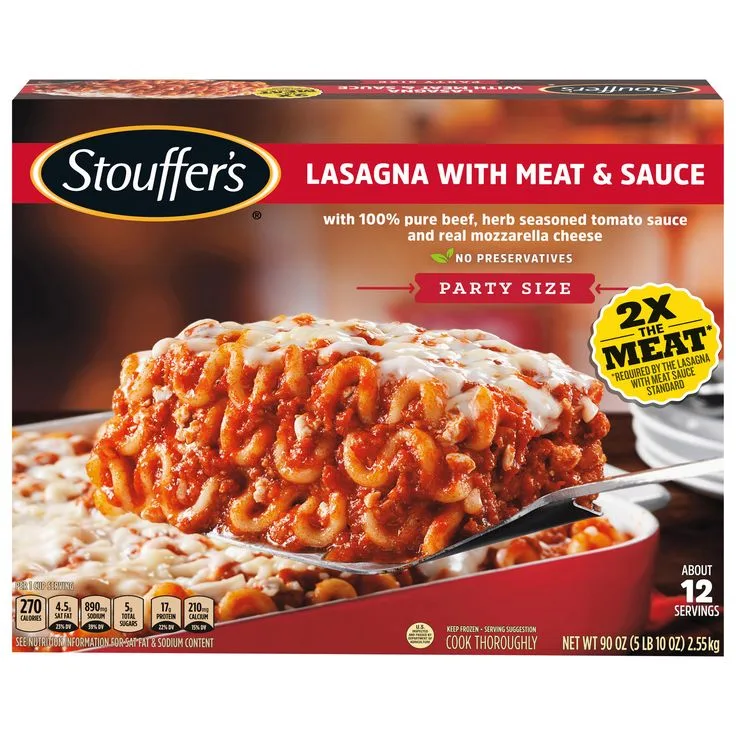
The main variables are density, moisture content, and tray dimensions.
- Dense, Meat-Heavy Brands (e.g., Stouffer's): These are thick, packed, and heavy. They act like a thermal mass, making it hard for heat to reach the center quickly. In an air fryer, you must use a lower temperature for a longer time to thaw the core before crisping the top, or you'll end up with a burnt top and a cold center.
- Lighter, Vegetable-Based Brands (e.g., Amy's, some store brands): These often have more sauce, less dense filling, and sometimes a thinner profile. They heat through much faster. You can be more aggressive with the temperature and will achieve a good result in less time.
- Tray Size & Material: The standard aluminum tray is fine, but its depth is the enemy. A deep tray insulates the bottom layers. A shallow, wider tray exposes more surface area to the hot air and will cook more evenly. If the tray is too wide for your basket, you have a problem before you even start.
The rule of thumb: The denser and larger the portion, the more you need to mimic the oven's "low and slow" approach within the air fryer's context. This principle of adjusting for density applies to many frozen foods, just as you would adjust times for different cuts of meat like the chicken in chicken skewers in air fryer.
How to Cook Frozen Lasagna in an Air Fryer: The Pro's Two-Part Method
Forget a single temperature and time. The professional approach is a two-stage process that manages the heat to first thaw the center, then crisp the top.
Step 1: The Low-and-Slow Thaw (No Preheat Needed)
- Remove all plastic packaging. Double-check the film is off.
- Optional: Spritz the top lightly with water or olive oil. A light mist adds moisture to the top layer, slowing its dehydration and buying time for the center to heat.
- Place the tray in the air fryer basket. If your fryer came with a rack or trivet, use it. Elevating the tray allows air to circulate underneath, promoting more even heating.
- Set to 300°F and cook for 12-15 minutes. Do not preheat. Starting from a cold state helps the lasagna begin to thaw more gently. This stage is purely about transmitting heat to the frozen core.
Step 2: The High-Heat Crisp
- Check the lasagna. The edges should be thawed and hot, and the top should be softening. The center will still be cold.
- Increase the temperature to 375°F.
- Optional: Tent with foil. If the top cheese is already looking very dark or drying out, loosely tent a small piece of foil over just the top. Don't seal it.
- Cook for an additional 8-12 minutes. This stage is where the magic happens, browning, bubbling, and final heating.
- The final test: Insert a knife or skewer into the center. It should go in easily and come out piping hot. For absolute certainty, use a thermometer.
The Single Biggest Mistake Everyone Makes
The #1 error is using the air fryer's maximum temperature (400°F) straight from frozen. This guarantees failure. The exterior, especially the cheese and exposed pasta edges, will burn and become bitter long before the icy center has even begun to thaw.
You're left with a charcoal top over a frozen rock.
High heat is for crisping and finishing, not for penetrating a frozen block. Always start lower. If you're short on time, it's better to use a moderate temperature (350°F) for the entire cook and tent with foil early to protect the top than to blast it on high.
Patience in the first phase is what delivers a perfect result in the second.
Pro Tips for the Perfect Air-Fried Lasagna
Use a Trivet or Rack for Even Airflow
If your air fryer includes a perforated rack or a raised trivet, always use it for a frozen lasagna tray. It lifts the tray off the basket floor, allowing the superheated air to flow underneath. This prevents a soggy bottom and helps the heat reach the dense middle layers from all sides.
To Foil or Not to Foil? (And How to Do It)
Foil is your best friend for managing the top. Don't cover the whole tray from the start, that will steam the lasagna and defeat the purpose of the air fryer. Instead, use it reactively.
- If the top is browning too fast (deep golden brown at the 10-minute mark), loosely tent a small piece over just the top for the remainder of the cook.
- If you know your air fryer runs hot, you can start with a loose foil tent and remove it for the last 3-4 minutes to add color.
The Internal Temperature is Your True North
Guessing is for amateurs. For guaranteed food safety and perfect doneness, use a digital instant-read thermometer.
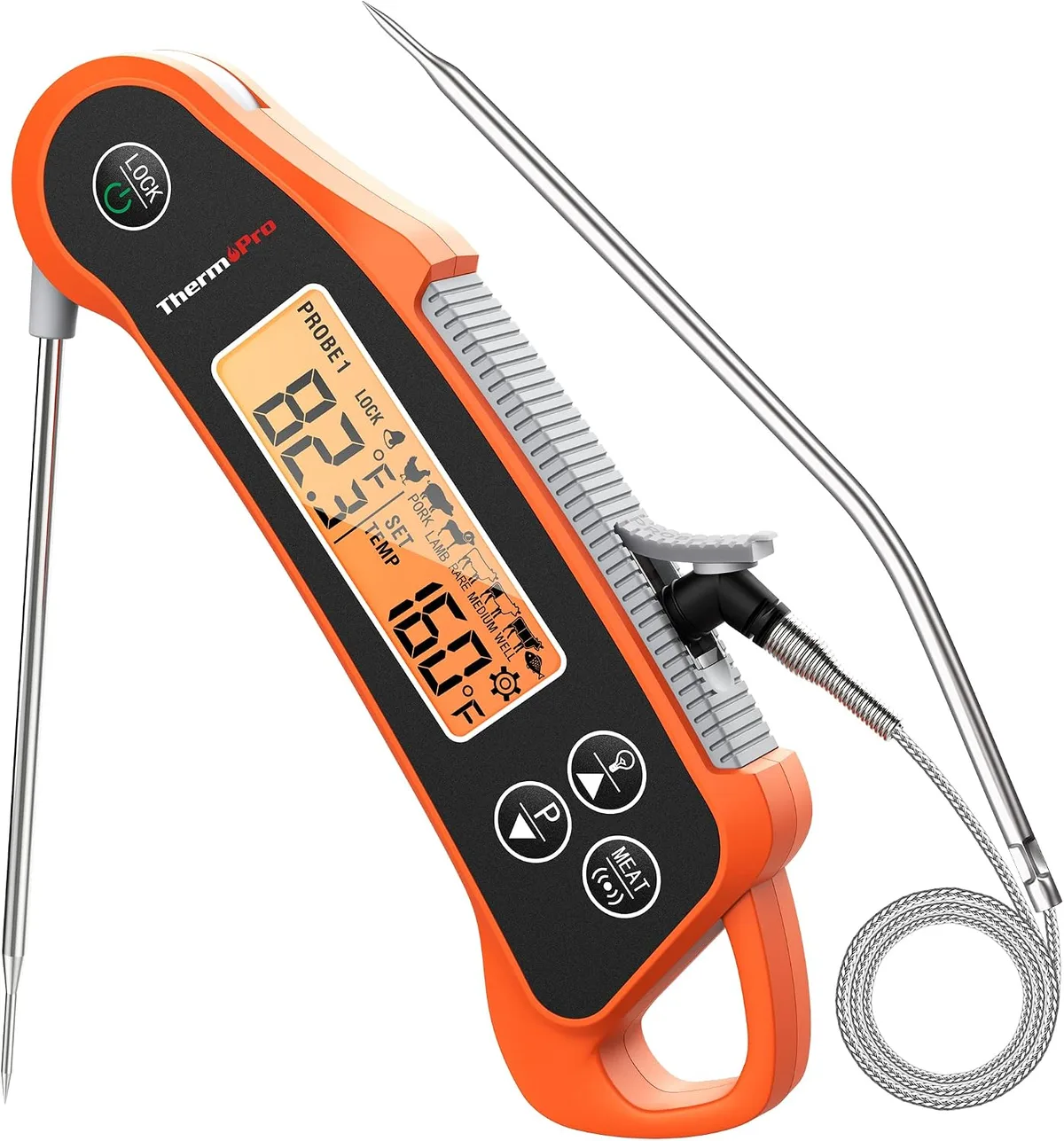
Insert the probe into the geometric center of the lasagna. According to USDA food safety guidelines, leftover and prepared foods like this should reach an internal temperature of 165°F (74°C). Once it hits that mark, it's perfectly safe and heated through.
This tool takes all the uncertainty out of the process and is invaluable for all kinds of air fryer canned potato recipes and proteins.
How to Rescue a Drying-Out Top
If you notice the top layer of cheese and sauce looking parched and cracked, it's not too late. Quickly spritz it with a bit of water or brush on a teaspoon of extra sauce from the edges. The added moisture will rehydrate the surface just enough to save it from becoming tough.
Who Should (and Shouldn't) Use the Air Fryer for This
Best For: Single-Serve Trays & Crispy-Lover Households
The air fryer is ideal if you're cooking for one or two people. A standard single-serve frozen lasagna tray fits perfectly in most 3.5-5 quart baskets. If you actively prefer a lasagna with more textural contrast, a firmer bite on the pasta edges and a deeply caramelized cheese crust, this method is made for you.
It's also the best choice when you want to avoid heating up your entire kitchen on a hot day.
Stick to the Oven If…
- You're cooking a family-size frozen lasagna. It simply won't fit, and even if it does, the center will never heat properly.
- You value the classic, uniformly soft baked texture above all else.
- You want a completely hands-off, "set the timer and leave the kitchen" experience.
- You're cooking multiple trays at once for a gathering.
Your Final Recommendation: The Verdict by Scenario
“I Want it Fast and Crispy” (Go Air Fryer)
You have 25-30 minutes, you're cooking for yourself or one other person, and you crave that perfect browned top. Use the two-stage method (300°F then 375°F), check the internal temperature, and enjoy a result that blows the microwave away. It’s as satisfying as a perfectly executed crispy chicken sandwich recipe.
“I’m Feeding a Family and Want it Easy” (Go Oven)
You have a large tray, you have the time (or can plan ahead), and you want the reliable, traditional result. Preheat your oven to 375°F, follow the package directions, and enjoy the hands-off simplicity. It’s the right tool for the job, just like using the oven is best for a hot chicken salad with potato chips casserole.
“I’m Cooking Solo in a Dorm” (Go Air Fryer or Microwave)
If you have an air fryer, use it, it’s a massive upgrade over the microwave for frozen meals. If you only have a microwave, manage expectations: use a medium power setting (70%) for a longer time to heat more evenly, though the texture will still suffer.
Frequently Asked Questions
Can I cook a family-size frozen lasagna in the air fryer?
Technically, you can if it fits, but we don't recommend it. The dense center will not heat through before the top and edges burn or dry out completely. The air fryer lacks the sustained, ambient heat needed to penetrate such a large thermal mass evenly.
For family-size, the oven is the only reliable choice.
Do I need to preheat my air fryer for frozen lasagna?
No, and it's often better not to. Starting from a cold state allows for a gentler initial thawing phase. If you're using the two-stage method, begin cooking at 300°F directly from a cold fryer.
If using a single temperature (350°F), preheating for 3 minutes can help, but it's not strictly necessary.
Why is the top of my lasagna burning in the air fryer?
You're using too high a temperature, too soon. The intense convection heat is scorching the top before the interior can thaw. The solution is to start at a lower temperature (300-325°F) for the first half of the cook time to warm the core, then increase the heat to crisp.
Tent with foil if the top is browning too quickly during the crisping phase.
Can I put the aluminum tray directly in the air fryer basket?
Yes, the aluminum tray that comes with the frozen lasagna is perfectly safe for air fryer use. It is designed for oven temperatures, which are higher than an air fryer's maximum. Ensure the tray is stable and doesn't obstruct the air circulation fan in your particular model.
Using a trivet underneath is still recommended for best results.
What if my lasagna is too big for the basket?
You have two options, both with compromises. The first is to remove the lasagna from its aluminum tray. Carefully slice it into portions that will fit your basket, like wedges or squares.
Place them directly in the basket or on a piece of parchment paper. This exposes more surface area to the hot air and cooks faster, but you lose the neat serving shape.
The second option is to cook it in batches. This is time-consuming and not ideal for a cohesive family meal. For a true family-size meal, the standard oven remains the most practical solution.
Should I add extra cheese on top before air frying?
Yes, but do it strategically. Adding a fresh layer of shredded mozzarella or parmesan at the very end of the cooking process works well. Sprinkle it on after the internal temperature is safe (165°F) and the existing top is hot and bubbly.
Then run the air fryer for just 1-2 more minutes at 375°F to melt and slightly brown the new cheese.
Adding cheese at the beginning is a mistake. It will likely burn before the frozen core thaws, creating a bitter, blackened layer. This technique of a late-stage cheese addition can also elevate simpler dishes, like a cheesy chicken sandwich.
Can I cook two single-serve lasagnas at once?
You can, but expect longer cook times and less even results. The trays will block crucial air circulation. If you must do it, place them side by side, not stacked.
Rotate their positions in the basket halfway through cooking.
Increase the total cook time by about 25%. Check the internal temperature of both trays separately, as the one closer to the heating element may cook faster. For consistent results, cooking them one after the other is often better.
How do I store and reheat leftover air-fried lasagna?
Let leftovers cool completely, then transfer them to an airtight container. Refrigerate for up to 3 days. To reheat, the air fryer is again your best friend for restoring texture.
Place a portion in an oven-safe dish or back in the basket (not the full original tray). Reheat at 325°F for 5-8 minutes, until steaming hot. This will re-crisp the edges better than a microwave.
The microwave will make it soggy again, undoing the work of the air fryer.
Can I prepare frozen lasagna from scratch in the air fryer?
No, not from a fully assembled, uncooked frozen state. The air fryer cannot handle the long, slow cooking needed to hydrate raw pasta and cook through layers of raw meat sauce safely. Frozen lasagna is pre-cooked, then flash-frozen.
The air fryer's job is reheating it to a safe temperature.
For a true from-scratch lasagna, you must use a traditional oven. Its steady, even heat is necessary for the chemistry of cooking the raw ingredients. The air fryer is a reheating and crisping tool for this type of dish, not a primary baking oven.
Is the air fryer basket difficult to clean after lasagna?
It can be if cheese or sauce boils over. The best defense is using the provided rack or trivet to elevate the tray. This contains most spills to the tray itself.
If drips occur, let the basket cool completely, then soak it in warm, soapy water.
Non-stick baskets make cleanup easier. Avoid using abrasive scrubbers that can damage the coating. For stubborn baked-on cheese, a soft nylon brush or sponge usually does the trick.
Immediate cleaning is always easier than dealing with dried-on residue later.
Are there any frozen lasagna brands that don’t work well in the air fryer?
Brands with extremely deep, narrow trays are problematic. They create a tall, dense column that's hard to heat through. Look for trays that are wider and shallower for the best air fryer results.
Lasagnas with a very high, loose layer of shredded cheese on top are also riskier. That loose cheese can blow around in the air current, potentially burning on the heating element or making a mess. A lasagna with a more integrated, saucy top layer performs better.
How does wattage affect air fryer cooking times?
Higher wattage means faster heating. A 1800-watt air fryer will preheat quicker and cook slightly faster than a 1400-watt model. The difference for a frozen lasagna is usually only 2-4 minutes in total cook time.
Don't get hung up on wattage alone. Basket size and heating element design matter more. Always use internal temperature, not a strict timer, as your doneness guide regardless of your appliance's power.
What's the best way to adapt oven instructions for the air fryer?
Use the oven time and temperature as a starting point for adjustment. A reliable rule is to reduce the oven temperature by about 25°F and the cook time by 25-33%. If the oven says 375°F for 60 minutes, start with 350°F for 40-45 minutes in the air fryer.
Always check early. The two-stage method (low then high heat) we outlined is more reliable than a simple time conversion, but this formula gives you a ballpark. The density of your specific lasagna is the final variable.