
Why Does Chicken Get Rubbery? Causes and Easy Fixes
You slice into a perfectly golden chicken breast, take a bite, and it squeaks against your teeth. If you've ever wondered why does chicken get rubbery, the short answer is heat squeezing moisture out of muscle fibers. But heat isn't always the villain.
Sometimes the damage happened long before the pan got hot.
Muscle proteins start tightening at around 105°F and clamp down hard above 150°F, which leaves a narrow window between juicy and rubbery. The USDA still requires poultry to reach 165°F internally, so cooking it less is never the fix. What you need is a proper diagnosis.
We'll start with the quick version, then work through each cause step by step.
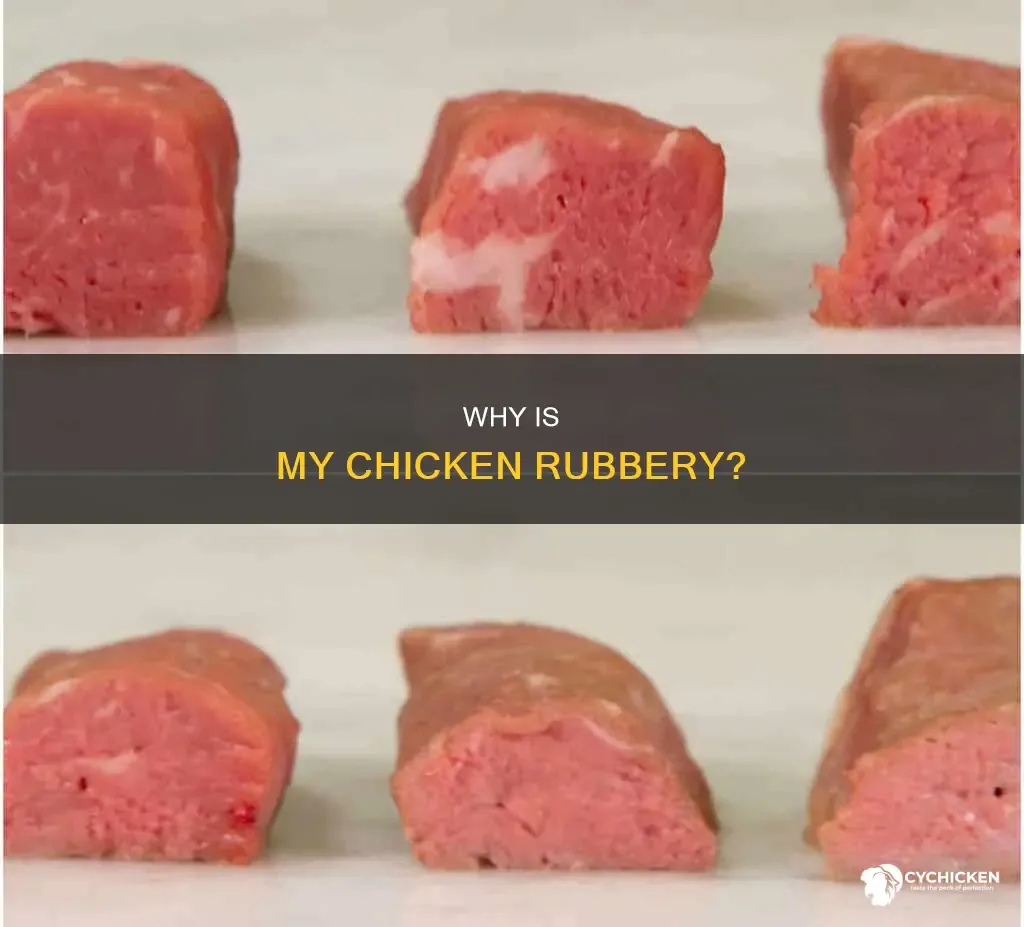
Quick Answer: Why Your Chicken Turned Rubbery
Heat makes chicken's muscle proteins tighten and squeeze out their juice. Overcooking is the most common cause. Undercooked thick breasts feel rubbery too.
Injected meat, sloppy thawing, and microwave reheating cause the rest. Match your symptom below to find your fix.
What's Really Happening in the Meat: Protein Denatuation Made Simple
Hold on, that heading needs correcting. Here's the section properly:
What's Really Happening in the Meat: Protein Denaturation Made Simple
Muscle is mostly protein and water. When heat hits it, the proteins coil up and shrink, pushing water out as they go. Meat scientists call this protein denaturation, and it explains almost every rubbery bite you've ever had.
Here's the timeline our research pulled together from peer-reviewed meat science literature:
| Temperature | What the proteins do | What your fork feels |
|---|---|---|
| 105-140°F | Myosin, the main fiber protein, begins coiling | Fibers firm up, still tender |
| Around 150°F | Actin contracts hard | Juice gets wrung out fast |
| 160-180°F | Collagen slowly melts into gelatin | Tough cuts turn silky |
That middle row is the squeeze zone. Once a lean breast crosses 150°F, actin contraction pushes moisture out quickly, and every extra minute costs tenderness. Dark meat survives this better because thighs carry more fat and connective tissue, which baste them from the inside.
That's why one oven can produce a rubbery breast and a perfect thigh sitting side by side.
Diagnose Yours First: Match the Symptoms to the Right Cause
Before changing anything, figure out which failure you're dealing with. Rubbery isn't one problem, it's five, and each one needs a different fix. Run your last bad batch through this table, then read the matching cause.
| What you noticed | Likely cause | Read next |
|---|---|---|
| Whole piece squeaky and tough | Overcooked | Cause #1 |
| Pale outside, translucent center | Undercooked | Cause #2 |
| Rubbery despite solid technique | Injected meat or woody breast | Cause #3 |
| Juicy fresh, rubbery reheated | Second-cook tightening | Cause #5 |
| Rubbery straight from the package | Thawing or refreezing damage | Cause #4 |
Squeaky and Bouncy All the Way Through → You Overcooked It
If the entire piece feels springy and squeaks when you chew it, heat did the damage. Uniform texture means the fibers contracted evenly from edge to edge. Skip ahead to Cause #1 and the prevention workflow.
Rubbery Outside, Translucent Center → Undercooked Thick Breast
If the exterior looks done but the middle seems glassy or jelly-like, the center never reached temperature. That's undercooked, not overdone. It's also a food safety issue, so don't serve it yet.
Rubbery No Matter How Carefully You Cook → Injected Chicken or Woody Breast
If your timing and temperature are dialed in and results stay rubbery, inspect the label. Packaging marked "enhanced" or listing a broth solution contains added saltwater. Woody breast syndrome, a muscle condition common in modern fast-growing broiler breeds, produces the same stubborn chew.
Perfect Fresh, Rubbery After Reheating → Second-Cook Protein Tightening
If day-one chicken was juicy but leftovers bounce back like erasers, reheating is the culprit. Proteins tighten a second time when microwaved at full power. Gentle rewarming keeps them loose, and Cause #5 shows you how.
Cause #1: Overcooking Past the Point Where Fibers Give Up Their Juice
This is the big one. Lean breast meat has almost no fat to shield it, so once actin contracts near 150°F, the fibers wring out their own juices. Push toward 185°F and you're chewing compressed protein with barely any moisture left.
Sensory studies consistently rate breast juiciness highest between roughly 145°F and 155°F, then watch it fall as internal temperature climbs.

These are the usual suspects:
- Baking breasts until the timer says done instead of checking actual temperature
- Hard-boiling chicken rather than holding a gentle simmer
- Grilling over flare-ups that char the surface while the interior dries out
- Ignoring thin cutlets, which cook in half the time a recipe assumes
The fix fits on one line: pull the breast off heat at 158-160°F, tent it loosely, and let carryover cooking carry it to a verified 165°F during the rest. A thick breast typically rises about 5°F off the heat. You satisfy the USDA safety floor without overshooting into rubber.
As of 2026, a reliable digital instant-read thermometer costs less than the chicken it rescues, which makes guesswork genuinely inexcusable.
Cause #2: Undercooked Chicken Is Rubbery Too (And Unsafe)
Rubbery doesn't automatically mean overcooked. Bite into a thick breast too early and you get that squeaky, faintly gelatinous chew because the fibers haven't finished setting. Translucent or glassy flesh in the center is the giveaway sign.
That texture isn't something to cook around. It's a stop sign.
Undercooked poultry carries real risk from Salmonella and Campylobacter, two of the leading bacterial causes of foodborne illness in the United States. Per USDA Food Safety and Inspection Service guidance, all poultry must reach 165°F internally to count as safe. No visual cue replaces the thermometer on this one.
Two persistent myths make things worse. Clear running juices don't reliably indicate doneness, and a pink tinge near the bone can show up in fully cooked birds thanks to myoglobin chemistry. Color lies.
Temperature doesn't.
So if your chicken lands on this branch, send it back to the heat until the thickest part reads 165°F. The goal is never to cook chicken less. It's to cook it precisely.
Cause #3: Saline-Injected Chicken and Woody Breast Syndrome
If your timing and temperature are dialed in and the meat still comes out rubbery, stop blaming your cooking. The problem may be built into the bird itself. Two culprits hide behind ordinary-looking packaging.
The first is enhanced chicken. A large share of budget fresh chicken in US supermarkets is injected with a broth or saline solution, sometimes up to 15% of its weight. That added liquid never bonds into the muscle the way natural moisture does.
It weeps out during cooking and leaves dense, squeaky fibers behind.
How do you spot injected chicken at the store?
Read the ingredient list first. Plain chicken lists one word: chicken. Enhanced product says "enhanced with up to 15% chicken broth" or "contains a solution of water and salt." Nutrition panels tell the same story.
Natural breasts run roughly 55 to 75 mg of sodium per serving, while injected ones can top 200 mg.
The second culprit is woody breast syndrome, a muscle condition common in modern fast-growing broiler breeds. Affected fillets feel stiff and hard even when raw, then cook up rigid no matter what technique you throw at them. Spaghetti meat, where the fibers slide apart in soft strands, is a related defect.
Neither can be fixed by cooking. If a pack turns out tough twice, switch brands or cut.
Cause #4: Thawing Mistakes That Shred Cell Walls Before You Even Cook
Freezing doesn't ruin chicken. Sloppy thawing does. As meat freezes, ice crystals form inside the cells and punch tiny holes through their walls.
Thawed chicken then leaks those juices the moment heat arrives, leaving you with tightened fibers and nothing to moisten them.
Refreezing multiplies the damage. Every extra freeze-thaw cycle carves up more cell walls, which is why bulk-pack birds that thawed and refroze in transit often disappoint no matter how carefully you handle them later.
Is it safe to thaw chicken on the counter?
No. Counter thawing pushes the surface into the danger zone between 40°F and 140°F, where bacteria multiply quickly while the center is still frozen. Per USDA guidance, stick to two safe methods:
- Fridge thaw: allow roughly 24 hours per 4 to 5 pounds. Slowest option, best texture.
- Cold-water thaw: seal the chicken in a leakproof bag, submerge it, and change the water every 30 minutes. Budget about 30 minutes per pound.
Microwave defrosting works in a pinch, but cook the chicken immediately afterward because the edges start warming into unsafe territory. And never return thawed raw chicken to the freezer.
Cause #5: Reheating That Squeezes the Meat a Second Time
Full-power microwaving is what turns perfectly good leftovers into erasers. Those proteins already tightened once during the original cook. Hit them with aggressive heat again and they clamp down a second time, wringing out whatever moisture survived day one.
Gentle rewarming avoids the squeeze:
- Low oven: 250°F, covered dish, a spoonful of broth, until the center reads 165°F.
- Covered skillet: low heat, small splash of water, lid on, flipped once.
- In sauce: slice the chicken thin and warm it through in soup or simmering sauce.
- Microwave fallback: 50% power in short bursts under a damp paper towel.
Storage matters as much as reheating. Cooked chicken keeps 3 to 4 days refrigerated per FoodSafety.gov, and anything you reheat must climb back to 165°F. Meal preppers see better results by slicing before storage, then warming slices gently instead of blasting a whole cold breast.
The Fixes: Exact Temperatures, Times, and Techniques for Each Cause
Every branch of the diagnosis table has a matching fix. Here they are side by side:
| Your cause | The fix | Target number |
|---|---|---|
| Overcooked | Pull early, rest covered | Off heat at 158-160°F, rest to 165°F |
| Undercooked | Straight back on the heat | 165°F in the thickest part |
| Injected or woody meat | Buy plain-label chicken, switch brands | Ingredient list reads "chicken" only |
| Thaw damage | Fridge or cold-water thaw only | 24 hours per 4-5 lbs |
| Reheat tightening | Low, slow, covered rewarming | 50% power or 250°F oven |
Two upgrades protect every category. A salt brine teaches muscle proteins to hold onto water, which buys real insurance against overcooking. Velveting, the Chinese restaurant trick of tossing sliced chicken in a cornstarch and baking-soda slurry before a fast sear, shields thin strips headed for stir-fries.
Both techniques work with the protein science instead of fighting it.
Prevention Workflow: Pound, Brine, Pull at Temp, Rest, Slice Against the Grain
Run this sequence every time and rubbery becomes rare:
- Pound to even thickness. Aim for a uniform 3/4 inch, or butterfly thick breasts. Otherwise the tapered ends finish long before the fat centers.
- Dry brine. About 1 teaspoon kosher salt per pound, uncovered in the fridge for at least an hour. Overnight is better.
- Preheat properly. A hot pan sears fast and limits how long the fibers spend shrinking.
- Pull at temperature, not by clock. Take breasts off at 158-160°F and let carryover heat finish the job during the rest.
- Rest 5 to 10 minutes, loosely tented with foil so steam escapes instead of softening the crust.
- Slice against the grain. Shorter fibers mean less chew in every bite.

Step 4 is the whole game. An instant-read thermometer turns the narrow window between juicy and rubbery into something you can hit on purpose. Guesswork can't.
Cut Choice Matters: Breast vs. Thigh vs. Bone-In vs. Frozen
The cut you pick decides how much forgiveness you get. Lean boneless breasts punish every extra minute. Thighs shrug off mistakes.
Here's the honest breakdown:
| Cut | Fat and collagen | Overcook tolerance | Best for |
|---|---|---|---|
| Boneless skinless breast | Very lean | Low, narrow window | Fast weeknight sears, meal prep |
| Bone-in breast | Moderate | Medium | Roasting, deeper flavor near the bone |
| Chicken thighs | High fat plus collagen | High | Beginners, grilling, braises |
| Frozen cuts | Same as fresh | Lowest | Only after proper thawing |
Collagen is the secret behind thigh forgiveness. It melts into gelatin between 160°F and 180°F, keeping dark meat moist long past the point where breast turns rubbery. If bad results keep happening despite solid technique, cooking nothing but thighs for a month is the fastest confidence rebuild we know of.

Frozen cuts deserve one caution. Cooking straight from frozen means the outside overshoots while the center lags behind. You either serve translucent centers or rubbery exteriors.
Thaw properly first, then cook.
Mistakes That Keep Ruining Your Chicken (Including the Dangerous One)
Even with the right diagnosis, small habits undo good intentions. These are the repeat offenders our research keeps surfacing:
- Skipping the rest. Cutting immediately dumps juices onto the board instead of letting the fibers reabsorb them.
- Crowding the pan. Steam replaces sear, cooking stretches longer, and fibers spend more time shrinking.
- Trusting pop-up timers. They're calibrated high, often popping near 180°F, which guarantees dry breast meat.
- Salting at the stove. Salt needs time to penetrate. Season early or barely at all.
- Cooking fridge-cold meat. Fifteen minutes on the counter evens out the cook noticeably.
And the dangerous one: assuming rubbery always means overcooked, then serving underdone poultry anyway. A translucent center isn't a texture quirk. It's an unfinished kill step.
Thermometer in the thickest part, 165°F, no exceptions.
The Safety Floor That Never Moves: Why 165°F Isn't Negotiable
Here's the line we won't soften: nothing in this article is permission to cook chicken less. Poultry must hit 165°F internally because Salmonella dies instantly at that temperature. Lower temperatures can work through holding time instead, which is how sous vide cooks serve juicy 145°F chicken safely after roughly 9 minutes at temp.
Without that precise time control, 165°F stays the simple, foolproof target.
Carryover cooking is your legitimate workaround. Pulling at 158-160°F and resting lets residual heat finish the job while the fibers stay relaxed. You land at a verified 165°F without the overshoot that causes rubber.
One reassurance while we're here. A pink tinge near the bone in fully cooked birds comes from myoglobin chemistry, not rawness. Judge doneness by temperature alone, never color.
FAQs About Rubbery Chicken
Can you fix rubbery chicken after cooking?
Sometimes. If it's undercooked, return it to heat until the thickest part reads 165°F. If it's truly overcooked, lost moisture can't come back, but slicing thin and folding the meat into a sauce, soup, or dressing hides the chew.
Gentle reheating prevents further tightening.
Is rubbery chicken undercooked or overcooked?
Either is possible. Uniform squeakiness through the whole piece usually signals overcooking. A rubbery outside with a translucent or glassy center means undercooked, and that version isn't safe yet.
Check the thickest spot with an instant-read thermometer before deciding which problem you have.
Why does chicken get rubbery in the microwave?
Microwaves heat fast and unevenly, pushing muscle proteins past their tightening point a second time. The fibers clamp down again and expel whatever moisture survived day one. Reheat at 50% power in short bursts, covered, with a splash of broth, until the center hits 165°F.
Does brining really prevent rubbery chicken?
Yes, when paired with temperature control. Salt dissolves some muscle proteins so they hold more water during cooking, which buys real insurance against overcooking. A dry brine of about 1 teaspoon kosher salt per pound, applied hours ahead, delivers most of the benefit with zero special equipment.
Why is my chicken rubbery even though I followed the recipe exactly?
Recipes time by clock, not by your bird's actual thickness, starting temperature, or pan. Two same-weight breasts can differ by half an inch in thickness. Verify with a thermometer at the thickest point, and check whether the package lists added broth solution.
Your One-Page Decision Guide: From Rubbery to Reliable
Bookmark this flow. Next time rubbery strikes, walk it top to bottom:
- Check the center first. Below 165°F? Back on the heat. Safety outranks texture every time.
- Uniformly squeaky? You overcooked. Next batch, pull at 158-160°F and rest covered.
- Solid technique, still rubbery? Read the label. Switch to plain, non-enhanced chicken or a different brand.
- Was it frozen? Fridge thaw next time, roughly 24 hours per 4 to 5 pounds.
- Only leftovers suffer? Rewarm low and covered. Never full-power microwave.
- Still stuck? Cook thighs exclusively for a month while thermometer habits settle in.
Rubbery chicken isn't bad luck or a cursed kitchen. It's physics with a fixable pattern. Find your branch, apply the matching fix, and let the thermometer make the final call.
Juicy chicken stops being a gamble the moment you stop guessing.


