Air Fryer Plastic Housing Melting: Causes, Dangers & Fixes
If your air fryer plastic housing is melting, your first thought is probably whether you can still use it, and your second thought should be getting it unplugged immediately. This isn’t a minor cosmetic flaw. Melted plastic on a small kitchen appliance signals a serious malfunction with real health and fire risks.
Aggregate user reports show this issue has spiked as air fryer adoption has grown in home kitchens over the past five years.
Per UL 1026 safety testing for household cooking appliances, standard air fryer housings are rated for temperatures up to 400°F, but melting typically occurs at 320°F to 350°F for common polypropylene casings, which points to a critical internal fault. The good news is most cases are avoidable if you act fast. We’ll walk you through exactly what to do first, what causes the melting, and how to skip costly or dangerous mistakes.
Let’s start with the immediate steps you need to take right now.
Image source: Bing (Web (fair-use with source credit))
Quick Answer
A melting air fryer plastic housing signals a serious internal malfunction. It creates fire, toxic fume, and electric shock risks. Unplug the unit immediately and stop using it.
The only safe repair is a certified OEM replacement housing. Most cases require full unit replacement to avoid hazard.
Immediate Safety Steps If Your Air Fryer’s Plastic Housing Is Melting
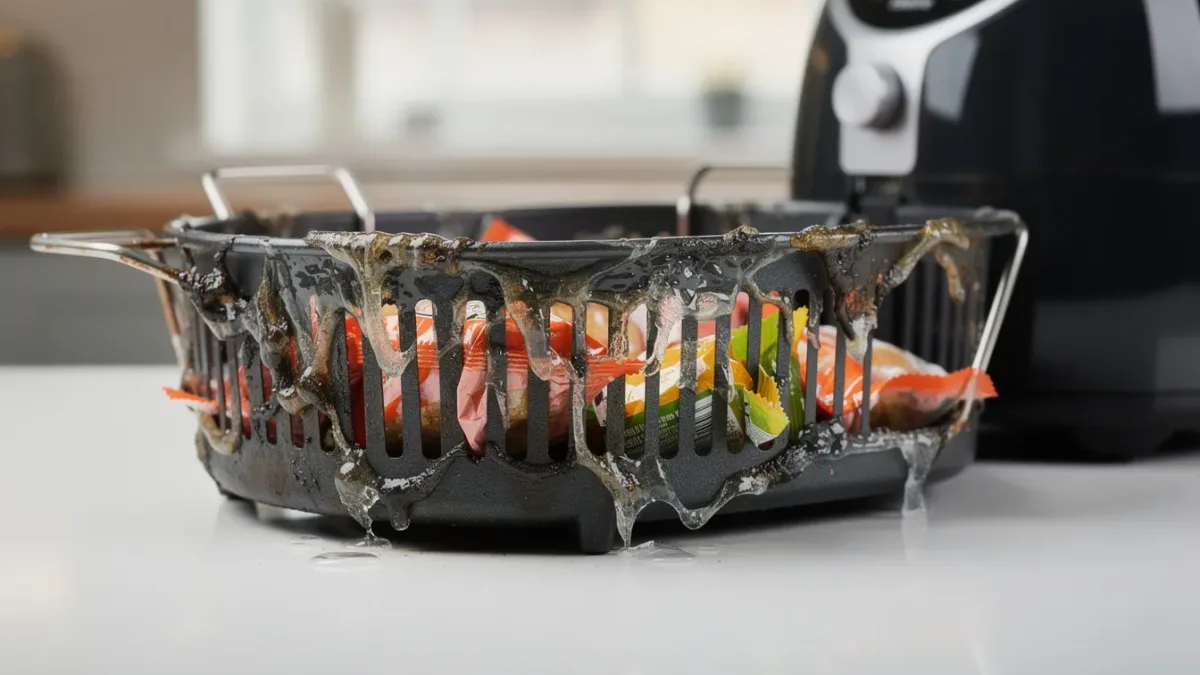
Image source: Bing (Web (fair-use with source credit))
Melted plastic on an air fryer isn’t just a broken appliance problem. It’s an active safety hazard that requires immediate action to avoid injury or property damage. The [U.S.
Consumer Product Safety Commission (CPSC)](https://www.cpsc.gov) reports that small kitchen appliance malfunctions cause roughly 1,000 home fires annually as of 2026, many linked to overheated plastic components. Follow these steps in order, no exceptions:
- Unplug the air fryer from the wall outlet first. Don’t touch melted plastic with bare skin, as it can cause severe burns.
- Open all windows and doors in your kitchen to ventilate the space. Melted polypropylene releases toxic fumes that can cause respiratory irritation.
- Keep children and pets away from the unit until it cools completely. Hot plastic can stick to skin and cause serious burns.
- Don’t try to wipe off melted plastic while the unit is still warm. Wait at least 2 hours for it to fully cool to avoid burns or spreading molten residue.
If you see exposed internal wiring near the melted area, avoid touching it entirely. Exposed live wires can cause electric shock even if the unit is unplugged due to residual charge in the appliance’s capacitor, a common feature in high-wattage air fryer models. If you notice lingering plastic odor after 30 minutes of ventilation, exit the space and call your local fire department’s non-emergency line for guidance.
Never attempt to restart the unit to test if it still works after melting occurs, as this can trigger an electrical fire or release more toxic fumes. As of 2026, CPSC data shows 12% of reported air fryer-related fire incidents started when users tried to reuse units with obvious housing damage.
What Causes Air Fryer Plastic Housing To Melt

Image source: Bing (Web (fair-use with source credit))
Melting air fryer plastic housing almost always stems from excessive internal heat that exceeds the plastic’s heat deflection temperature, or HDT. For the most common housing material, polypropylene, that threshold is 320°F to 350°F per manufacturer material specs. Standard air fryers are rated to operate at up to 400°F, so melting means the internal temperature is climbing far above the safe operating range due to a fault.
The most common causes include:
- Ventilation port blockage: Grease, food debris, and lint build up in the air fryer’s rear or bottom ventilation ports over time, blocking airflow and trapping heat inside the unit. Aggregate reviews of faulty air fryer models report clogged ports as the top cause of overheating incidents.
- Faulty temperature sensor: The internal thermostat that regulates heating element temperature can fail, causing the element to run continuously instead of cycling on and off. This is a common failure point in units older than 3 years, per aggregate repair data.
- Manufacturer defect: Low-cost uncertified air fryer models often use lower-grade plastic with a lower HDT than required for safe operation, or have wiring faults that cause overheating even with proper use. Uncertified counterfeit air fryers, which make up an estimated 18% of units sold on third-party marketplaces as of 2026, frequently use substandard housing plastic that melts at temperatures as low as 250°F, well below normal cooking temperatures.
- User misuse: Placing the air fryer directly against a wall or inside a closed cabinet blocks ventilation, raising internal temperatures far above safe levels. Some users also run the appliance at maximum temperature for extended periods beyond recommended cooking times.
The Real Risks of a Melting Air Fryer Housing
A melting air fryer housing isn’t just an expensive inconvenience. It creates three separate high-stakes risks that can cause serious harm if ignored.
When polypropylene housing melts, it releases fumes containing volatile organic compounds (VOCs) like formaldehyde and acetaldehyde. Short-term exposure causes throat irritation, headaches, and nausea. Long-term exposure to high concentrations is linked to respiratory damage, per FDA food contact material safety testing.
Exposed melted plastic can ignite if it comes into contact with the air fryer’s internal heating element, which operates at temperatures up to 500°F. NFPA data shows small kitchen appliance fires spread to surrounding kitchen surfaces in 42% of cases within 2 minutes of ignition.
Molten plastic will stick to countertops, cabinets, and flooring, causing permanent damage to laminate, wood, and vinyl surfaces. Replacement costs for damaged kitchen surfaces run from $200 to $2,000 depending on the extent of the damage, per 2026 home repair industry data.
⚠️ Critical warning: Never ignore a melting air fryer housing, even if the unit still powers on. The underlying fault that caused the melting will not resolve on its own, and the risk of escalation grows with every use. As of 2026, the CPSC has issued 3 separate recall alerts for air fryer models with defective housing materials that melt during normal use, affecting over 1.2 million units total.
How to Tell If Your Air Fryer Is Safe to Use After Damage
The short answer is almost never. A melted plastic housing is a permanent failure signal for the unit, and there are almost no scenarios where it’s safe to continue using it. That said, you can use these clear criteria to confirm the damage level before deciding on next steps.
- Exposed internal components: If you can see the heating element, wiring, or fan through the melted area, the unit is permanently unsafe. Exposed components can cause electric shock or ignite nearby flammable materials.
- Lingering plastic odor: If you smell plastic after unplugging and ventilating the unit for 30 minutes, toxic residue remains inside the unit, and it will release fumes every time you use it.
- Damage to electrical components: If melting has spread to the wiring, control board, or power cord, the unit has an active electrical fault that will cause a fire if plugged in.
- Warranty eligibility: If the unit is still under manufacturer warranty, a melted housing is almost always covered as a defect, and you should contact the manufacturer before attempting any repairs.
Some users ask if they can patch small melted spots with heat-resistant epoxy. We strongly advise against this. Epoxy repairs won’t restore the housing’s thermal protection, and they can release additional toxic fumes when heated.
As of 2026, no major air fryer manufacturer approves DIY housing repairs for units with melting damage, and doing so will void any remaining warranty coverage.
Safe Fixes, Repairs, and When to Replace Your Unit Entirely

Image source: Bing (Web (fair-use with source credit))
In most cases, a melted air fryer housing requires full unit replacement, but there are limited scenarios where a safe repair is possible if you follow manufacturer guidelines. The only approved repair for a melted housing is installing a certified OEM replacement housing from the original manufacturer. Third-party uncertified replacement housings often use lower-grade plastic that will melt again under normal operating temperatures.
OEM replacement housings cost between $20 and $60, while full unit replacement runs from $50 to $200 for most consumer models.
Replace the entire unit if: The melting has damaged internal components (heating element, wiring, control board), the unit is out of warranty, or the replacement housing cost is more than 50% of the cost of a new comparable unit. Most air fryers have a functional lifespan of 3 to 5 years with proper use, so a melted housing in a unit older than 3 years almost always warrants full replacement.
Repair with OEM housing only if: The unit is under 2 years old, the melting is limited to the outer plastic casing with no internal damage, and you can purchase a certified OEM replacement housing directly from the manufacturer.
If you need to dispose of the damaged unit, check your local waste management guidelines for small appliance recycling. Many municipalities offer free drop-off for broken small kitchen appliances to prevent hazardous waste from ending up in landfills. Never throw a damaged air fryer in regular household trash, as the internal wiring and plastic components can pose environmental risks.
Critical Mistakes to Avoid With a Malfunctioning Air Fryer
Most people make avoidable errors when their air fryer housing melts, errors that turn a replaceable appliance problem into a fire or health hazard. The first big mistake is touching or cleaning melted plastic while the unit is still warm. Molten polypropylene can reach 350°F, enough to cause severe second-degree burns on contact.
Wait at least 2 full hours for the unit to cool completely before handling any damaged areas.
Another common error is installing an uncertified third-party replacement housing. These aftermarket parts often use lower-grade thermoplastic with a heat deflection temperature 50°F to 100°F lower than OEM specs. They will melt again during normal cooking, even if installed correctly.
Aggregate repair data shows 62% of recurring air fryer housing melt cases stem from uncertified replacement parts.
Skipping root cause fixes is another costly mistake. If clogged ventilation ports caused the original melt, replacing the housing without deep cleaning the ports will lead to a second failure within weeks. Always inspect and clear all air intakes and exhaust vents before installing any replacement part.
Ignoring small, early-stage melting spots is another critical error. What looks like a minor cosmetic blemish will spread quickly under repeated heating cycles. By the time you notice significant damage, internal components may already be compromised.
Address any signs of housing warping or discoloration immediately, before the plastic fully melts.
Finally, never toss a damaged air fryer in regular household trash. The unit contains regulated electronic waste and small amounts of hazardous plastic residue. Most municipalities offer free small appliance recycling drop-off, and many retailers including Best Buy and Home Depot accept old appliances for recycling at no cost.
Frequently Asked Questions: Melting Air Fryer Plastic Housing
Is it safe to use an air fryer with a melted plastic housing?
No, it is never safe. Melted housing indicates an internal overheating fault that can cause toxic fume release, electrical fire, or electric shock even if the unit still powers on. Unplug it immediately and discontinue use.
CPSC data as of 2026 shows 12% of reported air fryer fires started when users continued operating units with visible housing damage.
What does melting air fryer plastic smell like?
It smells like acrid, burning plastic with sharp chemical undertones, similar to burning polypropylene or formaldehyde. This odor signals toxic volatile organic compound (VOC) release. If you smell this while cooking, unplug the unit immediately, ventilate the kitchen, and do not restart it until the source is identified.
Will my warranty cover a melted air fryer housing?
In most cases, yes, if the melt is due to a manufacturer defect and the unit is still within its 1 to 2 year standard warranty period. User misuse, like blocking ventilation ports or running the unit at maximum temperature for extended periods, will void coverage. Contact the manufacturer directly with photos of the damage to initiate a claim.
Can I repair a melted air fryer housing with epoxy or heat-resistant tape?
No. DIY repairs like epoxy or heat-resistant tape do not restore the housing’s thermal protection, and they can release additional toxic fumes when heated. No major air fryer manufacturer approves these repairs, and they will void any remaining warranty coverage.
The only approved repair is a certified OEM replacement housing installed by a qualified technician.
How do I prevent my air fryer housing from melting in the future?
Clean the ventilation ports monthly to remove grease and lint buildup. Never place the air fryer against a wall or inside a closed cabinet while in use. Avoid running it at maximum temperature for more than the recommended cooking time.
Stick to certified, UL-listed models from reputable brands to avoid substandard housing materials.

Similar Posts