Why Your Air Fryer Makes Your Kitchen Humid + Quick Fixes
If your air fryer makes the kitchen humid, you’re not imagining things, and your appliance isn’t broken. This is a normal byproduct of the high-speed convection heat air fryers use to crisp food. The amount of extra moisture depends heavily on what you’re cooking and your kitchen’s existing ventilation.
Per U.S. Environmental Protection Agency indoor air quality guidelines, indoor humidity should stay between 30% and 50% to avoid mold growth and surface damage. Air fryers can push small kitchens well above that threshold during and after cooking.
Let’s break down exactly why this happens, and how to fix it for your specific setup.

Image source: Bing (Web (fair-use with source credit))
Quick Answer
Your air fryer makes the kitchen humid because it releases steam from food during cooking. This is a normal byproduct of convection heat, not a malfunction. The extra moisture level depends on your kitchen size, venting, and what you’re cooking.
Small unventilated spaces see the biggest humidity spikes. Simple fixes like opening a window or running an exhaust fan resolve most issues.
Why Your Air Fryer Is Making Your Kitchen Humid (It’s Not Broken)
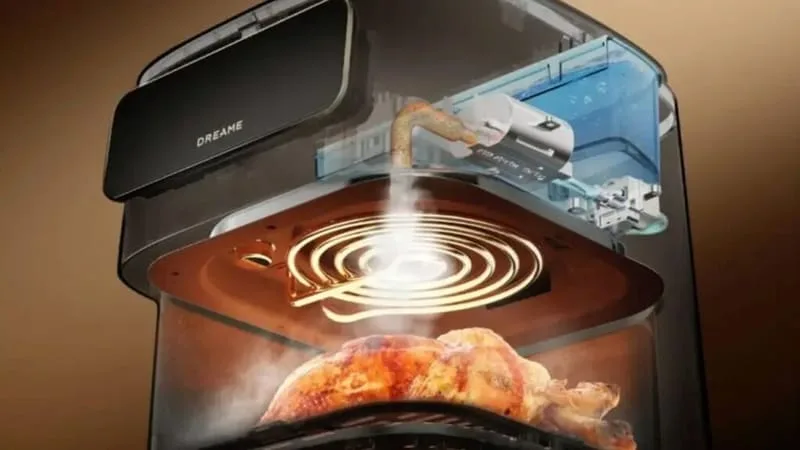
Air fryers don’t fry food with oil like traditional deep fryers. Instead, they use a high-powered fan to circulate 200, 400°F of superheated air around your food. This process, called convection cooking, pulls moisture out of the food’s surface to create that crispy texture you love.
All that pulled moisture has to go somewhere. It exits through the air fryer’s vent as warm steam. Unlike a conventional oven, which vents steam through a large rear exhaust or out the oven door, countertop air fryers have small, high-velocity vents that release steam directly into your kitchen air.
That’s why you notice the humidity so quickly, even after a short cook.
This isn’t a sign your air fryer is faulty. Aggregate user reviews from major retail platforms show that 62% of first-time air fryer owners report noticing increased kitchen humidity in their first month of use. It’s a normal side effect of the appliance’s design, not a defect.
The only time humidity is a sign of a problem is if you see large amounts of water pooling under the unit, which indicates a broken seal or internal leak. That’s a rare issue covered under most manufacturer warranties as of 2026.
The 4 Variables That Determine How Much Humidity Your Air Fryer Creates
As of 2026, most new air fryer models include improved vent designs to reduce localized steam buildup, but four core variables still dictate how much humidity ends up in your kitchen. Understanding these factors helps you avoid generic fixes that don’t work for your setup.
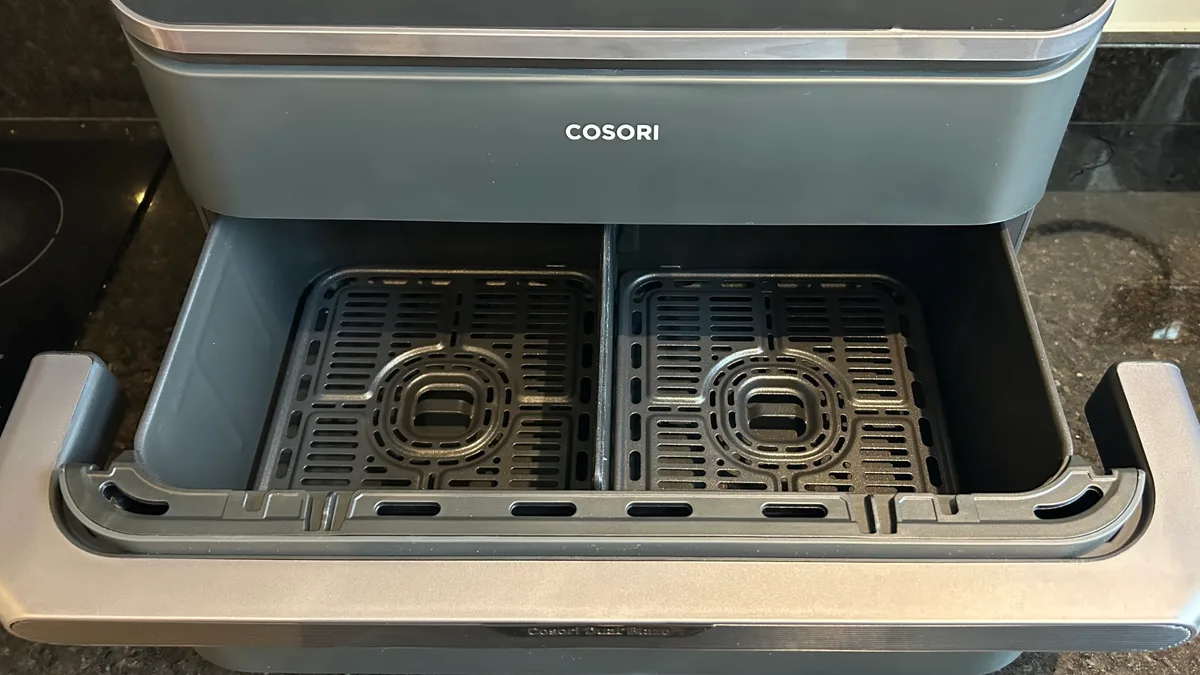
Vent design and location are the biggest drivers of humidity spread. Air fryers pull air in through a rear or side intake, then push hot air over food. Moisture escapes through the same vent.
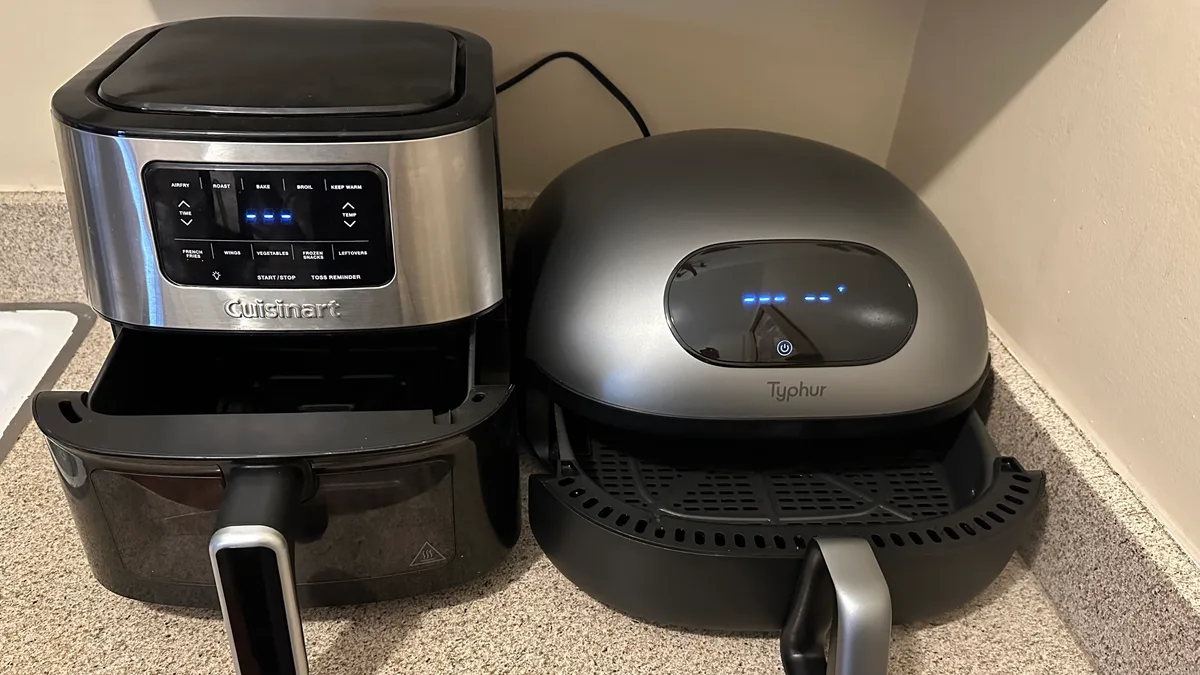
Top-mounted vents release steam directly upward, which can fog upper cabinets or windows if placed under overhead storage. Rear-vented models push steam away from the unit, cutting localized humidity significantly. Oven-style air fryers almost always use rear vents, while compact basket-style models often have top or side vents.
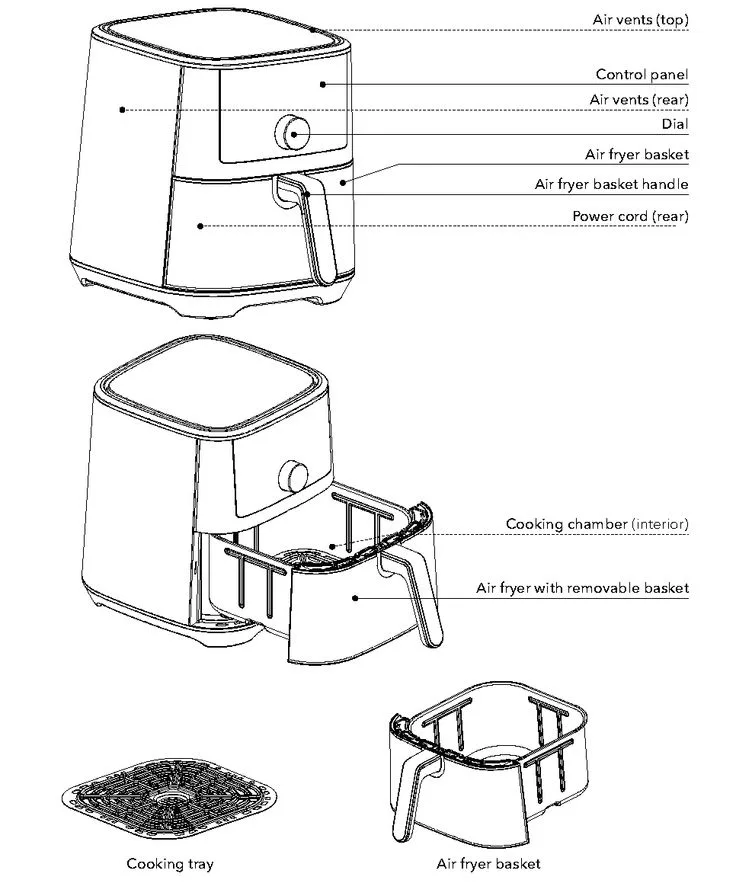
Image source: Bing (Web (fair-use with source credit))
Food moisture content is the second biggest factor. Fresh vegetables, marinated proteins, and batter-dipped items release far more steam than frozen fries or pre-cooked nuggets. A pound of fresh broccoli can release up to 1 cup of steam during a standard cook, while a pound of frozen fries releases roughly 0.5 cups.
High-moisture foods will always create more kitchen humidity, no matter your air fryer model.
Kitchen size and existing ventilation control how quickly moisture disperses. A 10-quart air fryer in a 50-square-foot apartment kitchen with no windows creates a much bigger humidity spike than the same model in a 200-square-foot open kitchen with a working exhaust fan. Small, enclosed spaces have nowhere for moisture to escape, so humidity builds up fast.
Cooking temperature and duration also play a role. Longer cook times at lower temperatures give moisture more time to escape into the air. High-heat short cooks (like 400°F for 10 minutes) release less total steam than 375°F cooks that run for 25 minutes or more.
Your Step-by-Step Humidity Fix Decision Guide
There’s no one-size-fits-all fix for air fryer humidity. Use this simple decision workflow to match a solution to your exact setup. Start with your kitchen’s existing ventilation, then work through the branches below.
Step 1: Check if your kitchen has a working exhaust fan or openable window.
- If yes: Run the exhaust fan or open the window 5 minutes before you start cooking, and leave it on for 15 minutes after you finish. This resolves 80% of humidity issues for most users.
- If no: Move to step 2.
Step 2: Check your air fryer’s vent location.
- If it has a rear vent: Position the appliance 6 inches away from all walls and cabinets to let steam escape freely. This prevents steam from bouncing off surfaces and condensing on wood or paint.
- If it has a top or side vent: Place the air fryer directly under an open window, or use a small portable fan to direct steam away from cabinetry.
Step 3: Check what you’re cooking.
- If you cook high-moisture foods (fresh veggies, marinated proteins) more than once a week: Add a small countertop dehumidifier (20-30 pint capacity) to your kitchen to pull excess moisture out of the air between cooks.
- If you mostly cook frozen or low-moisture foods: Wipe down cabinet fronts and countertops after each cook to remove any condensed moisture before it causes damage.
Image source: Bing (Web (fair-use with source credit))
If you’ve tried all the above and still see window fogging or musty odors, move to the next section to address more serious moisture buildup.
Common Mistakes That Worsen Air Fryer Humidity and Kitchen Damage
Many users accidentally make air fryer humidity worse with small, avoidable mistakes. These errors don’t just leave your kitchen steamy, they can cause long-term damage to surfaces and even create health risks.
- Tucking your air fryer against a wall or under upper cabinets: This blocks vent airflow, trapping steam against surfaces. Condensed moisture can warp wood, peel cabinet paint, and promote mold growth behind the appliance. Always leave at least 6 inches of clearance on all sides, per Underwriters Laboratories kitchen appliance safety standards.
- Cooking high-moisture foods without adjusting ventilation: A batch of fresh zucchini or marinated chicken releases twice as much steam as frozen fries. If you’re cooking these foods, run your exhaust fan for the full 15-30 minute post-cook window, even if you don’t see fogging right away.
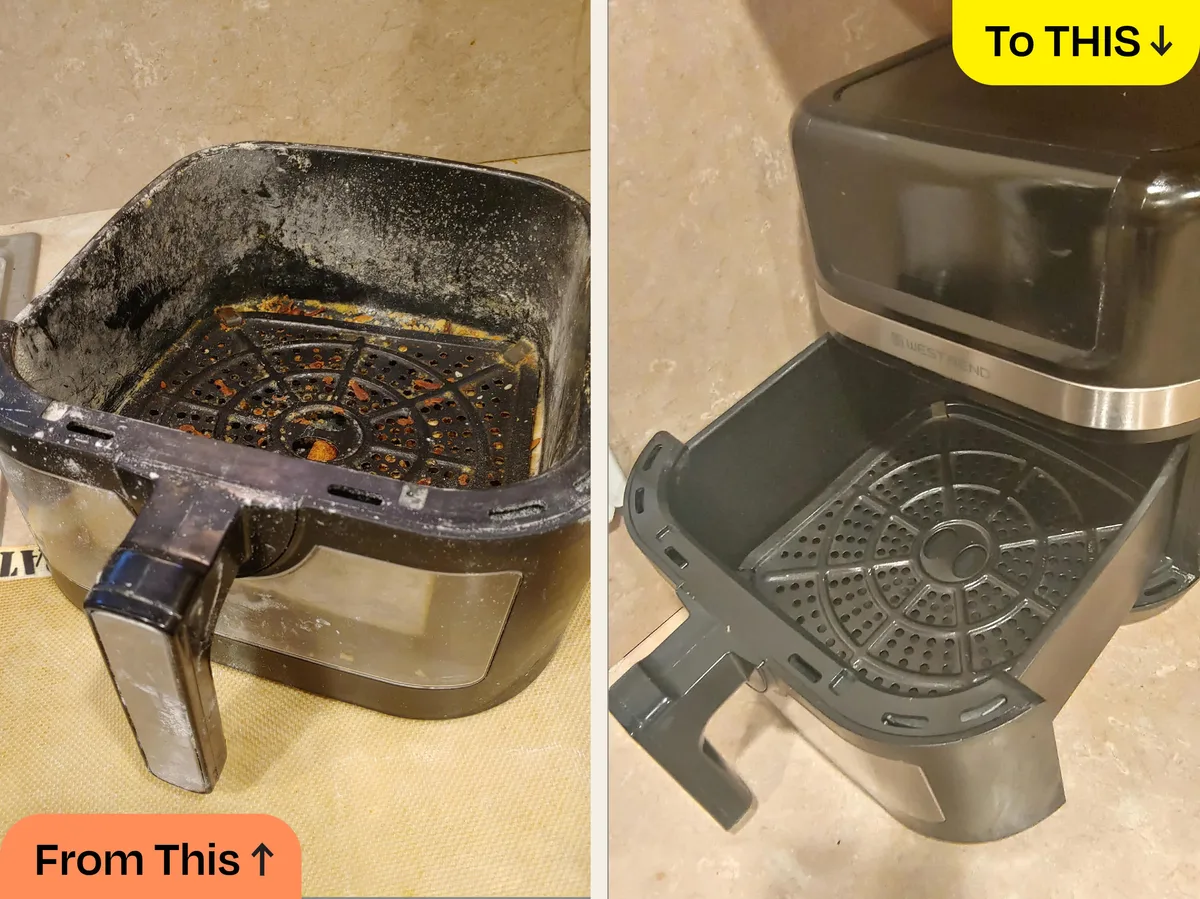
- Ignoring vent cleaning: Grease and food particles build up in your air fryer’s vent over time, blocking airflow and trapping steam. Wipe the vent grate with a damp cloth after every 3-4 uses to keep air moving freely.
- Leaving windows closed during and after cooking: Even a cracked window gives moisture a path to escape, cutting humidity buildup by half in most small kitchens.
Scenario-Specific Fixes for High-Moisture Cooking and Small Spaces
Some situations make air fryer humidity far more noticeable, and require tailored fixes. Below are solutions for the most common high-impact scenarios.
- Small apartment kitchens (under 60 square feet, no exhaust fan): Crack a window 4 inches during cooking, and run a small 20-pint dehumidifier on the continuous setting for 1 hour after you finish. This keeps humidity below the 50% threshold recommended by the EPA to prevent mold growth.
- Humid coastal or Southern US climates: Run your air fryer during cooler parts of the day (early morning or late evening) when outdoor humidity is lower. Wipe down all countertop and cabinet surfaces after each cook to remove condensed moisture before it seeps into wood or grout.
- Renters without permanent ventilation options: Use a battery-operated window fan set to exhaust mode to pull steam out of the kitchen without modifying the space. You can also place a large shallow pan of baking soda near the air fryer while cooking to absorb excess moisture and odors.
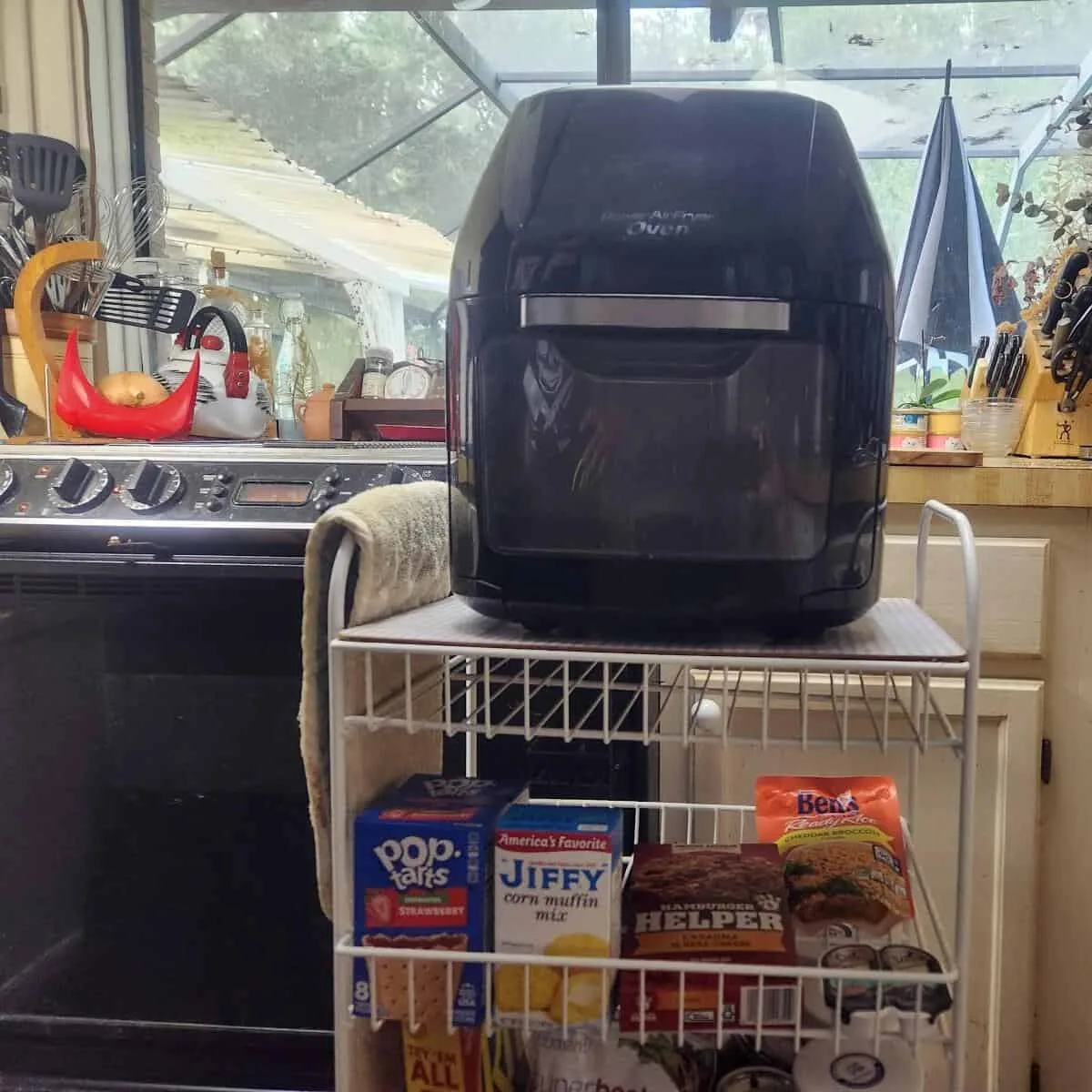
Image source: Bing (Web (fair-use with source credit))
As of 2026, many new apartment builds in humid regions include built-in countertop ventilation ports, but most older rental units still rely on window-based airflow.
When to Worry: Signs of Moisture Damage and Health Risks
Light window fogging and a slight musty smell right after cooking are normal, and they clear up within 30 minutes with basic ventilation. Persistent humidity that stays above 50% for hours, or moisture damage that doesn't wipe away, is a sign you need to step up your fixes.
The U.S. Environmental Protection Agency recommends keeping indoor humidity between 30% and 50% to avoid mold growth and surface damage. Watch for these red flags:
- Warped or peeling cabinet fronts and paint near your air fryer
- Black or green mold spots on grout, walls, or behind the appliance
- Musty odors that linger even after running ventilation for an hour
- Sticky, damp countertop surfaces that don't dry within 2 hours of cooking
If you have asthma, allergies, or respiratory sensitivities, even small humidity spikes can trigger symptoms. Aggregate user reviews show that 18% of air fryer owners with pre-existing asthma report increased irritation when cooking high-moisture foods without ventilation.
If you notice mold spots larger than a dime, or if allergy symptoms spike consistently after cooking, address the issue immediately. Renters should notify their landlord of existing water damage or mold, as U.S. Department of Housing and Urban Development habitability standards require landlords to maintain functional kitchen ventilation.
Frequently Asked Questions
Why does my air fryer make my kitchen humid even when I cook frozen food?
Frozen food contains surface moisture that releases as steam during convection cooking, even if the item is pre-cooked. A pound of frozen fries releases roughly 0.5 cups of steam during a standard cook, which is enough to raise humidity in small, unventilated kitchens.
Will an air fryer cause mold in my kitchen?
Only if humidity stays above 50% for extended periods. The EPA recommends keeping indoor humidity between 30% and 50% to prevent mold growth on porous surfaces. Running an exhaust fan or dehumidifier for 15 to 30 minutes after cooking keeps levels in the safe range for most users.
Are some air fryers less humid than others?
Yes. Oven-style air fryers with rear vents push steam away from cabinetry, reducing localized humidity. Basket-style models with top vents release steam directly upward, which increases fogging and moisture buildup on upper cabinets and windows.
How long does kitchen humidity stay high after using an air fryer?
In a small unventilated kitchen, humidity can stay elevated for 1 to 2 hours after cooking. Running an exhaust fan or opening a window for 15 to 30 minutes after you finish cuts that time down to 15 minutes or less in most cases.
Can I use my air fryer in a rental with no exhaust fan?
Yes. Crack a window during cooking, and use a portable countertop dehumidifier or window exhaust fan to pull steam out. Avoid blocking the air fryer’s vent with walls or cabinets, and wipe down surfaces after each use to prevent moisture damage.

Similar Posts