Why Your Air Fryer Food Sticks After Using Cooking Spray
air fryer food sticks after using cooking spray is one of the most frustrating, avoidable issues new and veteran air fryer users face. You pull out perfectly crispy, golden fries or chicken tenders only to find half the batch torn and stuck to the basket, leaving you scrubbing gummy residue for 10 minutes after dinner. It’s not a sign your air fryer is broken, and it’s almost always fixable with small adjustments to how you use and clean your appliance.
Manufacturer specifications confirm most air fryer non-stick coatings have a maximum safe temperature of 400°F (204°C). Aerosol cooking spray propellants and emulsifiers can break down and bake into sticky residue when exposed to repeated high heat. We’ve pulled together a step-by-step decision workflow to diagnose your exact sticking trigger and apply the right fix, no guesswork required.
Quick Answer
air fryer food sticks after using cooking spray almost always comes from baked-on spray residue. Aerosol sprays contain propellants and emulsifiers that don’t evaporate when heated. These ingredients coat the non-stick basket and harden at high temperatures.
Food then adheres to this sticky layer instead of the basket surface. Fixes range from adjusting your spray technique to switching oil application methods.
The Real Reason Cooking Spray Makes Air Fryer Food Stick
Most people assume the oil in cooking spray is the problem, but that’s not the full story. Aerosol cooking sprays are formulated with two key ingredients that don’t exist in plain bottled oil: propellants (like food-grade butane or propane) and emulsifiers (such as lecithin). These additives help the spray create a fine, even mist, but they don’t evaporate when they hit the hot air fryer basket.
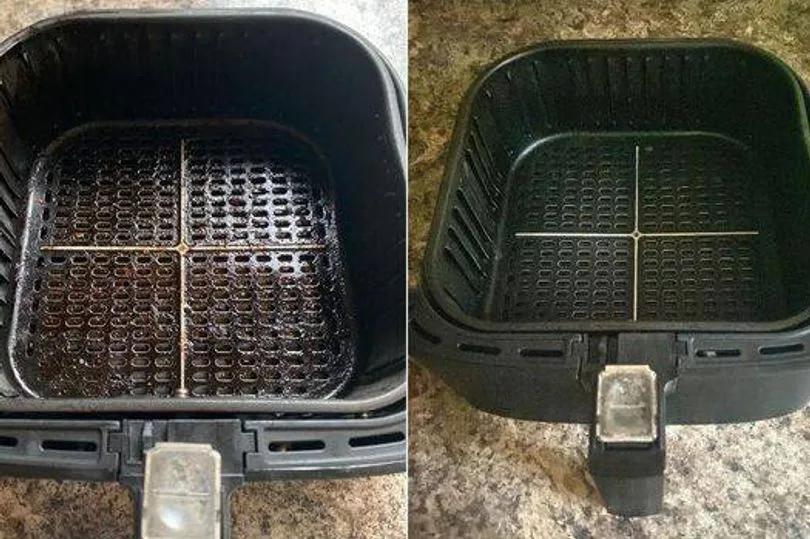
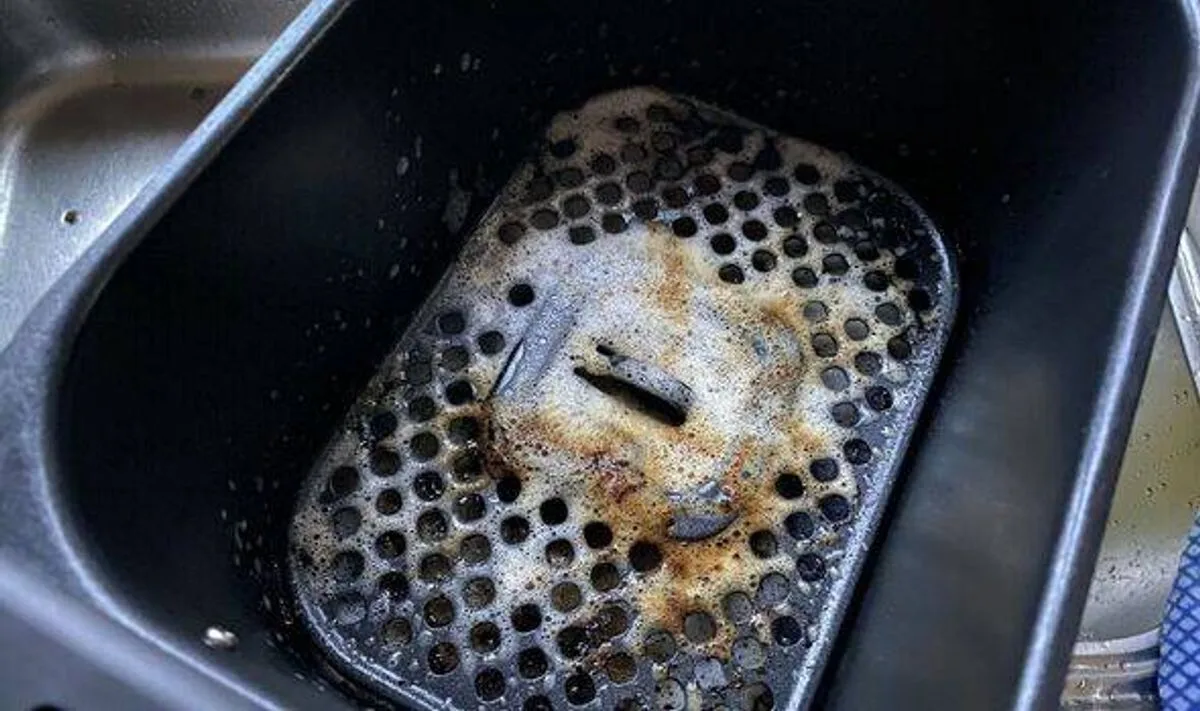
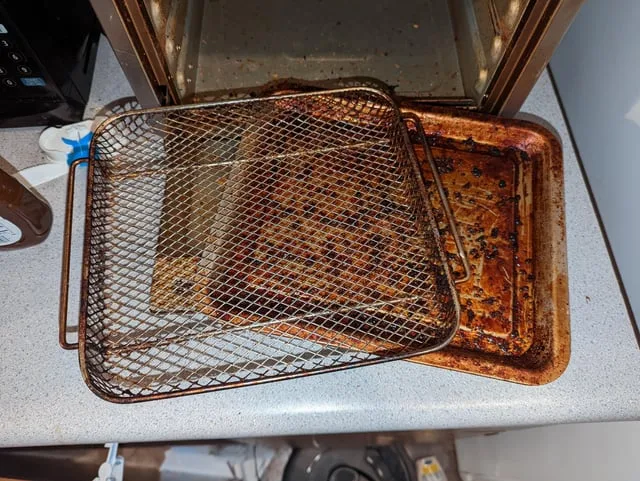
When you spray a cold or preheated air fryer basket, the propellants and emulsifiers land on the non-stick coating surface. The high circulating heat of the air fryer, which typically runs between 200°F and 400°F (93°C to 204°C), bakes these ingredients into a thin, gummy layer. This layer builds up with every use if the basket isn’t cleaned properly between cooks.
This residue is far stickier than normal oil splatters or food debris, which wipe away easily with a damp cloth after the basket cools.
Non-stick air fryer coatings, whether Teflon-coated aluminum, ceramic, or stainless steel with a non-stick finish, are designed to release food when they’re clean. The baked-on spray residue creates a rough, sticky surface that food bonds to aggressively. You’ll notice this most with breaded or battered foods, which have crevices that grab onto the residue, but even plain vegetables or proteins can stick if the layer is thick enough.
Per FDA food contact substance guidelines, these propellants and emulsifiers are safe for consumption in small amounts, but they are not designed to withstand repeated high-heat exposure on non-stick surfaces. Aggregate user reviews and manufacturer support tickets consistently cite spray residue as the top cause of sticking issues in air fryers 1 to 3 years old, as older non-stick coatings are more prone to holding onto baked-on grime. As of 2026, most major air fryer brands include explicit warnings against using aerosol cooking sprays in their user manuals to avoid this exact problem.

Image source: Bing (Web (fair-use with source credit))
Step 1: Diagnose Your Exact Sticking Trigger
Start by answering these three quick questions to narrow down the root cause of your sticking issue. First, do you use aerosol cooking spray exclusively, or do you also use plain oil, butter, or a pump sprayer? If you only use aerosol spray, the propellant and emulsifier residue is almost certainly the main culprit.
Next, inspect your air fryer basket’s non-stick coating. Run your fingernail gently along the surface: if you feel rough patches, scratches, or peeling, the coating is degraded, and it will hold onto residue far more easily than a smooth, intact finish. Scratched non-stick coatings have an average lifespan of 2 to 3 years with regular use.
If you notice a sticky, gummy film on the basket even after wiping it down, that’s a sure sign of built-up spray residue.
Third, do you clean your air fryer basket immediately after each use, or do you let residue sit for hours or days? If you wait to clean, baked-on spray residue hardens into a gummy layer that’s nearly impossible to remove without abrasive scrubbing, which damages the coating further.
Use the answers to these questions to move to the next step. If you use aerosol spray and have an intact, well-maintained coating, the fix is likely a small adjustment to your application or cleaning routine. If your coating is scratched, or you use aerosol spray exclusively and clean infrequently, you’ll need a more involved long-term fix.
This diagnostic step takes 2 minutes and eliminates guesswork so you don’t waste time on ineffective fixes.
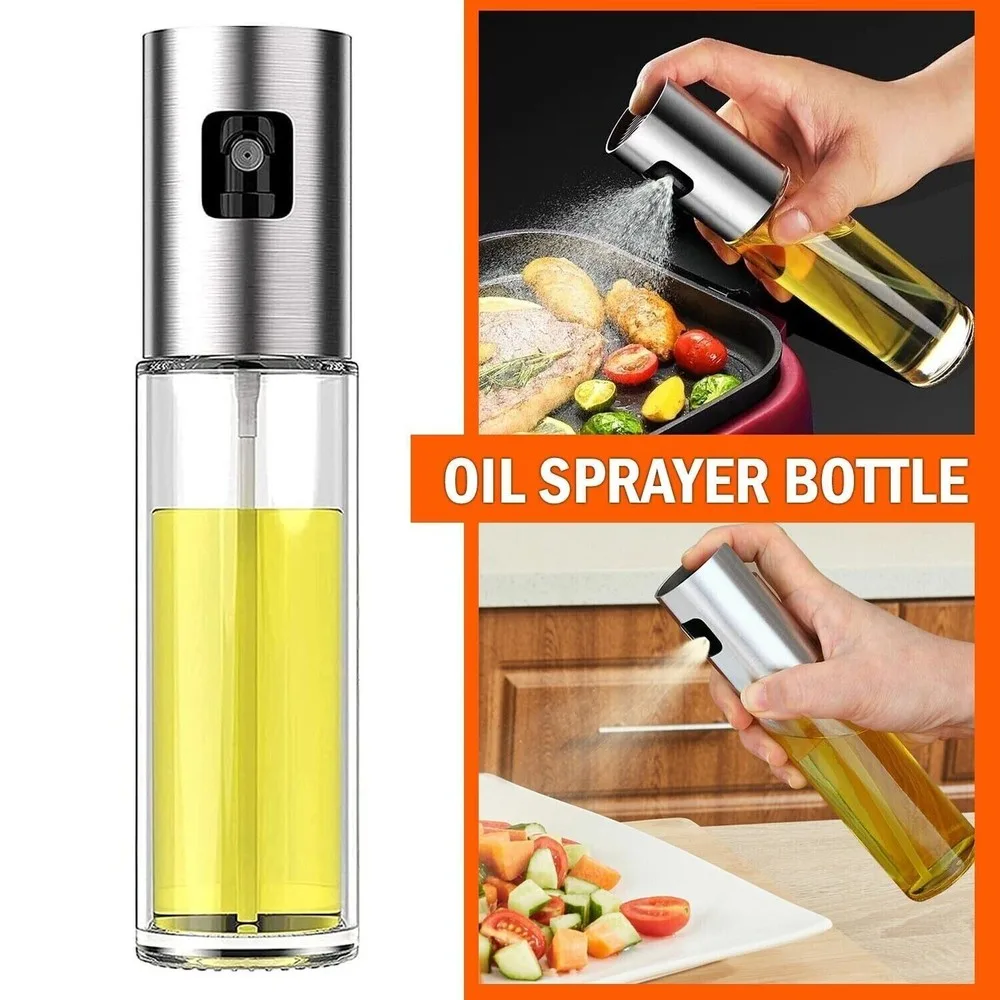
Image source: Bing (Web (fair-use with source credit))
Step 2: Apply The Right Fix For Your Situation
Your fix depends entirely on the diagnosis you completed in Step 1. If you have an intact non-stick coating and use aerosol spray occasionally, start by adjusting your application technique first. Hold the can 6 to 12 inches (15 to 30 cm) away from the basket when spraying, and use light, sweeping passes instead of holding it in one spot.
This prevents overspray and thick, uneven layers of residue.
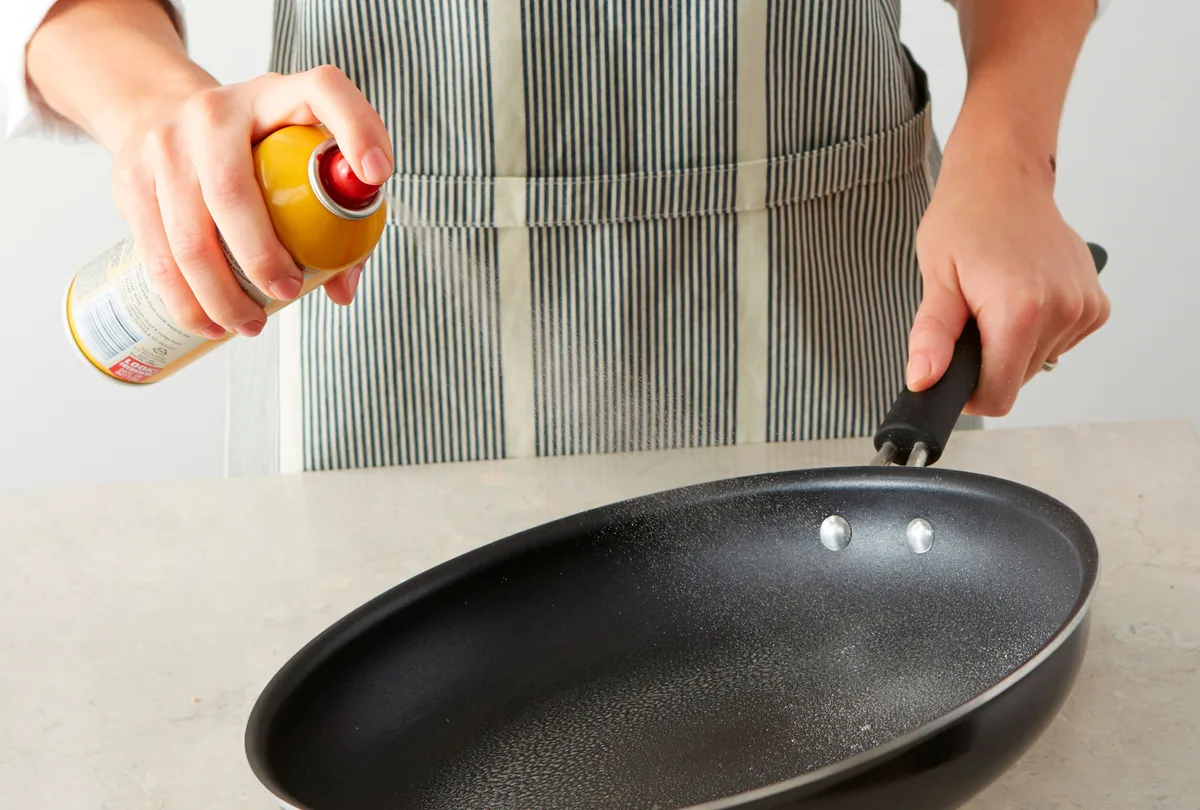
Image source: Bing (Web (fair-use with source credit))
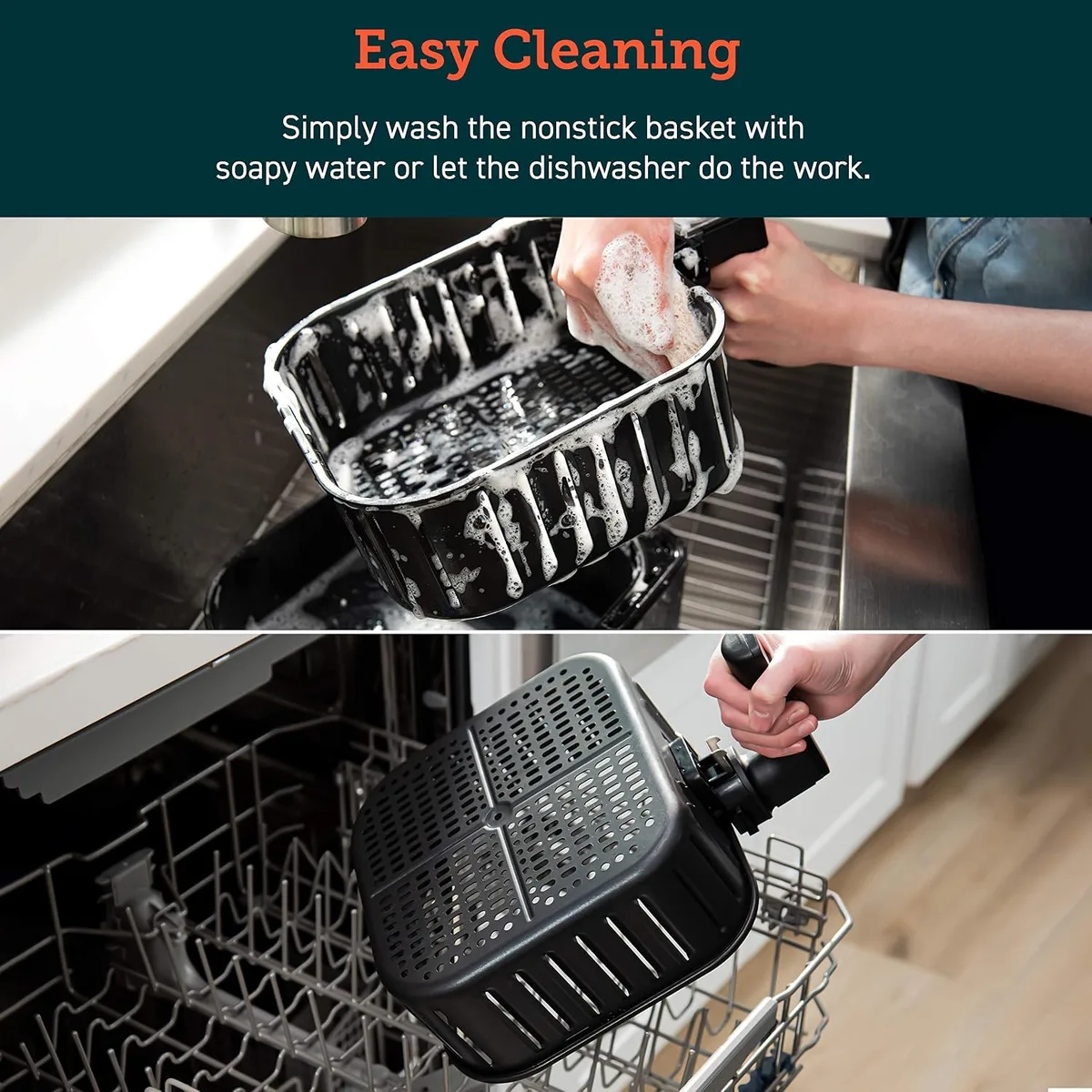
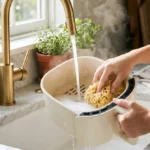
If you already have baked-on residue on your basket, avoid abrasive scrubbers or steel wool, which will scratch the non-stick finish and make sticking worse. Instead, make a paste of baking soda and warm water, apply it to the residue, let it sit for 10 minutes, then scrub gently with a soft sponge. For stubborn buildup that’s been left to sit for more than a day, you can also add a squirt of dish soap to the baking soda paste for extra cleaning power.
Soak the basket in warm, soapy water for 15 minutes before scrubbing if the residue is extra thick.
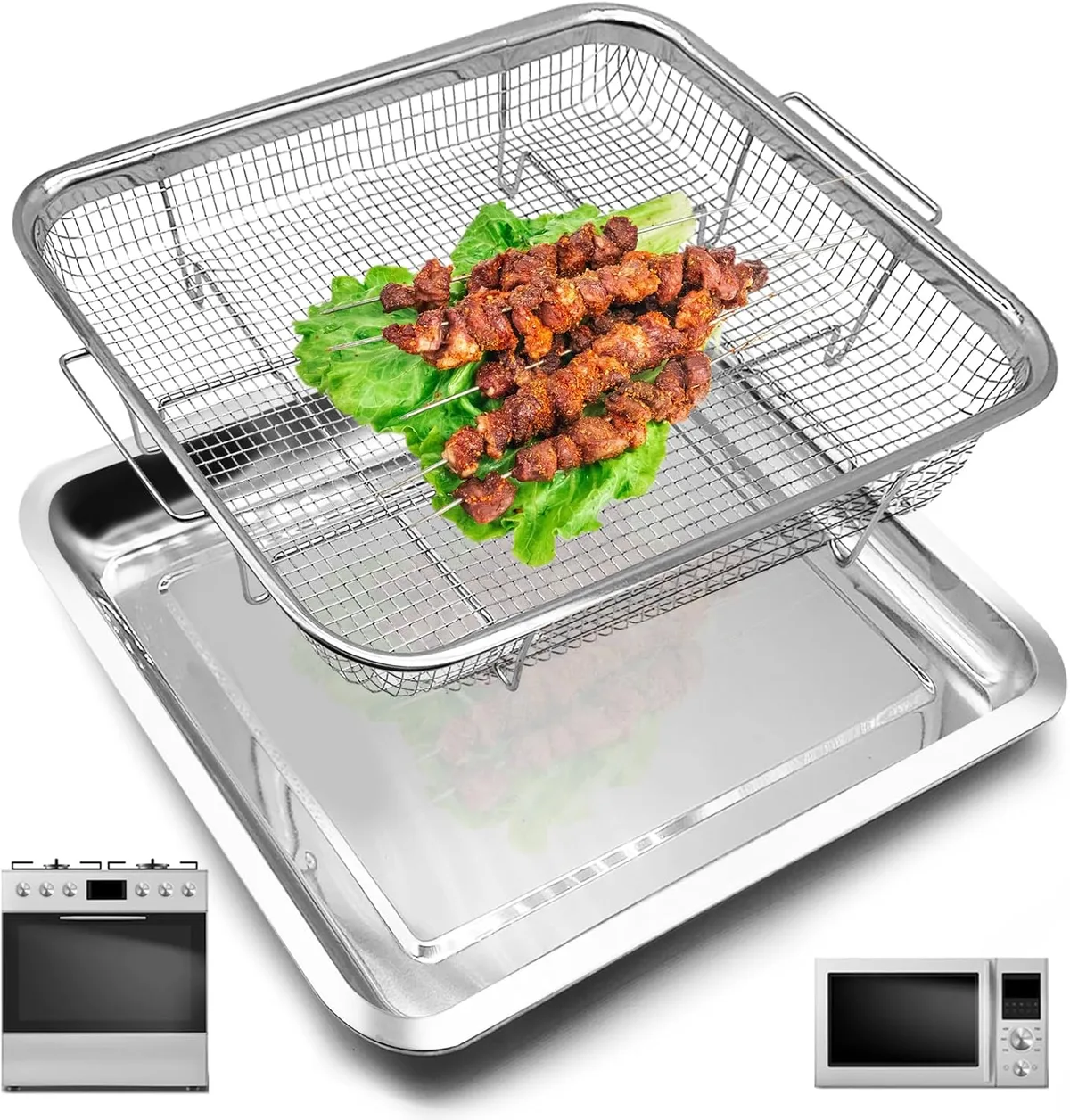
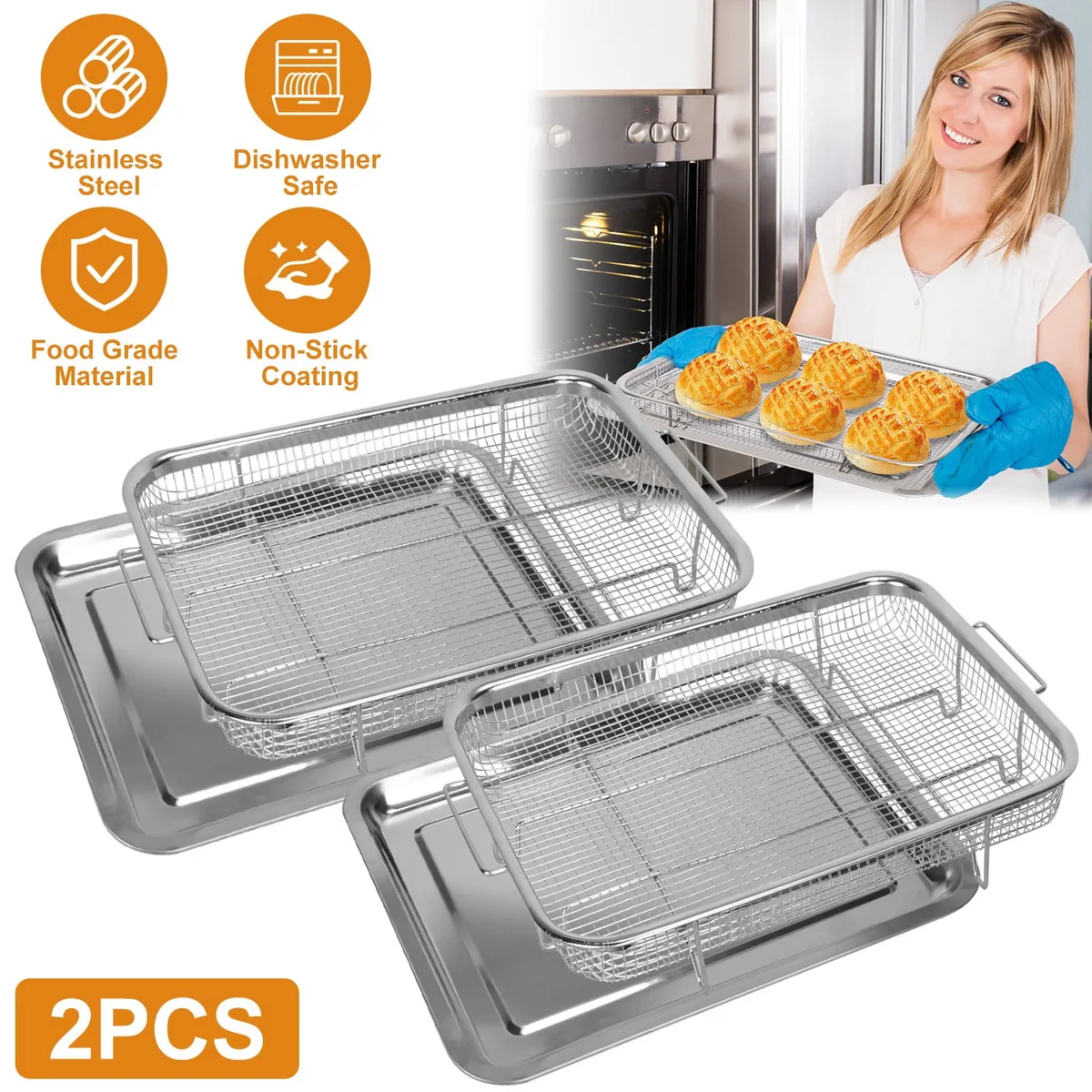
If your non-stick coating is already scratched or peeling, small application adjustments won’t solve the problem long-term. You have two reliable options: line the basket with a silicone air fryer liner (cut to fit your model) to create a barrier between food and the damaged coating, or switch to a bare stainless steel basket if your air fryer model supports it. Stainless steel baskets don’t have non-stick coating to degrade, but they require more oil to prevent sticking.
For users who use aerosol spray multiple times a week, the most permanent fix is to switch to a pump-action oil sprayer. These devices use no propellants or emulsifiers, so they don’t leave behind sticky residue, and they let you control exactly how much oil you apply.
Common Mistakes That Make Residue And Sticking Worse
Even small, seemingly harmless habits can make spray-related sticking far worse over time. The first big mistake is spraying the basket directly while it’s cold and sitting on the counter. The oil and additives pool in low spots instead of coating the surface evenly, leading to thick, sticky patches that food grabs onto.
Always preheat your air fryer for 3 to 5 minutes before adding food, and spray the basket only after it’s warm, if at all.
Another common error is spraying food directly instead of the basket, or doing both. Overspray lands on the heating element and the bottom of the air fryer cavity, where it bakes onto metal surfaces and creates off-flavors that transfer to your food. It also leads to excess oil pooling at the bottom of the basket, which makes the lower side of your food soggy instead of crispy.
This is especially common with frozen foods, which already have a higher moisture content that can bond to sticky residue more easily.
Using too much cooking spray is another frequent misstep. Most users only need 1 to 2 teaspoons (5 to 10 mL) of oil total for a full batch of food, regardless of application method. Dousing the basket with 10 or more sprays adds a thick layer of additives that bakes on quickly and builds up residue faster.
Finally, scrubbing stuck residue with abrasive tools is a mistake that creates a cycle of worsening sticking. Steel wool, harsh scouring pads, and abrasive cleaners scratch the non-stick coating, creating tiny grooves that trap residue and food particles. Once the coating is damaged, sticking will get worse with every use, even if you switch to gentler cleaning methods later.
Long-Term Fixes To Prevent Sticking For Good
If you want to stop dealing with spray-related sticking entirely, these small habit changes will eliminate the problem for most users. First, switch from aerosol cooking spray to a pump-action oil sprayer for regular use. These devices have no propellants or emulsifiers, so they leave no sticky residue behind.
You can control the oil volume precisely, and most models produce a fine mist that coats food evenly without overspray.
Second, adjust your pre-cooking routine. Skip spraying the basket entirely for most foods, and instead toss or brush food with a small amount of oil before adding it to the preheated air fryer. This cuts down on excess oil in the basket and eliminates the risk of overspray landing on the heating element.
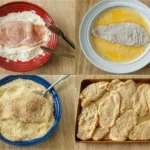
For breaded or battered foods, a light spray of oil on the food itself (not the basket) is enough to get a crispy, golden finish without sticking.
Third, clean your air fryer basket after every single use, while it’s still warm (not hot). Wipe it down with a soft sponge and warm, soapy water to remove any loose residue before it hardens. For deep cleaning, do a monthly bake-out: run the air fryer empty at 400°F (204°C) for 5 minutes with a small bowl of water inside to loosen stuck-on grime, then wipe clean.
Finally, avoid cooking acidic foods (like tomato sauce, citrus-marinated meats, or vinegar-based dressings) directly in a non-stick air fryer basket. Acid can degrade the non-stick coating over time, making it more porous and prone to holding onto residue. If you do cook acidic foods regularly, consider switching to a stainless steel air fryer basket, which is completely non-porous and won’t degrade from acid exposure.
If you don’t want to replace your basket, use a silicone liner or a small oven-safe dish to protect the coating surface.
Aerosol Spray vs. Alternative Oil Application Methods: Which Is Right For You?
The right oil application method depends on how often you use your air fryer, what you cook, and how much time you want to spend on cleanup. Each option has clear tradeoffs for specific use cases, so there’s no universal best pick for every household.
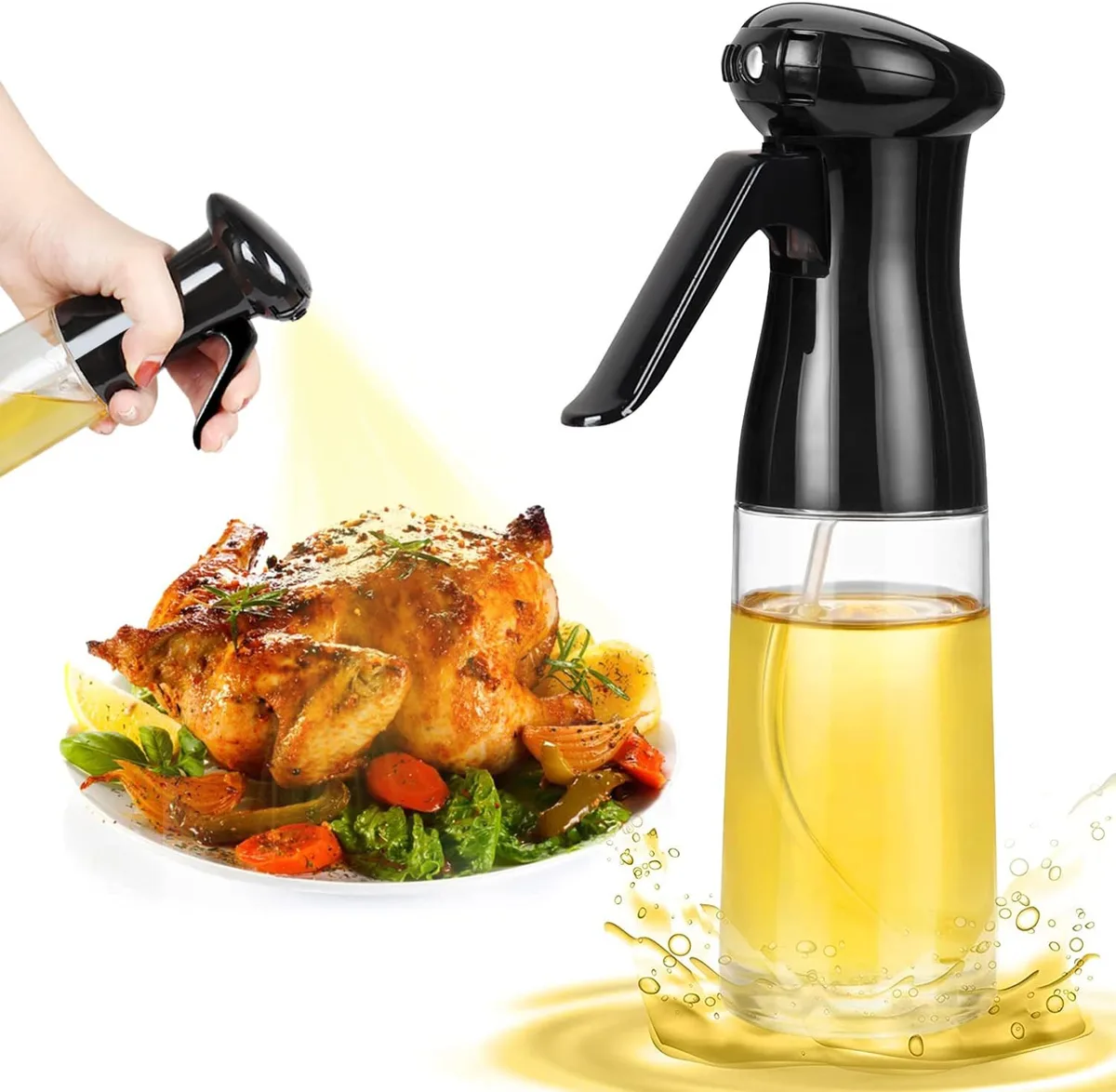
Image source: Bing (Web (fair-use with source credit))
| Method | Pros | Cons | Best For |
|---|---|---|---|
| Aerosol cooking spray | Fast, even mist, no prep needed | Propellant/emulsifier residue buildup, overspray risk | Occasional users (1-2 times per week) who clean the basket immediately after every use |
| Pump-action oil sprayer | No additives, precise oil control, no residue | Requires refilling, slightly slower application | Frequent users (3+ times per week), anyone prone to forgetting to clean the basket right away |
| Silicone basting brush | No overspray, direct food application, zero residue | Slower for large batches, requires washing the brush after use | Breaded/battered foods, small batches of delicate items like fish or veggies |
| Manual oil toss | Zero mess, no extra tools, perfect oil coverage | Can make food soggy if over-tossed, uneven coating for large pieces | Hearty veggies, marinated proteins, pre-brined foods |
For occasional air fryer users, standard aerosol spray works if you wipe the basket warm after each cook and deep clean weekly. If you use your air fryer more than twice a week, a pump-action sprayer eliminates residue risk and saves cleanup time. It also lets you use high-smoke-point oils like avocado or grapeseed.
These oils crisp food better than the lower-smoke-point oils pre-mixed in most aerosol sprays. For breaded frozen foods, a silicone brush applies oil directly to the food without overspray landing on the heating element. This avoids off-flavors and smoke.
Skip manual tossing for wet-battered items, as excess oil makes the coating gummy instead of crispy.
Frequently Asked Questions
Does cooking spray ruin air fryer non-stick coating?
Not if you clean residue promptly. The propellants and emulsifiers in aerosol spray bake into sticky gunk that scratches coating when scrubbed. Aggressive cleaning of built-up residue causes most coating damage, not the spray itself.
Wipe the basket warm after every use to avoid this.
Can I use PAM cooking spray in my air fryer?
PAM and other standard aerosol sprays work if used sparingly and cleaned immediately after each use. Most manufacturer manuals warn against aerosol sprays due to propellant residue buildup, so check your model’s guidelines first. A pump sprayer is a safer long-term alternative.
Why does my air fryer food stick even when I don’t use cooking spray?
Sticking can come from a degraded non-stick coating, insufficient preheating, overcrowding the basket, or wet food. Frozen breaded foods stick especially easily if the basket isn’t preheated, as moisture bonds to the coating before the crust sets.
How do I remove baked-on cooking spray from an air fryer basket?
Make a paste of baking soda and warm water, apply to residue, let sit 10 minutes, then scrub gently with a soft sponge. For tough buildup, soak the basket in warm soapy water for 15 minutes first. Never use steel wool or abrasive pads, as these scratch the non-stick finish.
Is olive oil cooking spray bad for air fryers?
Olive oil spray has the same propellant and emulsifier additives as other aerosol sprays, so it causes the same sticky residue buildup. It also has a lower smoke point than avocado or canola oil, so it can burn and leave off-flavors at high air fryer temperatures. Use a pump sprayer with plain olive oil if you prefer that oil type.

Similar Posts