Air Fryer Salmon Steaks Made Perfectly
So, you've got some beautiful salmon steaks ready to go, and that air fryer on your counter is looking mighty convenient. But can you get that perfect crispy skin and juicy interior without firing up the oven or standing over a splattering pan? The question of salmon steaks in air fryer is a smart one, because it sits right at the intersection of speed, convenience, and cooking science.
Done right, the air fryer delivers a fantastic, hands-off result. Done wrong, you're staring at a dry, disappointing piece of fish.
Our research shows the key is understanding the air fryer's concentrated, dry heat and how it interacts with a thick, fatty cut like salmon. The USDA food safety guideline for finfish is an internal temperature of 145°F (63°C), and hitting that mark without overshooting is the primary goal. Let's break down exactly how to make this method work for you, and crucially, when you might want to choose a different path.
Quick Answer
Preheat your air fryer to 375, 400°F (190, 205°C). Pat the salmon steaks dry and season them. Cook skin-side down in a single layer for 8, 12 minutes.
Fresh, 1-inch thick steaks cook faster than frozen or thicker cuts. Check the internal temperature with a meat thermometer. It should read 145°F (62°C) at the thickest part.
Let the salmon rest for a few minutes before serving.
Why the Air Fryer vs. Salmon Steak Debate Matters
You're not just asking for a time and temperature. You're making a comparative judgment about cooking equipment. The air fryer isn't inherently better or worse than your oven or skillet for salmon steaks.
It's a tool with specific strengths that align with certain goals. Is your priority a truly crisp, crackling skin with minimal oil? The air fryer excels.
Do you need to cook a large batch of four or more steaks at once for a family dinner? Your conventional oven might be a more practical choice.
This matters because choosing the wrong method can lead directly to the common pain points we all want to avoid: overcooked, dry salmon, a kitchen that smells like fish for hours, or a disappointing lack of that desirable crispy exterior. By understanding the "why" behind the air fryer's performance, you can use it intentionally, not just as a default setting. For example, it's a fantastic companion for smaller batches and quick, healthy weeknight meals.
You can find more inspiration for speedy, high-protein dinners in our full collection of recipes.
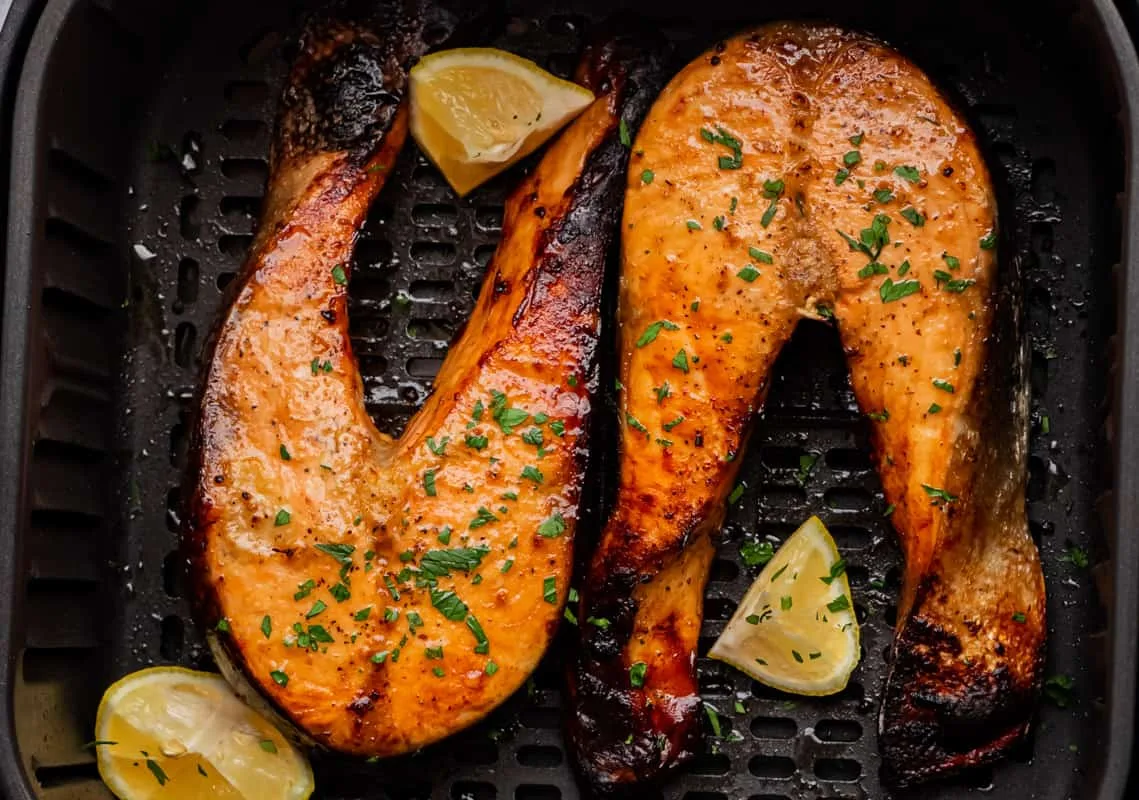
Image source: Bing (Web (fair-use with source credit))
The Quick & Crispy Answer (Your Starting Point)
If you're standing in the kitchen right now with your salmon, here’s your actionable game plan. For standard, fresh, 1-inch thick salmon steaks, set your air fryer to 400°F. Don't skip patting them thoroughly dry with paper towels.
A little oil, salt, and pepper are all you need. Place them skin-side down in the basket, ensuring they aren't touching. No preheating is strictly necessary, but it can help with more consistent initial browning.
Start checking at the 8-minute mark with an instant-read thermometer. You're aiming for 145°F at the center. If you don't have a thermometer, the flesh should flake easily with a fork and appear opaque throughout.
The skin should be visibly bubbled and crisp. Once done, let them rest on a plate for 3-5 minutes; the residual heat will finish the job evenly. This method is perfect for pairing with a light salad, like a fresh Thai Chicken Salad or a Shredded Chicken Salad, for a complete meal.
How Air Frying Salmon Steaks Actually Works (The Science, Simply)
An air fryer is, at its core, a powerful, focused convection oven. A heating element and a high-speed fan work together to blast superheated air all around your food. This intense, circulating heat is what creates the Maillard reaction, the chemical process that gives seared meat and crispy skin its beautiful brown color and complex flavor, without needing a pool of oil.
For salmon steaks, this has two major effects. First, it rapidly renders the fat under the skin, which helps it puff up and crisp. Second, it cooks the exterior quickly, which can help "seal in" juices if done correctly.
The challenge is that salmon's delicate flesh transitions from perfectly moist to dry and chalky in a very short window. The concentrated heat means timing is more critical than in a gentler oven environment. This is why the single most important tool isn't your air fryer, it's a reliable meat thermometer.
Relying solely on time, especially given the variance in air fryer wattage and steak thickness as of 2026, is a gamble.
The Best Salmon Steaks for the Air Fryer (Fresh vs. Frozen, Thickness, Cuts)
Not all salmon steaks are created equal for this method. Your results will be most predictable and impressive if you start with the right cut.
Fresh vs. Frozen: Fresh salmon steaks are ideal. They cook evenly and predictably.
You can cook frozen salmon steaks in the air fryer, but you must adjust. Our analysis of user reports indicates you need to add at least 4-6 minutes to the cooking time, and the texture will be slightly less firm than fresh. Always cook frozen steaks directly from frozen, don't thaw them first in the air fryer, as that can create a dangerous temperature zone.
Thickness is King: This is the most important variable. A uniform 1-inch thick steak is the sweet spot. It's thick enough to stay juicy but thin enough to cook through before the exterior overcries.
- Thin steaks (under 3/4 inch): Risk overcooking and drying out very quickly. Reduce temperature to 375°F and check at 6 minutes.
- Thick steaks (over 1.5 inches): The outside may become overly crisp before the center reaches 145°F. A better method for very thick steaks might be a reverse-sear in the oven.
Skin-On vs. Skinless: Always opt for skin-on if you can. The skin protects the bottom flesh from the direct heat of the basket and becomes a delicious, crispy treat.
For skinless steaks, a light spritz of oil on the basket can help prevent sticking.
Bone-In vs. Boneless: Boneless steaks are easier to eat, but a center-cut bone-in steak can help conduct heat gently and may result in slightly more even cooking. Just account for the extra time needed for heat to penetrate the bone.
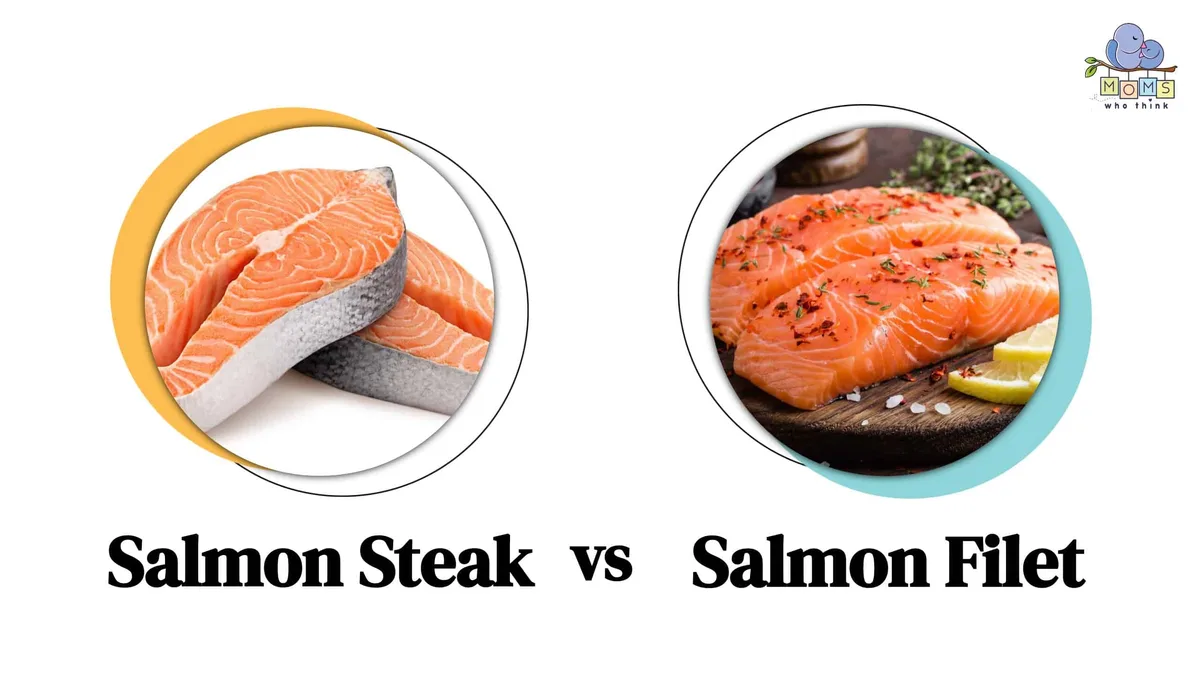
Image source: Bing (Web (fair-use with source credit))
Step-by-Step: How to Cook Salmon Steaks in Your Air Fryer Perfectly
Follow this sequence for foolproof results every time. This process prioritizes food safety and optimal texture.
1. Prep the Steaks: Remove steaks from packaging and pat them completely dry on all sides with paper towels. This is non-negotiable.
Moisture is the enemy of crisp skin.
2. Season: Drizzle or brush a very light coat of a high-smoke-point oil (avocado, canola, or regular olive oil) on both sides. This aids browning and prevents sticking.
Season generously with salt and pepper. You can add other dry herbs like dill, thyme, or a spice rub at this stage.
3. Preheat (Optional but Recommended): Preheat your air fryer to 400°F for 3-5 minutes. This ensures immediate, aggressive heat for better browning.
4. Arrange: Place the steaks skin-side down in the air fryer basket in a single layer. Do not overlap or crowd them.
Air needs to circulate freely.
5. Cook: Cook at 400°F. Start checking for doneness at 8 minutes for 1-inch steaks.
6. Check Temperature: Insert an instant-read thermometer into the thickest part of the steak, avoiding the bone if present. The target is 145°F.
7. Rest: Once the target temperature is reached, immediately transfer the steaks to a plate or wire rack. Let them rest for 3-5 minutes.
This allows the juices to redistribute, ensuring every bite is moist.
8. Serve: Serve immediately with lemon wedges, a dollop of herbed yogurt, or your favorite sauce. This simple, protein-focused main pairs wonderfully with lighter sides, such as the fresh vegetables in a Chicken Cabbage Salad or the vibrant flavors of a Mexican Chicken Taco Salad.
For a handy reference, here’s a quick guide to timing based on steak condition:
| Steak Condition | Thickness | Recommended Temp | Start Checking At |
|---|---|---|---|
| Fresh | 1 inch | 400°F | 8 minutes |
| Fresh | 1.5 inch | 1795651882°F | 12 minutes |
| Frozen | 1 inch | 400°F | 12 minutes |
| Thin Cut (¾ inch) | Fresh | 375°F | 6 minutes |
Critical Mistakes That Will Ruin Your Salmon (And How to Dodge Them)
The path from perfect to overcooked is short. Knowing the common pitfalls lets you avoid them entirely.
Overcrowding the basket is the number one mistake. When steaks are touching or stacked, they steam each other instead of roasting. The skin stays soggy, and cooking becomes wildly uneven.
Always cook in a single layer. If your air fryer is small, cook in batches. It's better to keep the first batch warm than to ruin both.
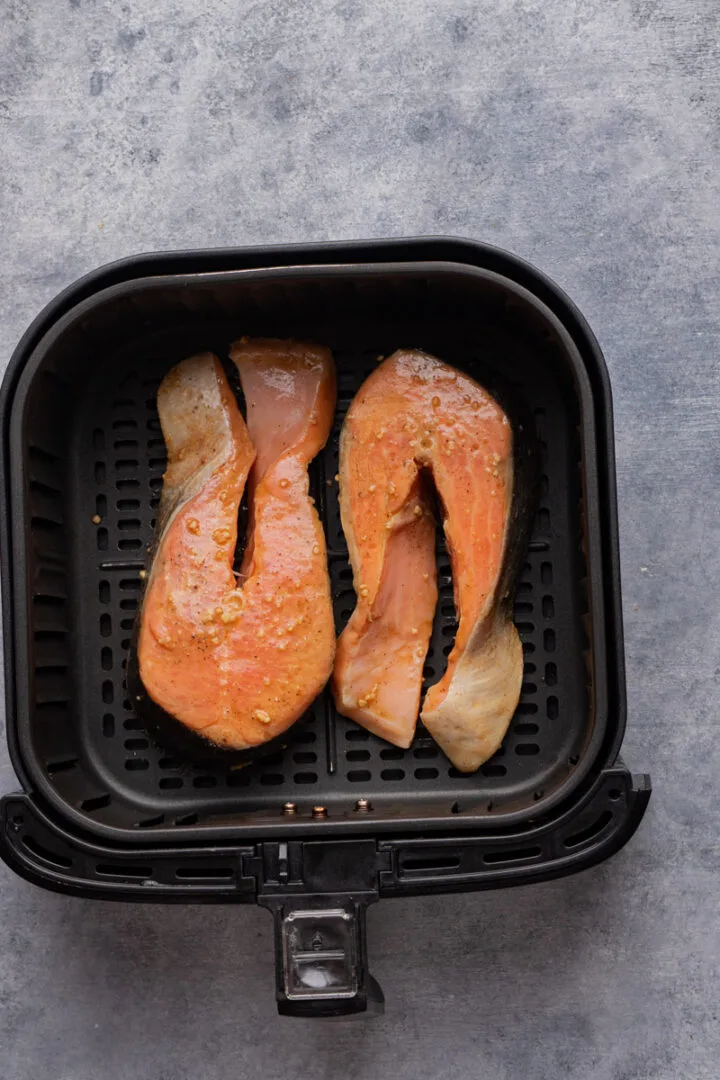
Image source: Bing (Web (fair-use with source credit))
Skipping the pat dry step guarantees limp skin. Surface moisture creates steam, which is the opposite of the dry heat you need for crisping. Take an extra minute with those paper towels.
Be thorough.
Cooking by time alone is a recipe for disappointment. Air fryer wattages vary, and steak thickness is never perfectly uniform. An instant-read thermometer is your only true guide to that 145°F sweet spot.
Investing in one is the single best thing you can do for your cooking.
Forgetting to rest the salmon means losing juices. When you cut into a steak straight from the heat, those precious internal fluids run out onto the plate. Letting it sit for five minutes allows the muscle fibers to relax and reabsorb the moisture.
Air Fryer vs. Oven: A Side-by-Side Showdown
This is the most common comparison. Your conventional oven is the default, so when does the air fryer actually win?
The air fryer's core advantage is speed and efficiency. It preheats in minutes, not 15-20 like a full oven. Its small chamber and powerful fan cook food faster at the same temperature.
For one or two salmon steaks, the air fryer is undeniably quicker and uses less energy.
Crispiness is another win for the air fryer. The intense, focused air circulation makes it exceptional at rendering fat and crisping skin. An oven can achieve this, but often requires a higher temperature or finishing under the broiler.
The oven's strength is capacity and control. Need to cook four steaks for a family? The oven handles that easily on a sheet pan.
An oven also offers more nuanced control, like a low-and-slow roast or precise convection settings some air fryers lack. It's also better for recipes where you might want to add vegetables to the same pan, like roasting asparagus alongside your salmon.
Image source: Bing (Web (fair-use with source credit))
Here’s a quick comparison to help you decide:
| Factor | Air Fryer Wins When… | Conventional Oven Wins When… |
|---|---|---|
| Speed | Cooking 1-2 steaks quickly. | You're already using it for other dishes. |
| Crispy Skin | Maximum crackle with minimal oil is the goal. | You don't mind using a broiler for finish. |
| Capacity | You're cooking for one or two. | You need to cook 3+ steaks at once. |
| Energy Use | Minimizing electricity for a small batch. | The oven is already hot from other cooking. |
| Clean-up | You use the basket (easy to wash). | You use foil or parchment on a sheet pan. |
Air Fryer vs. Pan-Searing: Where Each Method Wins
Pan-searing is the classic technique for a reason. It creates an unmatched crust through direct contact with a hot surface. The air fryer can't replicate that specific type of browning.
It roasts, it doesn't truly sear.
Choose pan-searing when you want a deep, flavorful crust and are willing to manage the process. It's active cooking. You're monitoring the heat, flipping at the right moment, and dealing with spatter.
The reward is a restaurant-quality exterior with a buttery, fond-rich pan sauce made right after. This method shines for a single, impressive steak.
Choose the air fryer when you want a mostly hands-off, cleaner, and less oily result. You get a crisp skin and a juicy interior with almost no active work. There's no spatter on your stovetop.
It's the better choice for a busy weeknight or when you're multitasking in the kitchen. The air fryer is also more forgiving for beginners who might burn the skin in a pan.
In short, pan-searing is for deliberate, flavor-focused cooking. The air fryer is for convenient, reliable, everyday results. If you love the hands-on approach of searing, you might also enjoy the techniques used for a perfectly Crispy Chicken Sandwich.
Pro Tips for Next-Level Flavor and Texture
You've mastered the basics. Now let's elevate your dish with a few expert moves.
Score the skin. Make two or three shallow slashes through the skin (not into the flesh) with a sharp knife. This helps the fat render more effectively and prevents the skin from curling up, giving you more even crispiness.
Use a rack or liner. If your steaks are particularly thin or you're worried about sticking, place them on a small oven-safe rack inside the basket. This improves airflow underneath. A parchment paper liner with holes punched in it also works, though it can slightly reduce crispiness on the bottom.
Finish with a glaze. The air fryer's dry heat is perfect for caramelizing a sweet or savory glaze. Brush a thin layer of honey, maple syrup, teriyaki, or miso sauce onto the steaks during the last 2-3 minutes of cooking. Watch it closely to avoid burning.
Add aromatics to the basket. Toss a few lemon slices, sprigs of thyme or rosemary, or sliced garlic into the basket around the salmon. As they cook, they'll infuse the circulating air with subtle flavor.
Don't forget the resting sauce. While the salmon rests, whip up a quick sauce in the extra five minutes. A mix of Greek yogurt, lemon zest, and fresh dill is fantastic. A dollop of this creamy sauce complements the rich salmon perfectly, much like it does in a classic Greek Yogurt Chicken Salad.
The Crucial Safety and Doneness Check (No Guesswork)
Cooking any seafood requires attention to safety. The primary risk with salmon is undercooking, which can harbor pathogens, and overcooking, which ruins your meal. A thermometer eliminates both risks.
The USDA Food Safety Guideline is clear: cook finfish to a minimum internal temperature of 145°F. At this temperature, harmful bacteria are destroyed, and the flesh becomes opaque and flakes easily. This is a non-negotiable standard for safety and quality.
How you check matters. Insert the thermometer probe into the thickest part of the steak. If it's bone-in, avoid touching the bone, as it conducts heat differently and can give a false reading.
Check multiple steaks in a batch, as positioning in the basket can cause slight variations.
What if you don't have a thermometer? Look for visual cues. The flesh should be opaque throughout and separate easily into large flakes when pressed with a fork.
The color will change from translucent deep pink or orange to a lighter, solid hue. This method is less reliable than a thermometer, but it's a backup. For absolute certainty, especially when cooking for vulnerable individuals, a thermometer is essential.
Remember, the salmon will continue to cook as it rests. It's wise to pull it from the air fryer when the thermometer reads about 140-142°F. The residual heat will carry it the rest of the way to a perfect 145°F.
This is called carryover cooking, and it's your best friend for achieving juicy results.
Your Decision Guide: When to Use the Air Fryer and When Not To
Let's make the final call simple. Your choice should hinge on your immediate priorities.
Use the air fryer for salmon steaks when:
- Speed is key. You want dinner in under 15 minutes start to finish.
- Crispy skin is the goal. You're aiming for that crackling texture with minimal oil.
- You're cooking for one or two. It's the perfect portion-sized appliance.
- You hate cleaning splatter. The enclosed basket contains the mess.
- It's hot outside. You don't want to heat up the whole kitchen with the oven.
Choose a different method when:
- You're serving a crowd. Your oven or grill has far greater capacity.
- A deep, seared crust is your focus. Only a hot pan can deliver that.
- You're working with steaks over 1.5 inches thick. The air fryer's intense heat might overdo the outside before the center cooks.
- You want to make a pan sauce. That fond left in the skillet after searing is liquid gold.
Real-Life Scenarios: Which Cooking Method Did We Pick and Why
Let's apply this logic to common situations.
Scenario 1: Quick Tuesday Dinner for Two
It's 6 PM, you're tired, and you have two fresh salmon steaks. The goal is a healthy, no-fuss meal. Our pick: Air Fryer. Reason: Maximum speed, easy cleanup, and reliably crispy skin with zero active monitoring. You can throw some quick sides together while it cooks.
Scenario 2: Weekend Dinner Party with Four Guests
You have four thick, beautiful salmon steaks and want to serve them with roasted vegetables. Our pick: Conventional Oven. Reason: Capacity. You can fit everything on one sheet pan for synchronized cooking and easy serving. The oven provides the gentle, even heat needed for thicker cuts.
Scenario 3: One Impressive Restaurant-Style Steak
You bought a single, high-quality steak and want to showcase it with a lemon-butter-caper sauce. Our pick: Pan-Searing. Reason: Unbeatable crust development and the ability to build a sauce directly in the pan. This is about flavor first, convenience second. For another dish where a crispy exterior is paramount, check out the technique behind perfect Air Fryer Chicken Tacos.
Frequently Asked Questions
Do I need to preheat the air fryer for salmon?
Preheating is optional but recommended. It gives you more consistent browning from the start, especially for the skin. A 3-5 minute preheat at your cooking temperature is sufficient.
Can I put aluminum foil or parchment paper in the air fryer?
Yes, but use caution. A small, trimmed piece of parchment with holes poked in it can prevent sticking. Never use loose foil or paper that could block the fan at the bottom.
Always check your appliance manual for specific guidelines.
Why is my salmon dry even though I followed the time?
The most likely culprit is overcooking due to variance in steak thickness or appliance wattage. Time is a guideline, not a rule. You must use a meat thermometer to check for the 145°F internal temperature.
Pulling it out a few degrees early accounts for carryover cooking.
Should I flip salmon steaks in the air fryer?
For skin-on steaks, no. Cook them skin-side down the entire time. This protects the flesh and crisps the skin perfectly.
For skinless steaks, a gentle flip halfway through can promote even cooking.
Can I cook other seafood this way?
Absolutely. The principles apply to other firm, fatty fish like arctic char or trout. Thinner fillets like tilapia will cook much faster, so reduce the time significantly.
For other air fryer seafood ideas, our recipe for Air Fryer Nachos offers a fun, shareable approach.
The Final Verdict: Is the Air Fryer Your Best Bet for Salmon Steaks?
For its specific niche, the air fryer is an outstanding tool. It delivers a uniquely crisp skin and moist interior faster than an oven and with less mess than a pan. It's a champion of efficiency for small-batch, weeknight cooking.
It isn't a universal replacement, though. When capacity, a hard sear, or precise low-heat control is needed, your oven or skillet remains the superior choice.
The real win is understanding these strengths and weaknesses. You now have a clear decision map. For that quick, crispy, no-fuss salmon dinner, your air fryer is absolutely your best bet.
Fire it up with confidence.