Golden-Crust Hot Chicken Salad Casserole That Delivers Flavor, and Perfect Texture Every Time
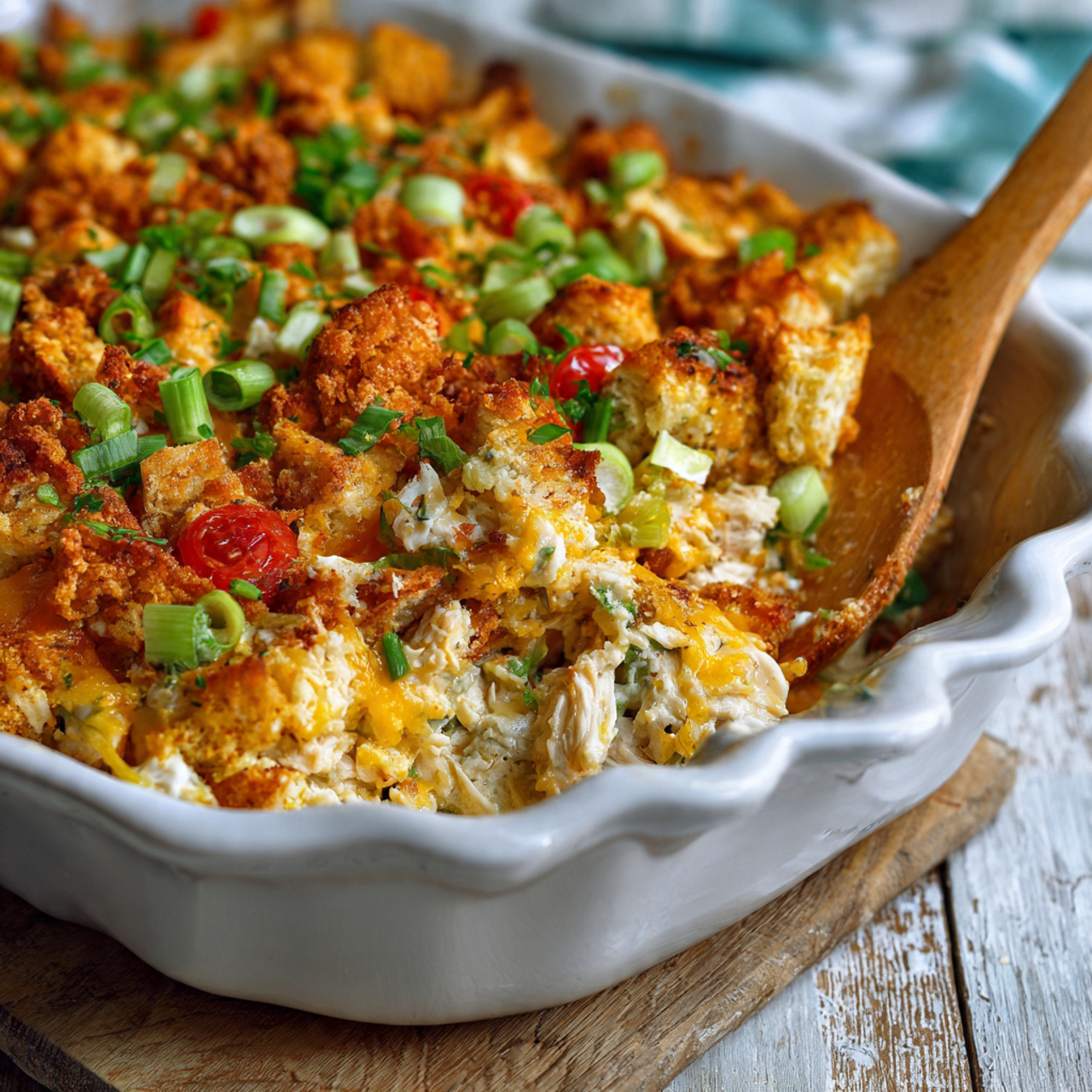
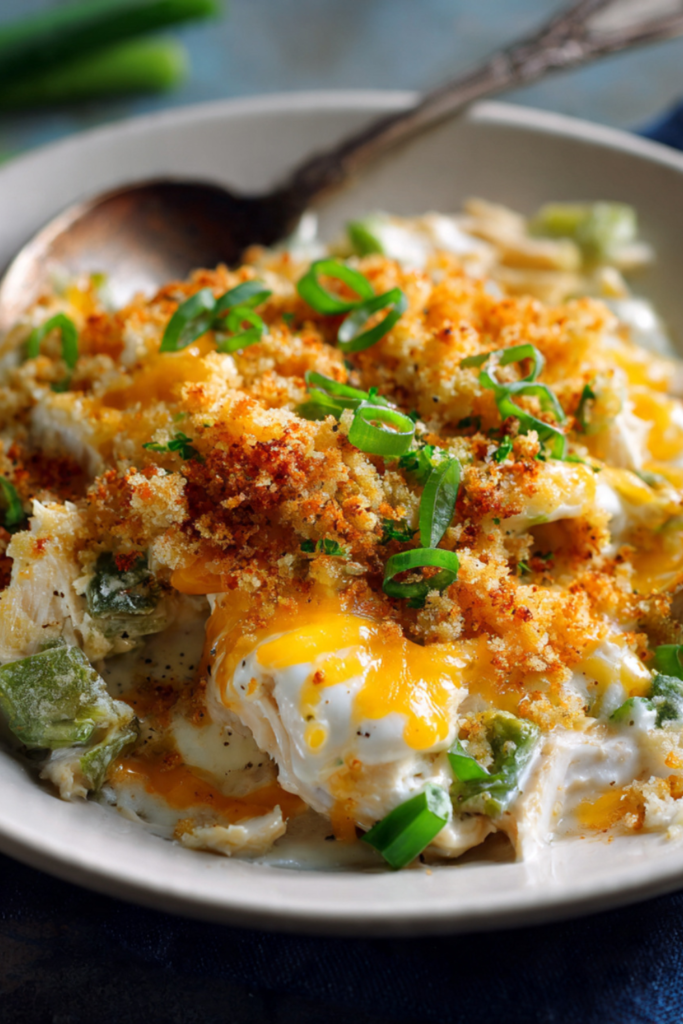
Hot chicken salad casserole occupies a special place in American comfort cooking because it transforms familiar ingredients into a deeply satisfying, oven-finished dish with layered flavor and texture. Unlike traditional cold chicken salad, this baked version offers warmth, creamy richness, and a crisp topping that provides a striking contrast to the tender filling beneath.
This recipe focuses on balance and precision. Properly cooked chicken remains juicy rather than dry, while the dressing is designed to bind ingredients without becoming heavy or greasy. Careful temperature control ensures the casserole heats evenly, preventing separation or overbrowning. Every component—from the aromatic base to the crunchy topping—plays a functional role in delivering both flavor and structure.
Hot chicken salad casserole is also exceptionally versatile. It can serve as a weeknight family dinner, a potluck centerpiece, or a make-ahead meal solution. With clear technique and professional-level guidance, even novice cooks can achieve consistent results.
This comprehensive guide walks through every step with clarity, offering timing benchmarks, texture cues, troubleshooting advice, and expert tips to ensure success from preparation to serving.
ESSENTIAL TOOLS
- Large skillet or sauté pan
- Medium mixing bowls
- Cutting board and chef’s knife
- Measuring cups and spoons
- Rubber spatula
- 9×13-inch casserole dish
- Oven thermometer (recommended for accuracy)
- Aluminum foil
QUICK RECIPE SNAPSHOT
| Category | Details |
|---|---|
| Recipe Name | Hot Chicken Salad Casserole |
| Author | Jordan Ryan |
| Prep Time | 20 minutes |
| Cook Time | 35–40 minutes |
| Total Time | About 1 hour |
| Servings | 6–8 portions |
| Difficulty Level | Easy to Moderate |
| Cooking Method | Oven-baked casserole |
| Key Texture | Creamy interior with crispy topping |
| Primary Protein | Cooked chicken |
| Best Occasion | Weeknight dinners, potlucks, make-ahead meals |
INGREDIENTS
Protein Base
- 3 cups cooked chicken, diced or shredded
Creamy Dressing
- 1 cup mayonnaise
- ½ cup sour cream
- 1 teaspoon Dijon mustard
- 1 teaspoon lemon juice
Vegetables & Texture Elements
- ½ cup celery, finely chopped
- ½ cup onion, minced
- ½ cup sliced almonds
- ½ cup frozen peas, thawed
Seasonings
- 1 teaspoon salt
- ½ teaspoon black pepper
- ½ teaspoon garlic powder
Topping
- 1 cup crushed butter crackers or breadcrumbs
- 2 tablespoons melted butter
THE FLAVOR ARCHITECTS
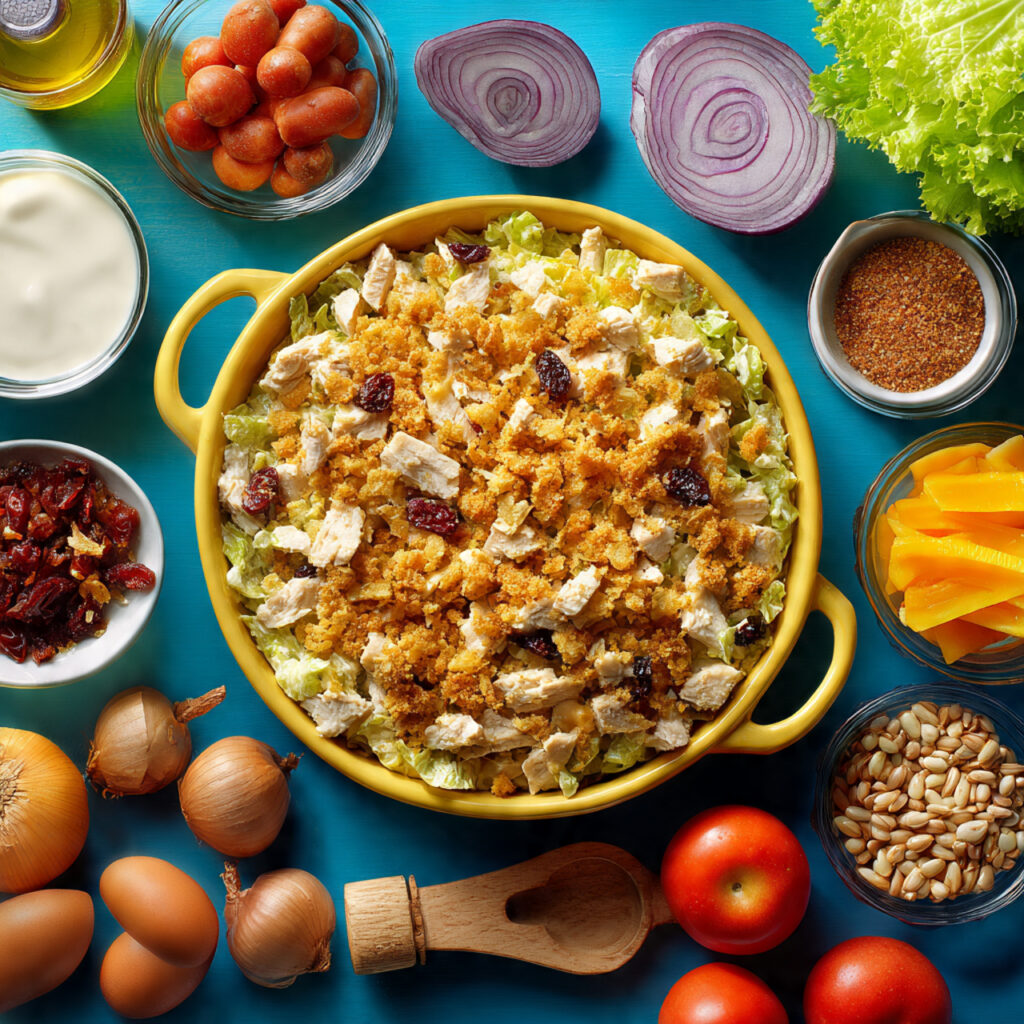
Understanding ingredient roles ensures consistent results.
Chicken: Provides structure and protein. Pre-cooked chicken must remain moist to avoid dryness after baking.
Mayonnaise and Sour Cream: Create the creamy binding matrix. The combination prevents heaviness while adding tang.
Celery and Onion: Offer aromatic depth and subtle crunch.
Almonds: Contribute nutty richness and textural contrast.
Lemon Juice and Mustard: Brighten the dish and balance richness.
Butter Cracker Topping: Forms the essential golden crust that defines the casserole.
COOKING INSTRUCTIONS
Step 1: Prepare and Condition the Chicken
If using freshly cooked chicken, allow it to cool for 10–15 minutes before dicing. Warm chicken can release steam inside the casserole, leading to excess moisture.
Dice into uniform ½-inch pieces for even distribution. Overly large chunks prevent cohesive texture, while very small shreds can become mushy.
Timing: 10 minutes preparation.
Texture Cue: Chicken should feel moist but not wet.
Common Mistake: Using dry rotisserie leftovers without rehydrating.
Fix: Toss chicken with 2 tablespoons warm broth before mixing.
Pro Tip: Slightly under-season the chicken initially because the dressing contains salt.
Step 2: Build the Creamy Dressing Base
In a large bowl, whisk mayonnaise, sour cream, mustard, lemon juice, salt, pepper, and garlic powder until smooth and fully emulsified.
Proper mixing prevents oil separation during baking.
Timing: 3–4 minutes.
Texture Cue: Dressing should be thick but spreadable, similar to heavy yogurt.
Common Mistake: Overmixing vigorously can thin the dressing.
Fix: Stir gently and avoid adding extra liquid.
Pro Tip: Taste and adjust seasoning at this stage for precision.
Step 3: Integrate Vegetables and Texture Components
Fold celery, onion, peas, and almonds into the dressing.
This step ensures even flavor distribution before adding chicken.
Timing: 2–3 minutes.
Texture Cue: Vegetables should remain crisp, not crushed.
Common Mistake: Adding frozen peas directly from the freezer.
Fix: Always thaw and pat dry to avoid excess moisture.
Pro Tip: Toast almonds lightly for enhanced aroma.
Step 4: Combine Chicken with Dressing Mixture
Gently fold chicken into the prepared mixture until evenly coated.
Avoid stirring aggressively, which can break down chicken fibers.
Timing: 3 minutes.
Texture Cue: Each piece should appear lightly coated without pooling liquid.
Common Mistake: Overloading with dressing.
Fix: Add chicken gradually and stop when the mixture holds together without excess sauce.
Pro Tip: Allow mixture to rest for 5 minutes before baking to improve cohesion.
Step 5: Assemble the Casserole for Even Baking
Preheat oven to 375°F (190°C).
Spread the chicken mixture evenly into a lightly greased 9×13-inch casserole dish. Smooth the surface with a spatula.
In a separate bowl, combine crushed crackers and melted butter, then distribute evenly over the top.
Timing: 10 minutes preparation.
Texture Cue: Topping should appear evenly moistened but not soggy.
Common Mistake: Packing the topping too tightly.
Fix: Sprinkle loosely to allow airflow and crisping.
Pro Tip: Use an oven thermometer to verify accurate temperature.
Step 6: Bake to Achieve Creamy Interior and Crisp Crust
Place casserole in the center rack of the oven.
Bake uncovered for 30–35 minutes until the topping turns golden brown and the internal temperature reaches at least 165°F.
If browning too quickly, tent loosely with foil during the last 10 minutes.
Texture Cue: Edges should bubble gently; topping should be crisp.
Common Mistake: Overbaking, which causes dryness.
Fix: Remove immediately when heated through.
Pro Tip: Rotate the dish halfway through baking for even browning.
Step 7: Rest Before Serving
Allow casserole to rest for 10 minutes after removal from the oven.
This resting period allows the dressing to thicken and prevents separation when serving.
Texture Cue: Filling should hold shape when scooped.
Common Mistake: Serving immediately, causing a runny texture.
Fix: Always allow proper resting time.
Pro Tip: Cover loosely with foil during resting to retain warmth.
RECIPE VARIATIONS
- Low-Fat Version: Use Greek yogurt in place of sour cream.
- Extra Crunch Version: Add water chestnuts.
- Spicy Variation: Incorporate diced jalapeños or cayenne.
- Cheesy Style: Add shredded cheddar before baking.
- Herb-Forward Version: Include fresh parsley and thyme.
SERVING SUGGESTIONS
Hot chicken salad casserole pairs well with:
- Steamed green beans
- Roasted vegetables
- Simple green salad
- Buttery dinner rolls
- Light citrus slaw
Serving with fresh, crisp sides balances the richness of the casserole.
STORAGE & REHEATING
Refrigeration: Store in an airtight container for up to 4 days.
Freezing: Freeze unbaked casserole for up to 2 months.
Reheating:
- Oven: 325°F for 20 minutes
- Microwave: Use medium power to prevent separation
Always reheat gently to preserve creamy texture.
COMMON MISTAKES & FIXES
| Mistake | Cause | Fix |
|---|---|---|
| Dry casserole | Overbaking | Reduce bake time |
| Watery texture | Frozen vegetables not drained | Thaw and dry thoroughly |
| Greasy surface | Excess mayonnaise | Adjust dressing ratio |
| Burnt topping | Oven too hot | Use foil tent |
| Bland flavor | Under-seasoning | Adjust salt before baking |
FAQs
1. Can I use canned chicken?
Yes, but drain thoroughly and shred gently to prevent mushiness.
2. What is the best chicken type for this recipe?
Poached or rotisserie chicken works best due to moisture retention.
3. Can I assemble this ahead of time?
Yes, refrigerate up to 24 hours before baking.
4. How do I prevent topping from becoming soggy?
Ensure topping is added just before baking and do not cover during cooking.
5. Can this casserole be made dairy-free?
Yes, substitute dairy-free sour cream and mayonnaise alternatives.
CONCLUSION
Hot chicken salad casserole exemplifies the principles of balanced comfort cooking: controlled moisture, layered texture, and thoughtful seasoning. By understanding each ingredient’s function and following precise cooking techniques, it becomes possible to achieve consistent results with professional-level quality.
From properly conditioning the chicken to managing oven temperature and resting time, every step contributes to the final dish’s creamy interior and crisp topping. The recipe’s versatility further enhances its value, allowing cooks to adapt it for dietary needs, flavor preferences, or meal planning convenience.
Whether prepared for a family dinner or a gathering, this casserole delivers dependable satisfaction through careful technique and classic flavor harmony.